
Introduction
Research and development (R&D) is at the heart of technological progress, business competitiveness, and industrial growth. While basic research focuses on exploring theories and principles, applied research and development (Applied R&D) aims at translating these discoveries into tangible products, processes, and technologies.
In today’s fast-paced world, industries across manufacturing, healthcare, energy, information technology, and engineering rely heavily on applied R&D to solve real-world problems. This article explores the importance, process, and examples of applied R&D, showing how it acts as a bridge between innovation and practical implementation.
What is Applied R&D?
Applied R&D refers to the systematic use of scientific knowledge to develop new applications, services, or processes that have direct commercial or practical use. Unlike basic research, which focuses on knowledge for knowledge’s sake, applied R&D is outcome-driven.
Key characteristics of Applied R&D include:
- Goal-Oriented: Targets specific industry challenges or opportunities.
- Innovation-Driven: Creates new products, systems, or methods.
- Commercial Relevance: Results often lead to patents, prototypes, or market-ready solutions.
- Multidisciplinary Approach: Combines engineering, science, business, and design.
The Role of Applied R&D in Industry
Applied R&D is a cornerstone of competitiveness in nearly every sector. Its impact extends far beyond laboratories, shaping industries and society.
1. Driving Technological Innovation
Companies use applied R&D to create cutting-edge technologies—from artificial intelligence (AI) applications to renewable energy systems. It enables industries to stay ahead in global markets.
2. Improving Products and Services
From smartphones to medical devices, applied R&D helps improve quality, safety, and efficiency. For example, the pharmaceutical industry heavily invests in R&D to develop new drugs and treatments.
3. Boosting Economic Growth
Nations that invest in applied R&D see higher productivity and competitiveness. Countries like the United States, Germany, South Korea, and Japan are global leaders due to consistent R&D investment.
4. Sustainability and Green Solutions
Applied R&D contributes to eco-friendly innovations, such as low-emission vehicles, biodegradable materials, and renewable energy technologies.
Applied R&D vs. Basic Research
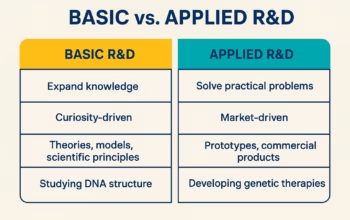
| Aspect | Basic Research | Applied R&D |
|---|---|---|
| Objective | Generate knowledge and theories | Develop practical applications |
| Focus | Fundamental principles | Problem-solving and innovation |
| Outcome | Publications, scientific theories | Products, prototypes, patents, new technologies |
| Timeframe | Long-term impact | Short to medium-term results |
Both are essential. Basic research provides the foundation of knowledge, while applied R&D transforms it into value-driven solutions.
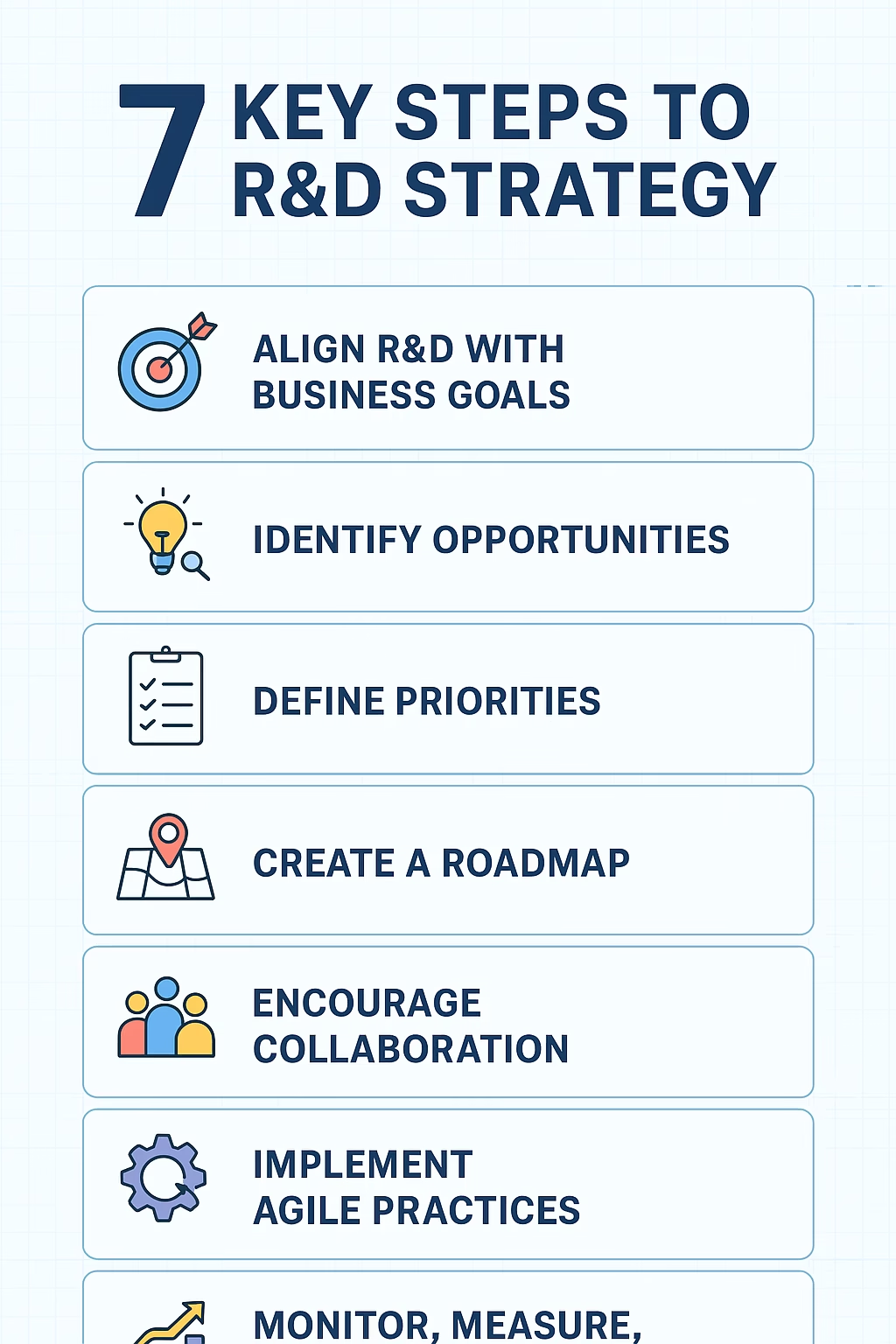
Key Stages of Applied R&D
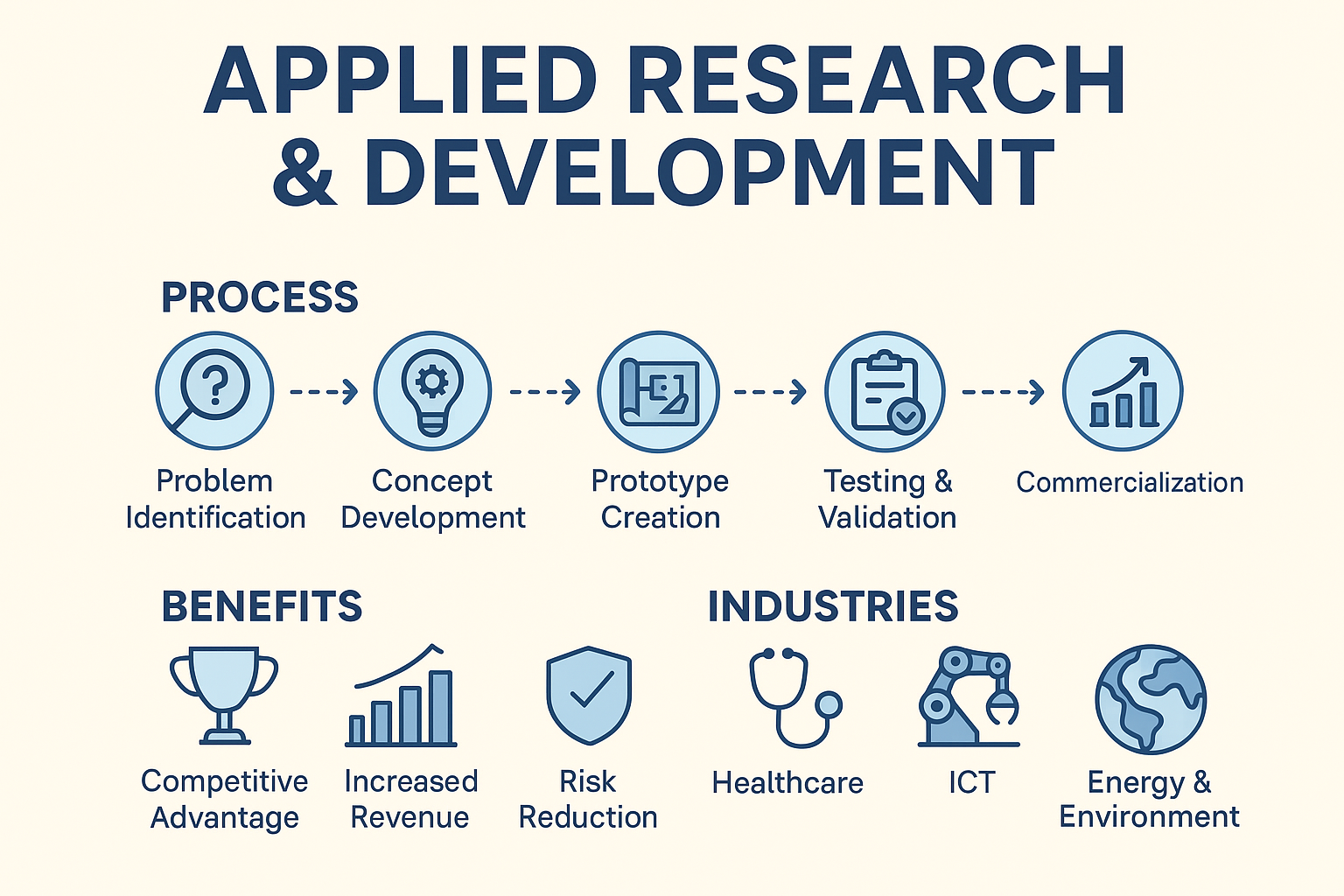
Applied R&D follows a structured process to ensure discoveries can be translated into viable solutions.
- Problem Identification – Define industry challenges or market opportunities.
- Concept Development – Generate ideas and design potential solutions.
- Prototype Creation – Build working models or simulations.
- Testing and Validation – Ensure safety, reliability, and performance.
- Commercialization – Prepare for large-scale production and market release.
Real-World Applications of Applied R&D
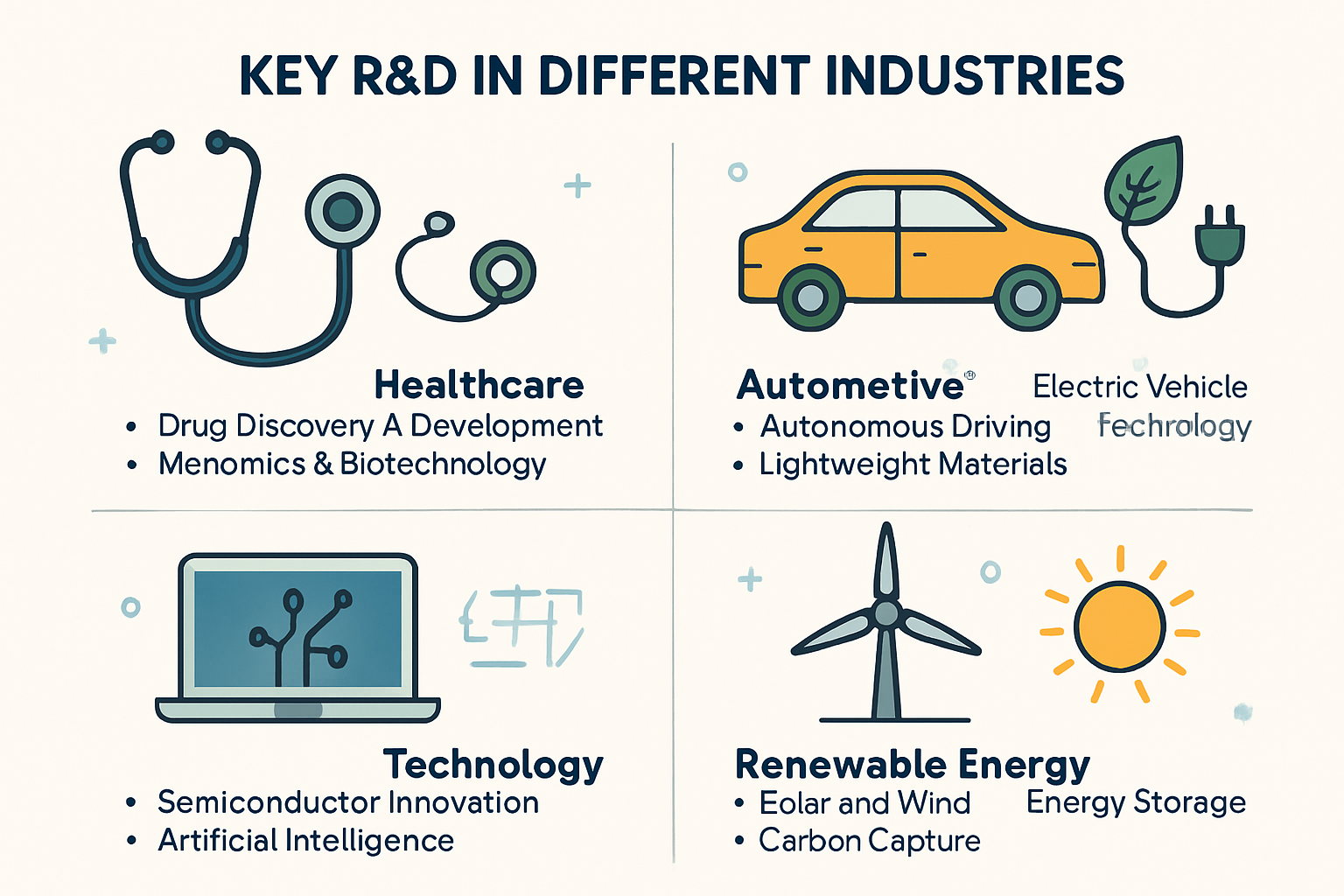
1. Healthcare and Pharmaceuticals
- Development of vaccines and advanced drug therapies.
- Medical imaging technologies like MRI and CT scans.
- AI-assisted diagnostic tools.
2. Information and Communication Technology (ICT)
- Next-generation semiconductors and processors.
- 5G and upcoming 6G communication networks.
- Cybersecurity innovations.
3. Manufacturing and Industrial Engineering
- Automation and robotics in production lines.
- Additive manufacturing (3D printing).
- Advanced materials like composites and nanomaterials.
4. Energy and Environment
- Renewable energy systems: solar, wind, and hydrogen.
- Carbon capture and storage (CCS) technologies.
- Energy-efficient appliances and smart grids.
5. Transportation
- Electric vehicles (EVs) and autonomous driving systems.
- Sustainable aviation fuels.
- Intelligent traffic management systems.
Benefits of Applied R&D for Businesses
- Competitive Advantage – Helps businesses stand out with innovative products.
- Increased Revenue – New products and services open up additional revenue streams.
- Risk Reduction – Anticipates industry shifts by preparing adaptable solutions.
- Customer Satisfaction – Creates solutions that address evolving consumer needs.
- Global Recognition – Patents and innovations enhance brand reputation.
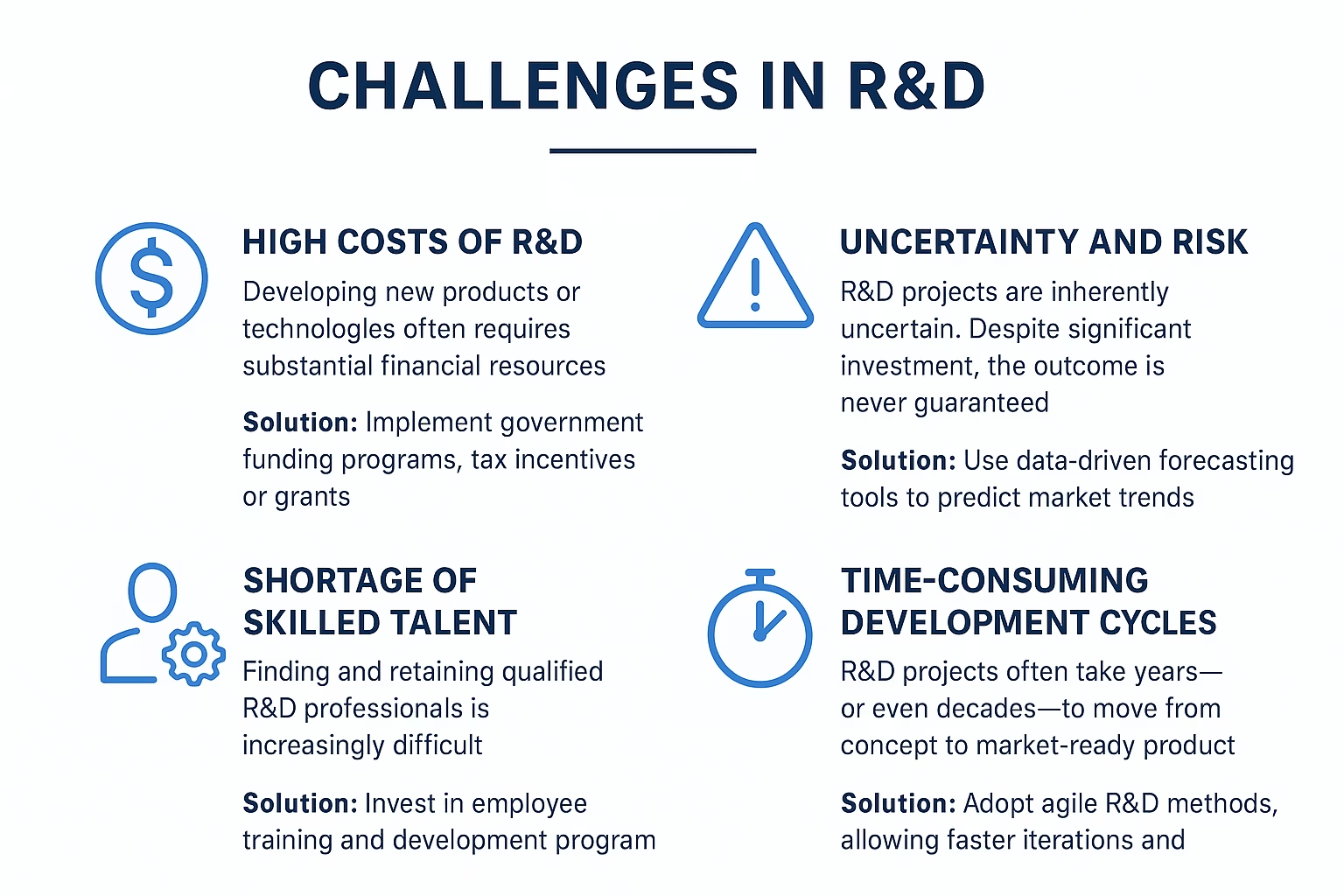
Challenges in Applied R&D
Despite its advantages, applied R&D comes with challenges:
- High Costs: Requires substantial financial investment.
- Uncertainty: Not all R&D projects lead to market success.
- Time-Intensive: Development cycles can take years.
- Regulatory Hurdles: Industries like healthcare face strict approvals.
- Skilled Workforce Shortages: Requires multidisciplinary expertise.
The Future of Applied R&D
As industries embrace digital transformation, applied R&D will integrate advanced tools like:
- Artificial Intelligence (AI) and Machine Learning – Enhancing decision-making and predictions.
- Big Data Analytics – Driving insights from massive datasets.
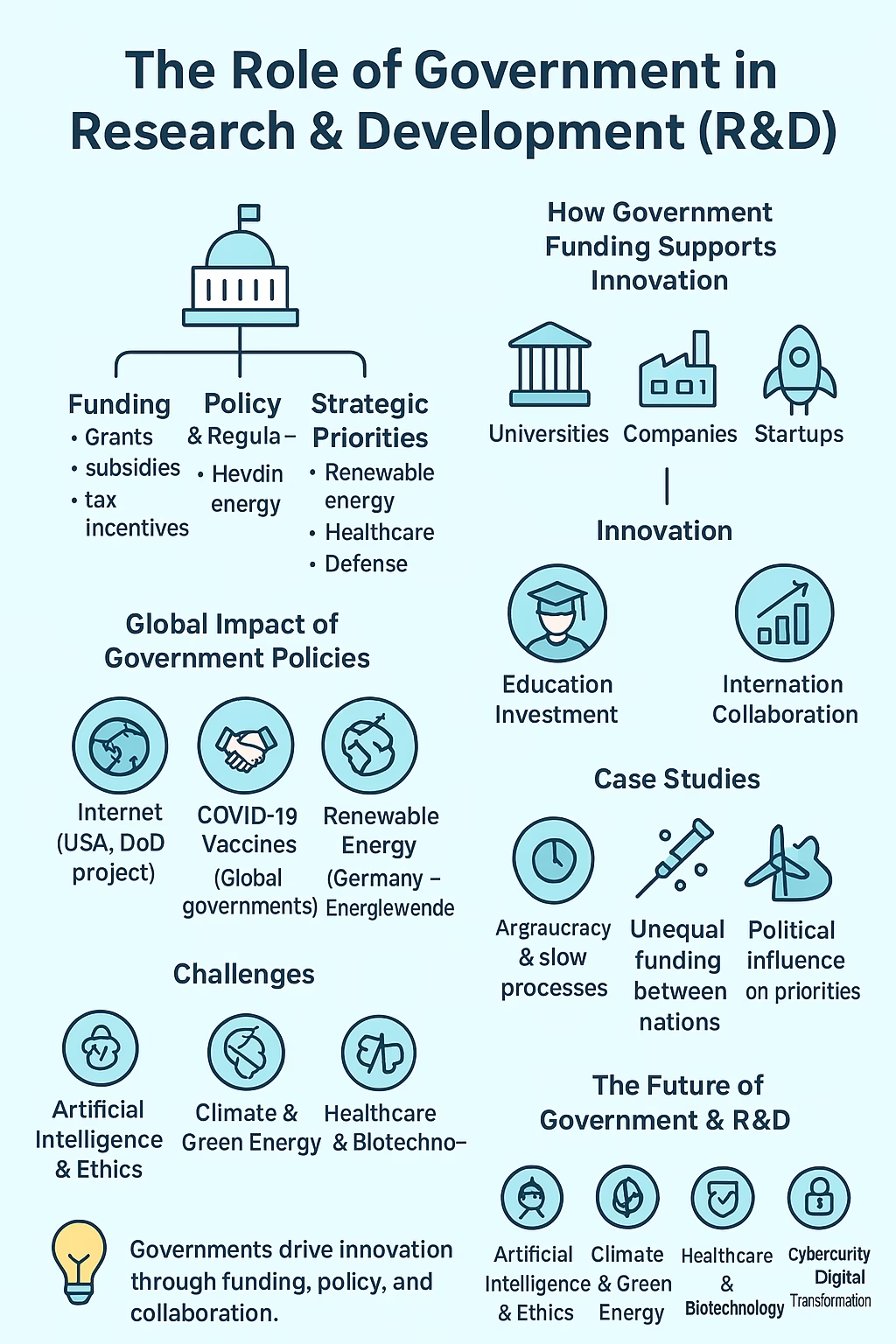
- Collaborative R&D Models – Universities, governments, and businesses working together.
- Sustainable Innovation – Greater focus on green and climate-friendly technologies.
- Global Knowledge Networks – Cross-border partnerships accelerating breakthroughs.
Conclusion
Applied research and development is more than just innovation—it is the pathway from scientific discovery to societal benefit. By focusing on practical outcomes, applied R&D enables industries to tackle complex challenges, improve products, and drive economic growth.
As technology evolves, the role of applied R&D will continue to expand, shaping the future of healthcare, industry, environment, and daily life. For businesses, investing in applied R&D is not an option—it is a necessity to remain competitive in a rapidly changing world.