In today’s fast-paced digital economy, businesses are under constant pressure to improve efficiency, reduce operational costs, and deliver better customer experiences. One of the most effective solutions to achieve these goals is Business Process Automation (BPA). BPA leverages technology to automate repetitive and time-consuming tasks, allowing organizations to focus more on strategy and innovation.
This article provides a complete overview of Business Process Automation, including its definition, benefits, applications, and future trends that businesses must be aware of.
What is Business Process Automation (BPA)?
Business Process Automation (BPA) refers to the use of software and digital technologies to perform recurring business tasks or processes with minimal human intervention. Unlike simple task automation, BPA focuses on optimizing entire workflows across departments and systems.
For example, instead of manually approving invoices, BPA solutions can automatically validate, route, and record them in the accounting system. This not only saves time but also reduces the risk of human error.
BPA can be applied in various business areas such as finance, human resources, customer service, supply chain management, and IT operations.
Key Benefits of Business Process Automation (BPA)
- Improved Efficiency
By automating repetitive tasks, employees can spend more time on value-driven activities. This accelerates workflows and reduces delays. - Cost Reduction
Automation minimizes the need for manual labor in routine tasks, which directly lowers operational costs. - Error Reduction
Human errors in data entry, approvals, or communication can be costly. BPA ensures greater accuracy through predefined rules and algorithms. - Better Compliance
BPA helps maintain regulatory compliance by ensuring that processes follow consistent procedures and documentation is properly recorded. - Enhanced Customer Experience
Faster response times, accurate information, and seamless service delivery improve customer satisfaction and loyalty. - Scalability
Automated processes can be easily scaled as businesses grow without requiring significant additional workforce.
Examples of Business Process Automation (BPA)
BPA is versatile and can be applied in numerous industries. Some common examples include:
- Finance & Accounting
- Automated invoice processing
- Expense report approval
- Payroll management
- Human Resources (HR)
- Employee onboarding and offboarding
- Leave requests and approvals
- Performance evaluations
- Customer Service
- Automated ticketing systems
- Chatbots for customer inquiries
- Feedback collection and analysis
- Supply Chain Management
- Order tracking
- Inventory management
- Shipment notifications
- Marketing & Sales
- Lead generation and nurturing campaigns
- Automated email marketing
- CRM data updates
Business Process Automation (BPA) vs. Robotic Process Automation (RPA)
While BPA and Robotic Process Automation (RPA) are often used interchangeably, they are not the same.
- BPA focuses on end-to-end process optimization across systems.
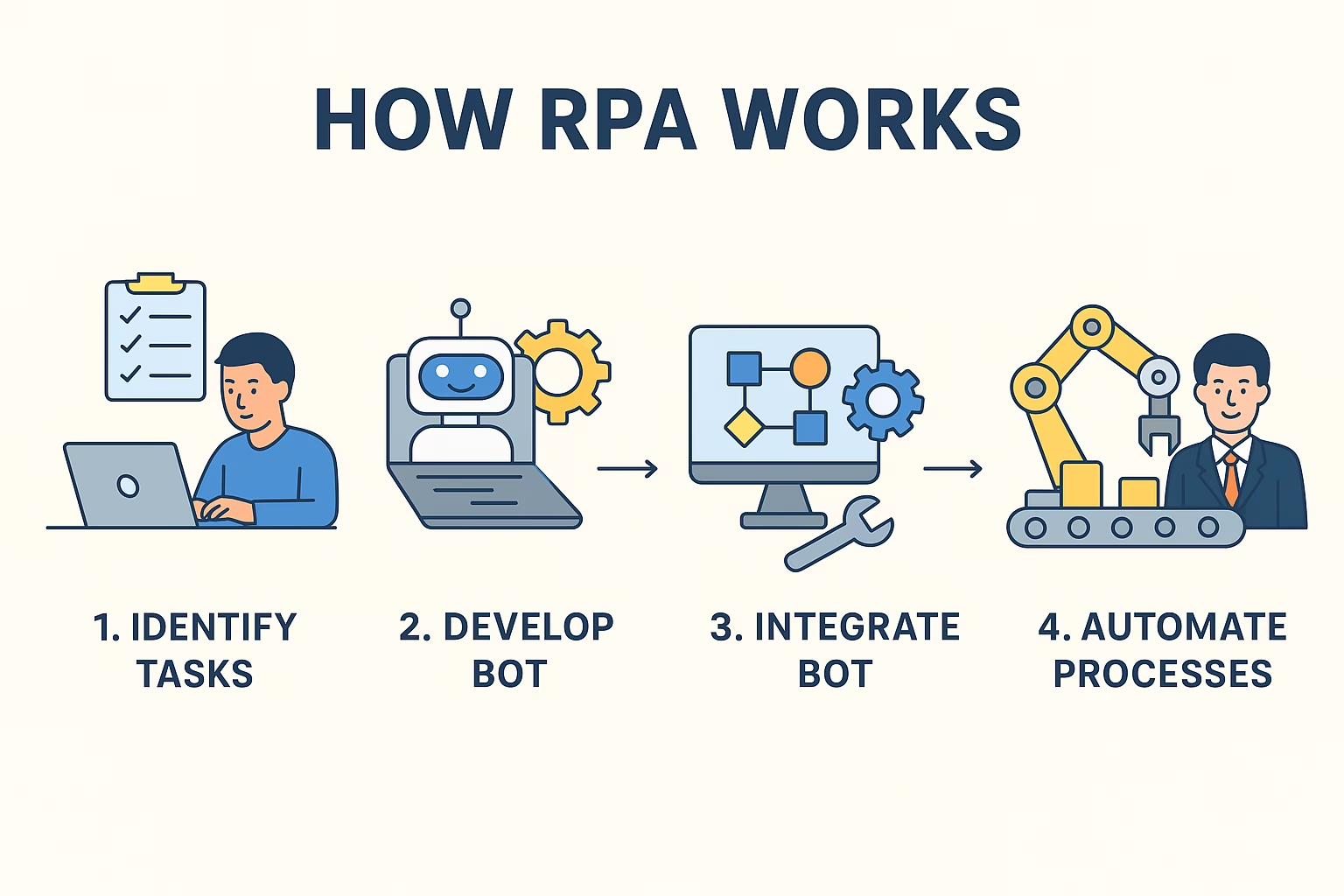
- RPA focuses on automating specific repetitive tasks using bots.
For example, RPA might extract data from invoices, while BPA manages the entire invoice approval workflow, including validation, routing, and payment.
Both BPA and RPA can be integrated to create powerful automation strategies.
Tools and Technologies for Business Process Automation (BPA)
Several software solutions help organizations implement BPA effectively. Some popular categories include:
- Workflow Automation Platforms – Tools like Kissflow, Nintex, and ProcessMaker.
- Robotic Process Automation (RPA) Tools – UiPath, Blue Prism, and Automation Anywhere.
- ERP Systems with Built-in Automation – SAP, Oracle NetSuite, and Microsoft Dynamics.
- CRM with Automation Features – Salesforce, HubSpot, and Zoho CRM.
These tools vary in complexity and can be customized to fit the unique needs of each organization.

Challenges in Implementing Business Process Automation
Despite its benefits, businesses may face challenges in BPA adoption:
- High Initial Costs – Implementing BPA tools and integrating them with existing systems requires significant investment.
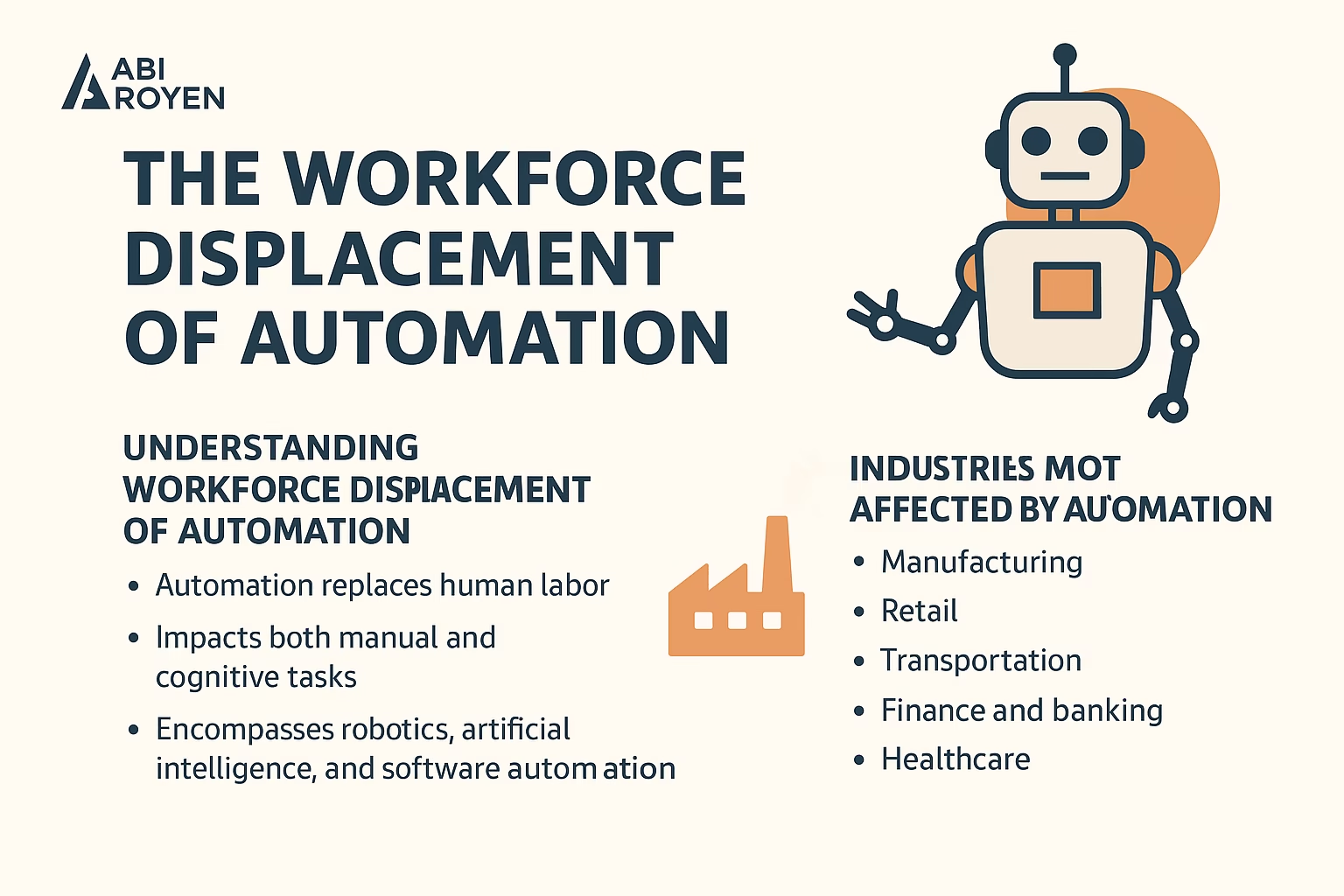
- Change Management – Employees may resist changes due to fear of job loss or unfamiliarity with new technologies.
- Process Complexity – Some business processes are too complex or dynamic to be fully automated.
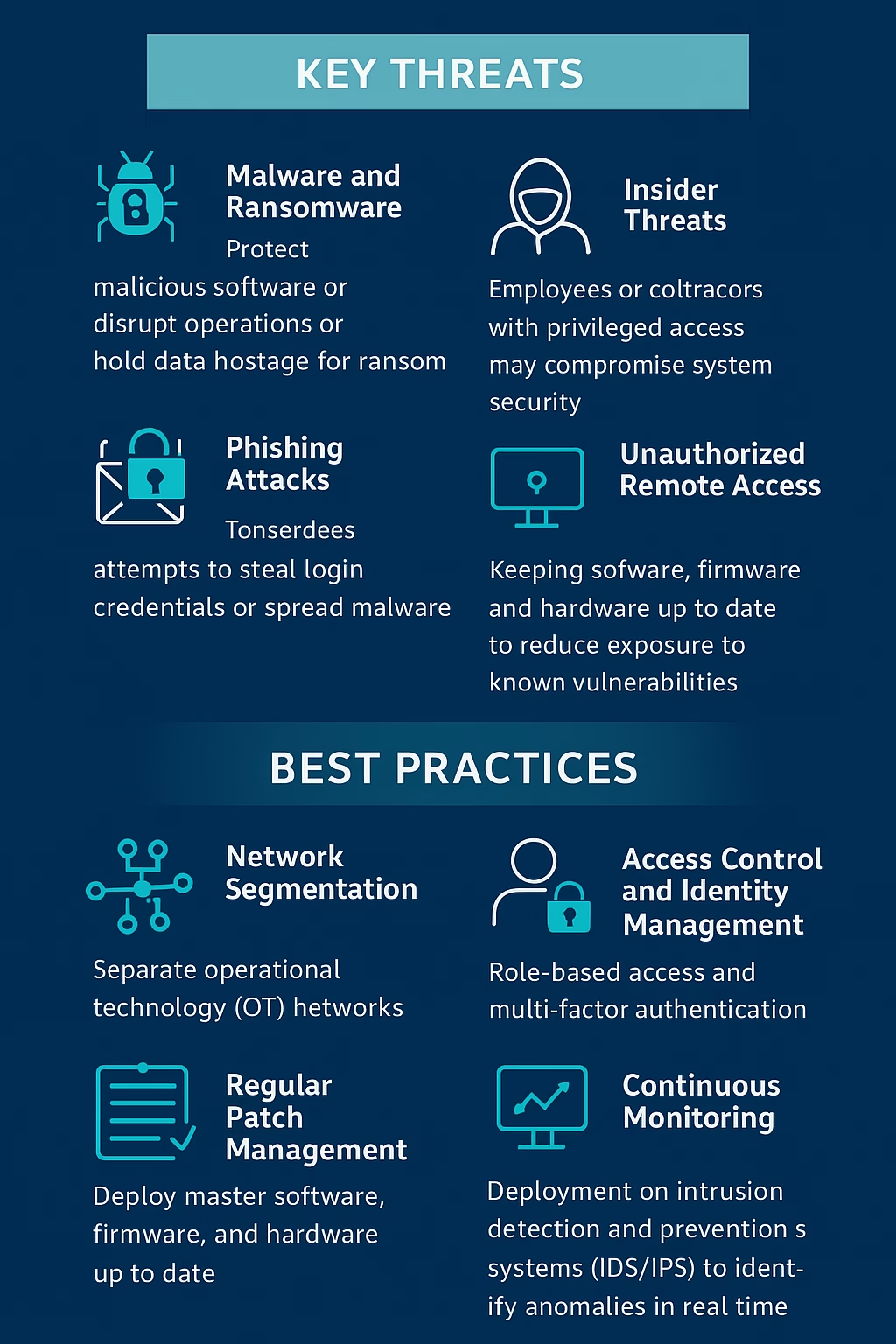
- Data Security Risks – As BPA relies on data exchange, ensuring security and compliance becomes critical.
To overcome these challenges, organizations must start with pilot projects, provide adequate training, and gradually scale automation initiatives.
Future Trends in Business Process Automation (BPA)
The future of BPA is strongly tied to emerging technologies such as:
- Artificial Intelligence (AI) & Machine Learning – Enhancing automation with predictive analytics and decision-making capabilities.
- Cloud-Based Automation – Allowing businesses to automate processes remotely with greater scalability and flexibility.
- Hyperautomation – A combination of BPA, RPA, AI, and analytics to automate as many processes as possible.
- No-Code/Low-Code Platforms – Enabling non-technical users to build and deploy automation solutions quickly.
Businesses that embrace these trends will gain a competitive edge in the digital economy.
Conclusion
Business Process Automation (BPA) is no longer a luxury but a necessity for businesses striving for efficiency and competitiveness. By automating repetitive tasks, organizations can reduce costs, improve accuracy, and deliver superior customer experiences.
While challenges exist, the benefits of BPA far outweigh the drawbacks. As technology continues to evolve, BPA will play an even more crucial role in shaping the future of business operations.
Companies that start implementing automation today will be better prepared for the digital transformation of tomorrow.