What Research and Development (R&D) ~ In today’s fast-paced and competitive world, innovation is no longer a luxury—it is a necessity. At the core of innovation lies Research and Development (R&D), a fundamental driver of progress across industries. From creating life-saving medicines to improving smartphone technology, R&D plays a crucial role in shaping our world.
But what exactly is R&D? Why is it so vital for companies, governments, and educational institutions? This comprehensive guide will walk you through the definition, types, processes, benefits, and challenges of R&D, providing you with a complete understanding of its significance in both business and society.
What Research and Development (R&D)?
Research and Development (R&D) refers to a series of investigative and creative activities undertaken by organizations to improve existing products, create new products, or develop new technologies and processes. It serves as a bridge between innovation and practical application.
While often associated with science and technology, R&D is present in various sectors such as:
- Pharmaceuticals
- Automotive
- Electronics
- Manufacturing
- Software and IT
- Agriculture
- Energy and Environment
Key Characteristics of R&D:
- Long-term investment with uncertain outcomes
- Knowledge creation and application
- High risk, high reward
- Focus on innovation and competitiveness
Types of R&D
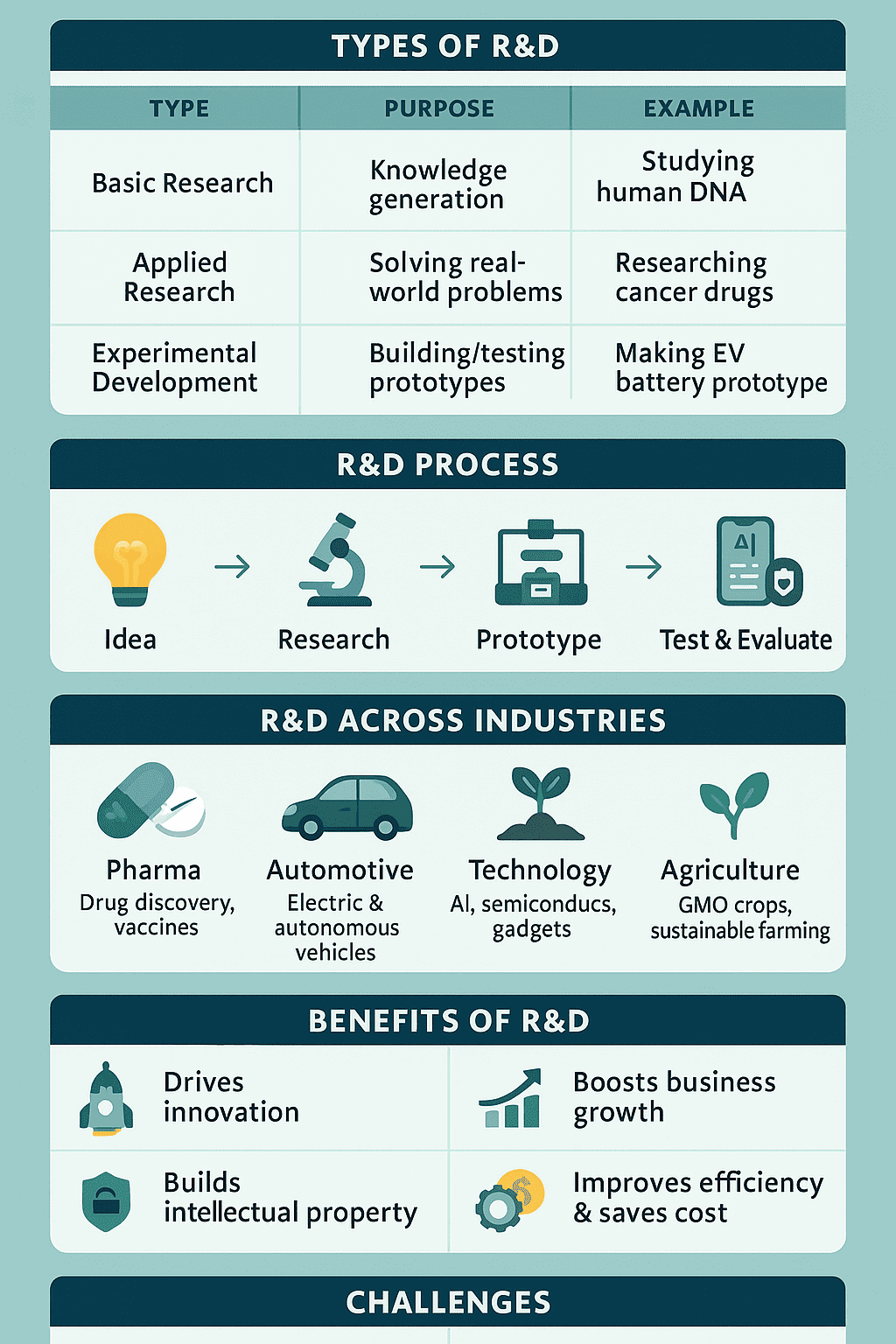
R&D is generally divided into three main categories:
1. Basic Research
Basic research aims to expand general knowledge and understanding without immediate commercial objectives. It is driven by curiosity and the desire to explore unknown areas of science or technology.
Example: Studying quantum mechanics to understand how particles behave at the subatomic level.
2. Applied Research
Applied research focuses on solving specific problems and has clear practical goals. It is often used to develop new products or enhance existing ones.
Example: Researching better battery materials to improve electric vehicle performance.
3. Experimental Development
This type involves using research findings to develop or improve products, processes, or services. It’s closer to the production stage and typically includes prototyping and testing.
Example: Creating a prototype of a new smartphone model based on applied research in display technology.
What Research and Development (R&D) Important?
R&D offers both strategic and economic value to organizations and countries. Here’s why it’s critical:
1. Drives Innovation
Without R&D, there is no innovation. It fuels the development of new technologies, products, and services that give companies a competitive edge.
2. Boosts Economic Growth
Nations that invest in R&D often experience higher levels of GDP growth, job creation, and global influence.
3. Improves Efficiency
R&D can streamline manufacturing processes, reduce waste, and optimize supply chains—leading to cost savings.
4. Supports Customer Satisfaction
Innovative products that meet evolving customer needs are often the result of extensive R&D.
5. Builds Intellectual Property (IP)
Through R&D, companies can generate patents, trademarks, and proprietary technologies that protect and monetize their innovations.
What Research and Development (R&D) Process: From Idea to Innovation
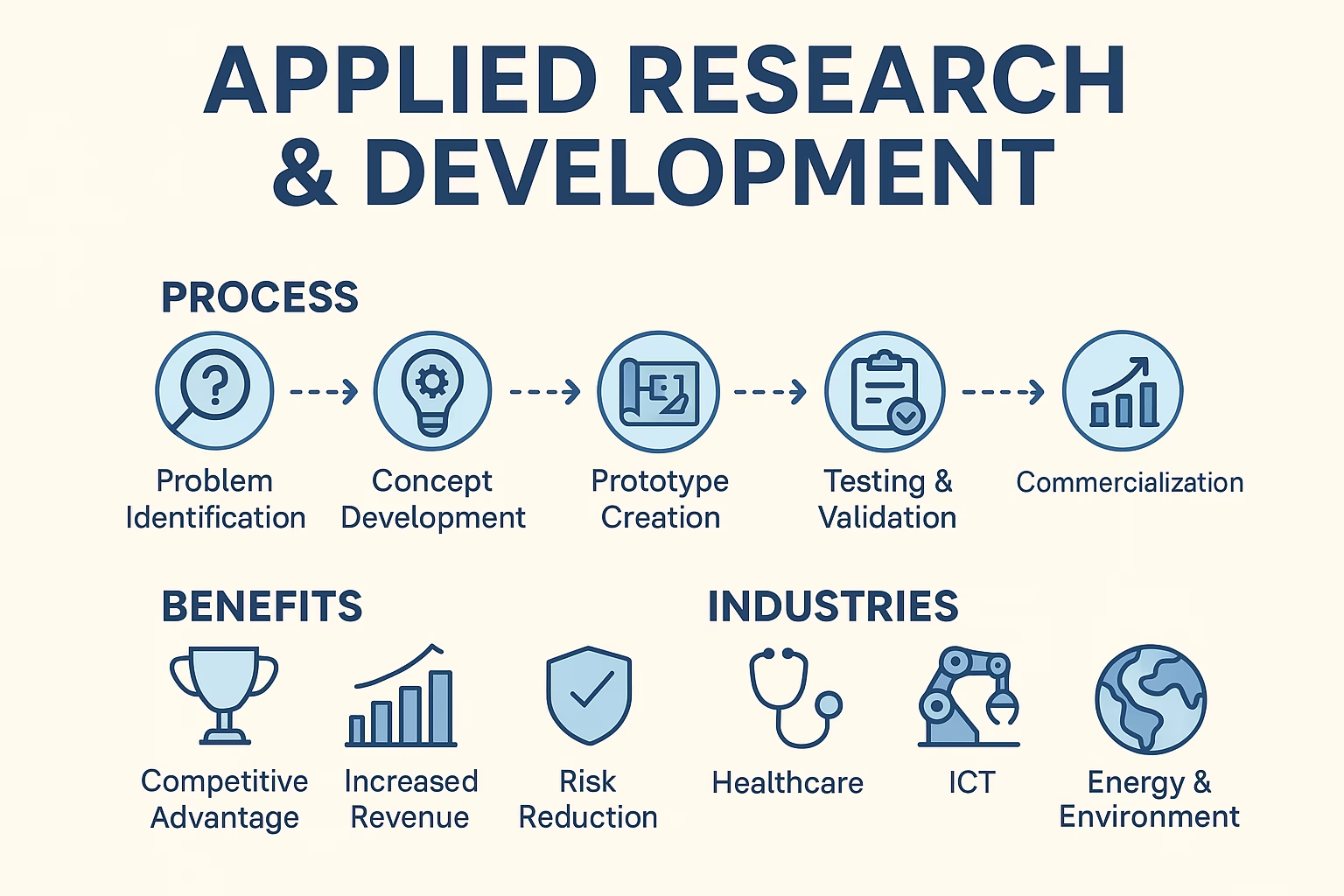
Although R&D processes vary by industry and organization, the typical cycle involves the following steps:
- Problem Identification
- Recognizing a need or opportunity
- Research Phase
- Conducting studies, gathering data, exploring alternatives
- Concept Development
- Creating initial concepts or hypotheses
- Design and Experimentation
- Designing prototypes, running tests
- Evaluation
- Analyzing test results, refining the product or process
- Commercialization
- Bringing the final product to market
Each step may require cross-functional collaboration involving engineers, scientists, designers, analysts, and marketers.
What Research and Development (R&D) Across Industries
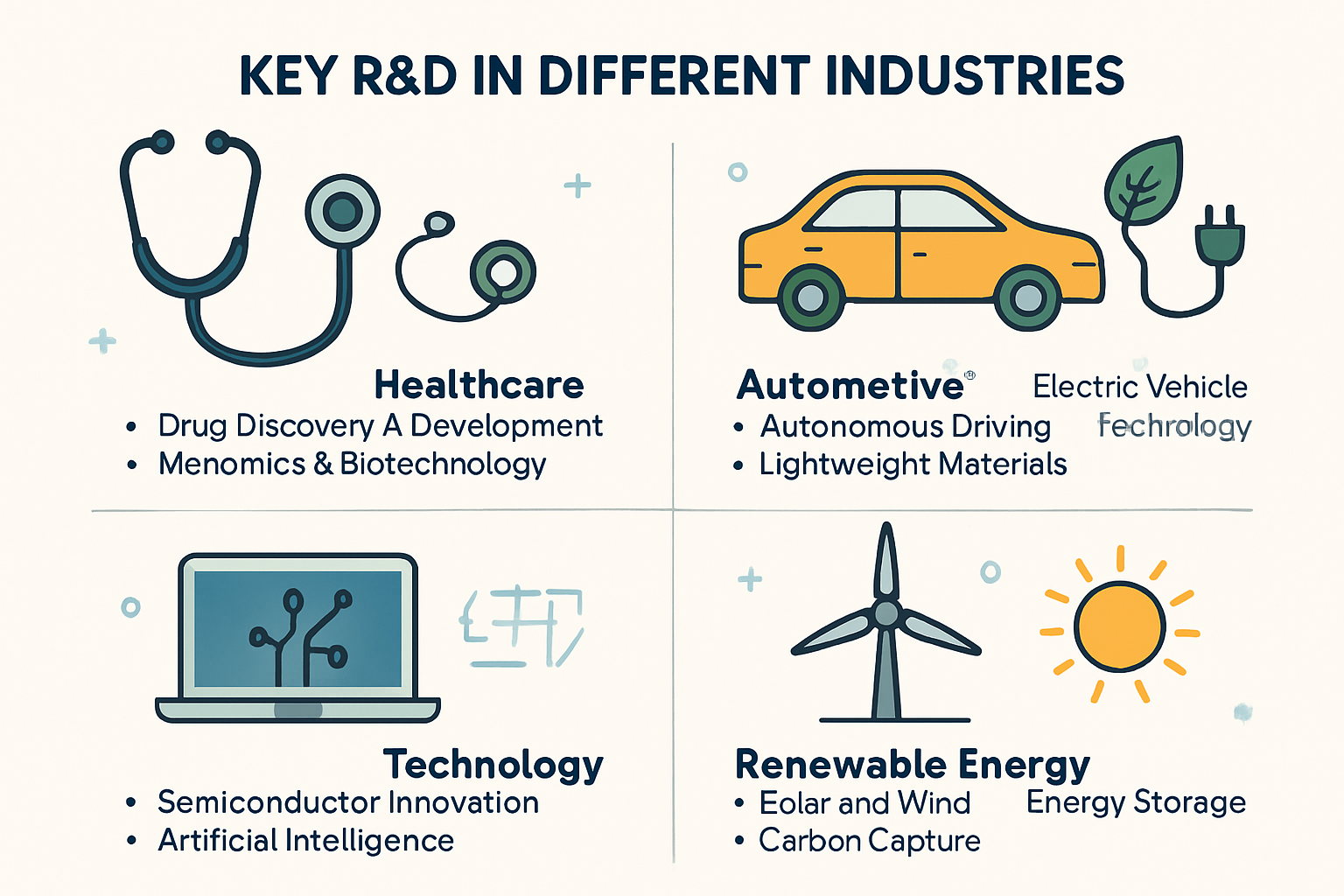
Let’s take a closer look at how R&D impacts different sectors:
🔬 Pharmaceutical Industry
- Drug discovery and development
- Vaccine research
- Clinical trials
🚗 Automotive Industry
- Autonomous vehicle technology
- Fuel efficiency and electric drivetrains
- Safety innovations
📱 Technology and Electronics
- AI and machine learning
- Semiconductor development
- Consumer electronics design
🌱 Agriculture
- Genetically modified crops
- Sustainable farming techniques
- Soil and pest control research
R&D Investment: How Much is Enough?
Global companies like Apple, Google, Samsung, and Pfizer spend billions annually on R&D. In fact, R&D expenditure is often a key performance indicator (KPI) for innovation-driven businesses.
Key Metrics to Watch:
- R&D Intensity: R&D spending as a percentage of revenue
- Number of Patents Filed
- Time-to-Market for Innovations
- Return on R&D Investment (ROI)
While there’s no one-size-fits-all approach, the best strategy balances risk, potential, and available resources.
Government and Public Sector Involvement in R&D
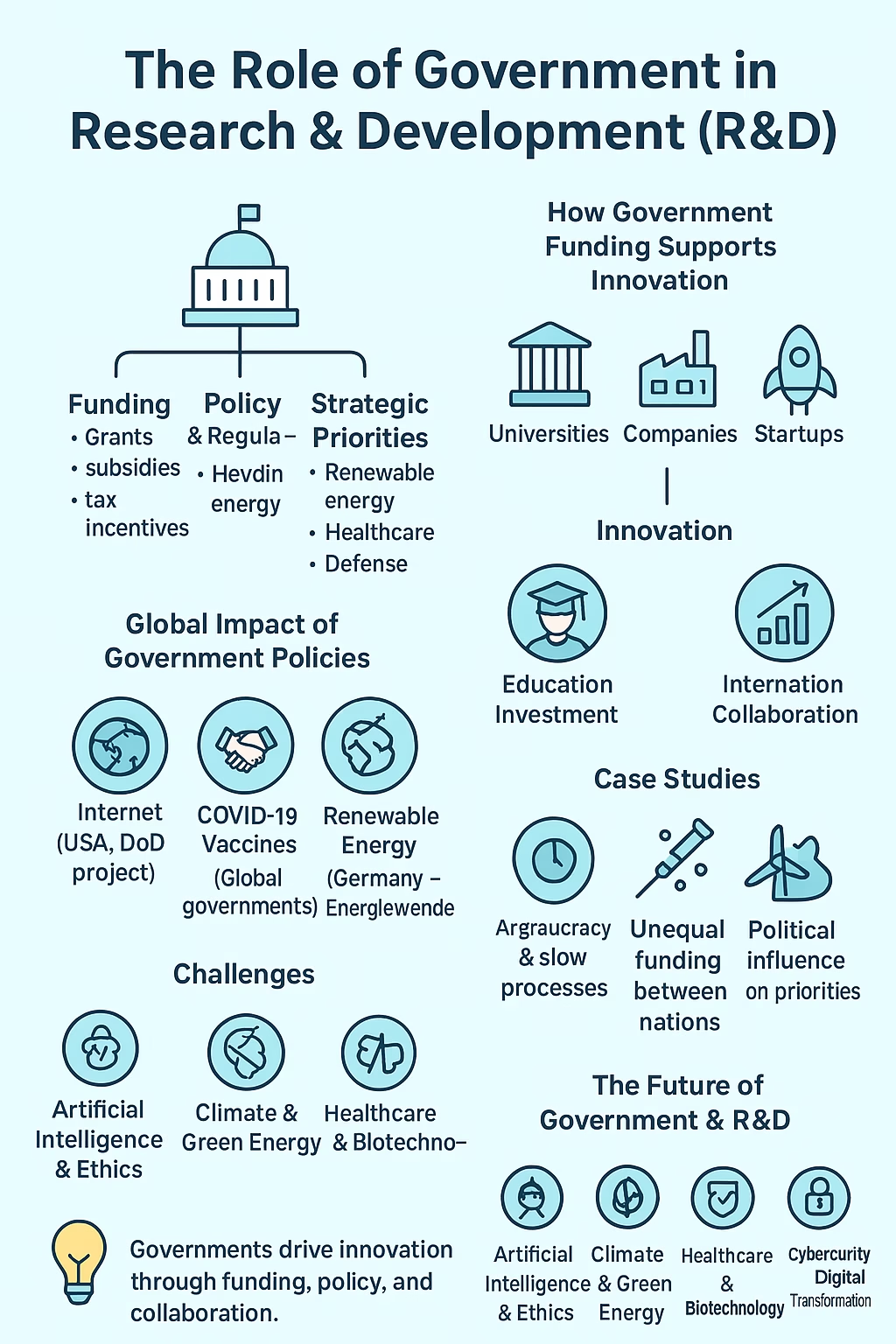
Governments also play a critical role by:
- Funding research at universities and national labs
- Offering tax incentives for R&D activities
- Collaborating with private sectors on large-scale innovation projects
For example, NASA’s R&D programs have led to countless technological spinoffs used in everyday life—from water filtration systems to memory foam.
Challenges in R&D
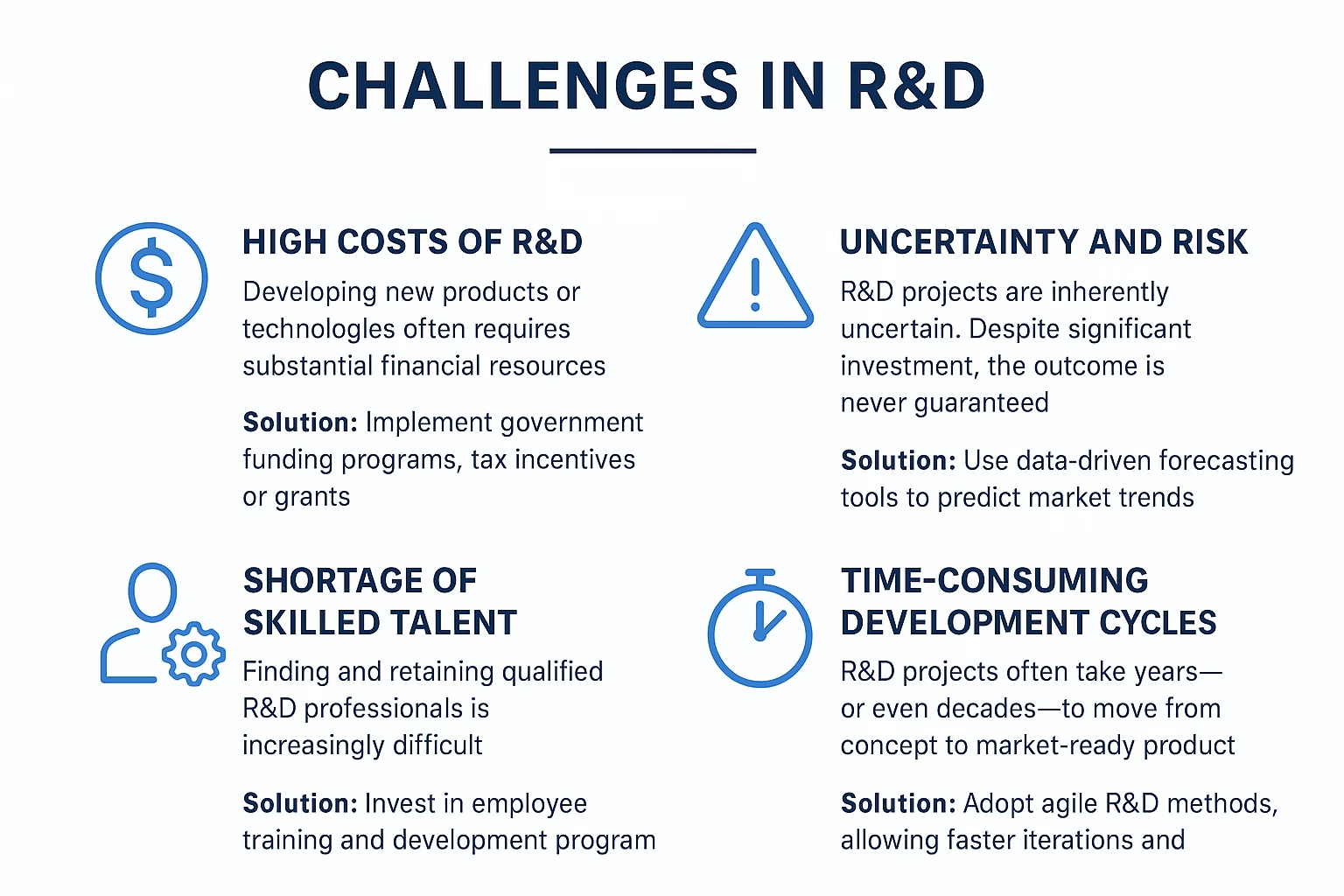
Despite its benefits, R&D comes with notable challenges:
- High Costs: Long-term investments that may not yield immediate returns
- Uncertainty: High risk of failure or market rejection
- Intellectual Property Theft: Loss of competitive advantage if not protected
- Talent Shortage: Difficulty in finding skilled researchers and engineers
- Regulatory Barriers: Especially in pharmaceuticals, biotech, and energy
To overcome these challenges, organizations often form R&D partnerships, outsource specialized work, or co-innovate with universities.
The Future of R&D
As we move into an era shaped by Artificial Intelligence, quantum computing, climate change, and global health crises, the role of R&D will only grow.
Key future trends include:
- AI-powered R&D platforms for faster experimentation
- Sustainable R&D with green technologies
- Decentralized R&D through global collaboration and remote innovation
- Digital Twins and Simulation for safer, cost-effective prototyping
Companies that adapt to these trends will not only survive but thrive in the future innovation economy.
Conclusion of What Research and Development (R&D)
Research and Development is the heartbeat of progress. Whether you’re a business leader, engineer, investor, or student, understanding R&D helps you appreciate the unseen effort behind every great product and breakthrough.
At Abi Royen, we believe in highlighting the processes and technologies that shape our future. By investing in and supporting R&D, we empower innovation, economic growth, and a better world.