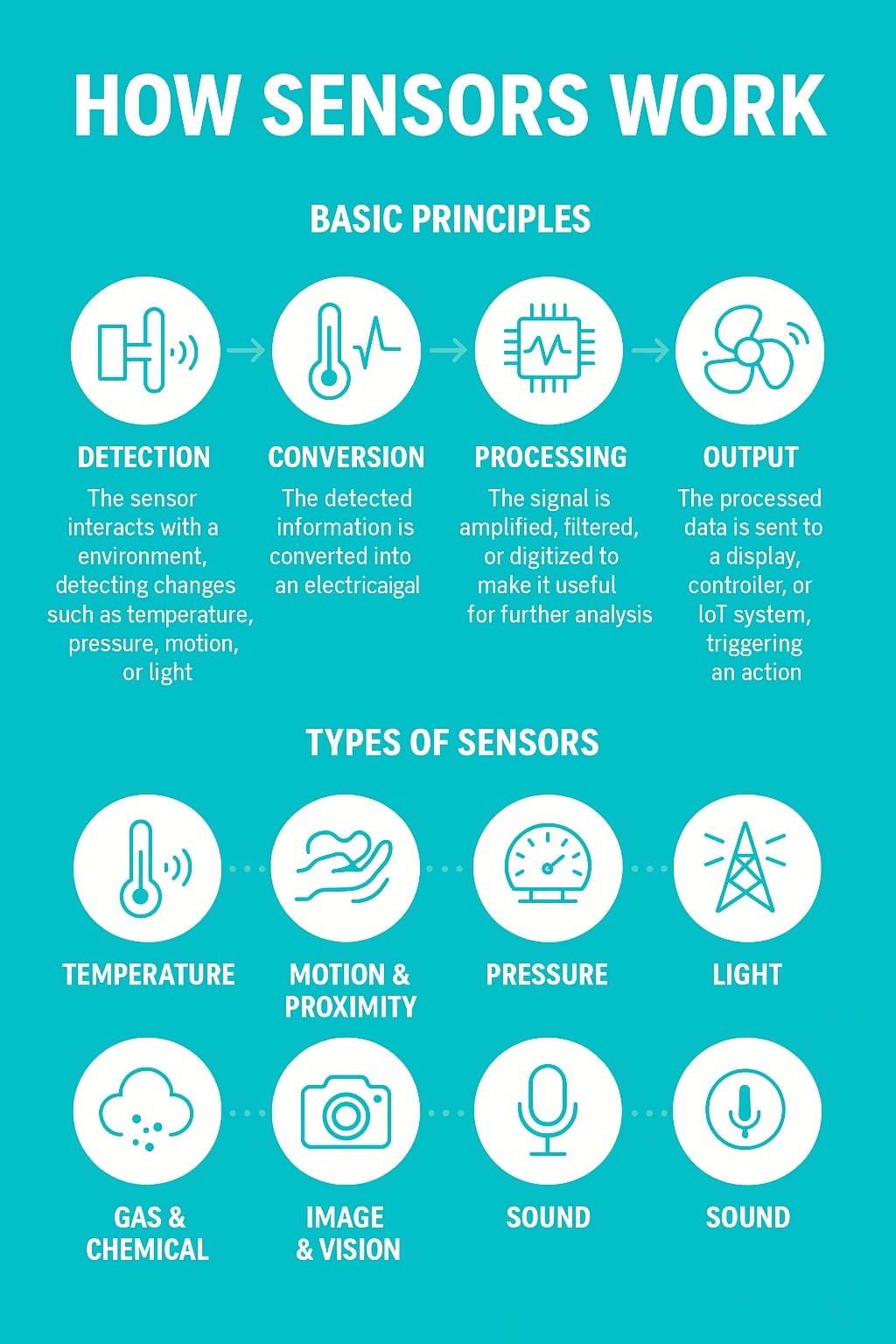
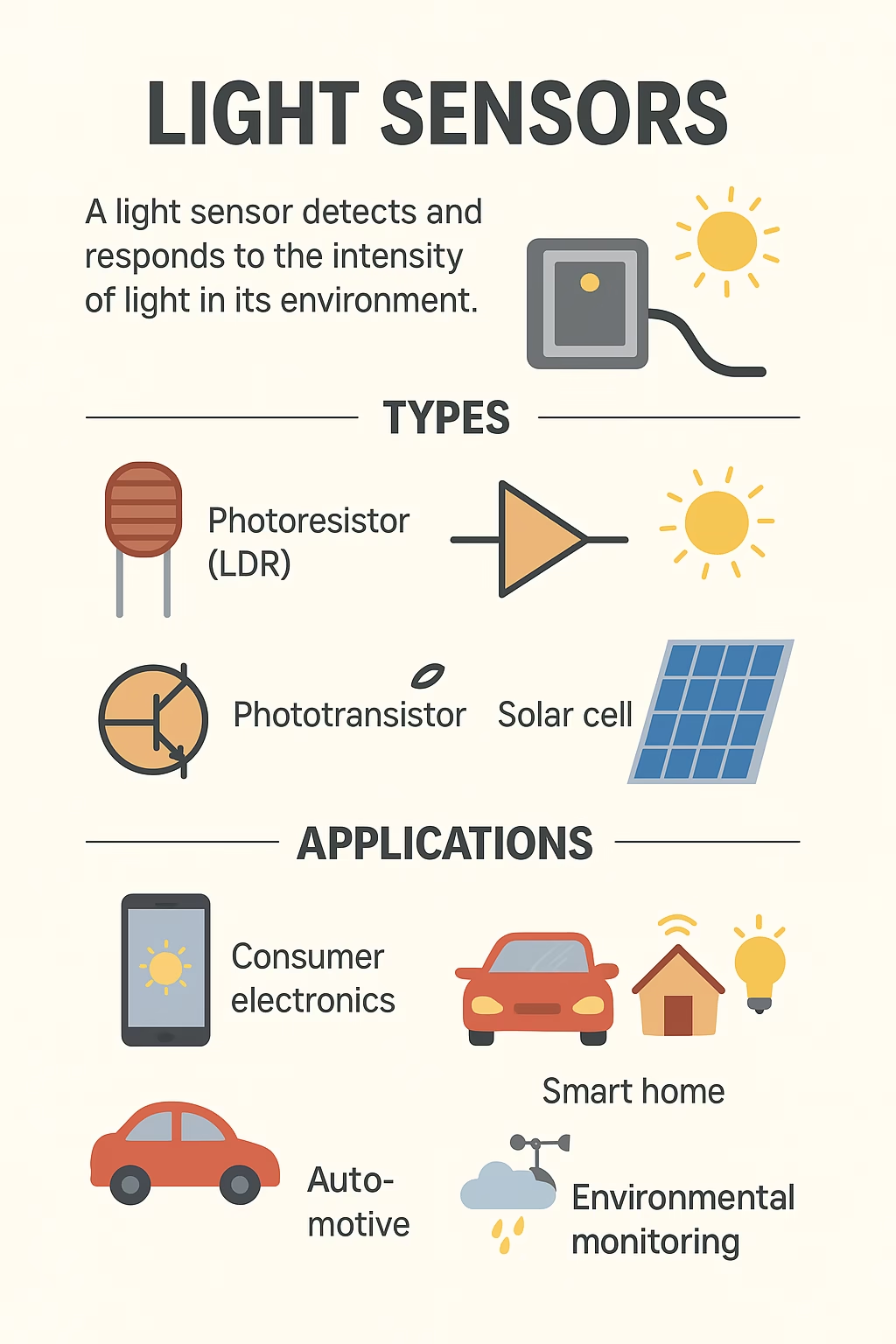
Pressure measurement plays a vital role in a wide range of industries, from manufacturing and automotive to aerospace and healthcare. Among the various types of pressure sensors, absolute pressure sensors are essential for applications where precise pressure measurement relative to a perfect vacuum is required. These sensors provide reliable data in critical processes and help ensure safety, efficiency, and performance.
In this article, we will explore what absolute pressure sensors are, how they work, their core applications, and why they are crucial for modern industrial and scientific environments.
What is an Absolute Pressure Sensors?
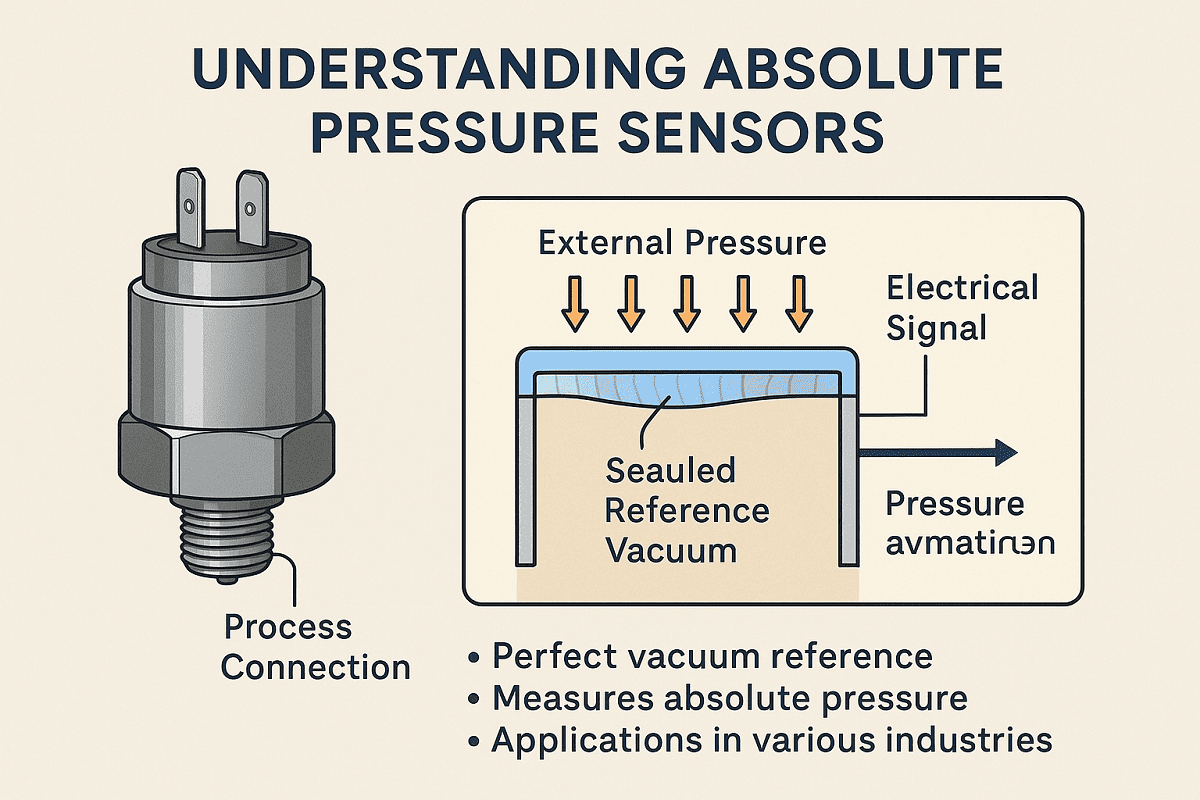
An absolute pressure sensor is a device that measures pressure relative to a perfect vacuum (0 psi or 0 bar). Unlike gauge pressure sensors that reference atmospheric pressure, absolute pressure sensors use a sealed reference vacuum within the sensor housing, allowing them to deliver readings that are unaffected by barometric changes or environmental conditions.
The reference vacuum inside the sensor serves as a baseline, ensuring accurate and consistent readings regardless of the surrounding air pressure.
How Absolute Pressure Sensors Work
The working principle of absolute pressure sensors involves the use of a sealed reference chamber that contains a vacuum. The sensor typically uses a pressure-sensitive diaphragm made from materials like silicon, stainless steel, or ceramic. When external pressure is applied, the diaphragm deflects. This deflection is measured using different transduction methods such as:
- Piezoresistive
- Capacitive
- Strain Gauge
- Optical
- Resonant Frequency
The measured deflection is then converted into an electrical signal proportional to the absolute pressure.
Key Characteristics Absolute Pressure Sensors:
- Reference: Perfect vacuum (0 bar or 0 psi)
- Output: Absolute pressure regardless of atmospheric changes
- High accuracy for scientific and critical processes
Absolute Pressure Sensors vs. Gauge Pressure vs. Differential Pressure
| Type | Reference Point | Usage Example |
|---|---|---|
| Absolute Pressure | Perfect vacuum | Spacecraft systems, weather stations |
| Gauge Pressure | Atmospheric pressure | Tire pressure, blood pressure |
| Differential Pressure | Two separate pressure inputs | Flow measurement, filtration systems |
Understanding the differences is critical when selecting the right sensor for your application.
Applications of Absolute Pressure Sensors
Absolute pressure sensors are widely used in environments that demand precision, stability, and reliability in pressure measurement. Here are some major application areas:
1. Aerospace and Aviation
Aircraft systems require precise pressure data for altitude monitoring, cabin pressurization, and weather instruments. Absolute pressure sensors offer the needed accuracy at varying altitudes where atmospheric pressure fluctuates drastically.
2. Weather Monitoring and Meteorology
Barometric pressure is measured using absolute pressure sensors to monitor weather changes. These sensors help predict storms, track weather systems, and contribute to climate studies.
3. Automotive Industry
In modern vehicles, absolute pressure sensors are used in manifold absolute pressure (MAP) sensors to control fuel injection and improve engine efficiency.
4. Vacuum Systems and Semiconductor Manufacturing
In vacuum chambers, especially in cleanrooms or semiconductor fabs, absolute pressure sensors ensure accurate control of extremely low pressures to maintain product integrity.
5. Medical and Laboratory Equipment
Applications like blood analyzers, autoclaves, and respiratory machines rely on absolute pressure sensors to deliver safe and reliable operation.
6. Space Exploration
Absolute pressure sensors are used in satellites, spacecraft, and launch systems to monitor conditions in environments where reference to atmospheric pressure is irrelevant.
Benefits of Using Absolute Pressure Sensors
Absolute pressure sensors offer several advantages over other sensor types:
✅ High Accuracy and Stability
Because they use a perfect vacuum as a reference, these sensors are less affected by changes in environmental pressure or altitude.
✅ Suitable for Vacuum Measurements
They are ideal for low-pressure and vacuum environments where standard gauge sensors would not provide reliable data.
✅ Wide Operating Range
Absolute sensors can operate under extreme conditions, including very high or very low pressures, making them versatile across different industries.
✅ Improved Process Control
In precision applications like gas flow monitoring and chemical processing, using absolute pressure sensors enhances control and quality assurance.
Factors to Consider When Choosing an Absolute Pressure Sensor
Before selecting an absolute pressure sensor for your application, consider the following factors:
- Pressure Range: Ensure the sensor supports your specific measurement range.
- Media Compatibility: Select materials that can withstand the media (gas, liquid, corrosive chemicals).
- Output Type: Choose between analog (voltage/current) or digital (I2C/SPI/Modbus) outputs.
- Accuracy Requirements: Ensure the sensor meets the required tolerances and standards.
- Temperature Range: Consider the sensor’s operating temperature range for your application.
Examples of Absolute Pressure Sensor Models
Some well-known manufacturers and models include:
- Honeywell TruStability HSC Series
- Bosch BMP388 (for consumer electronics and drones)
- TE Connectivity 86A Series
- Sensata P1A Series
Each model caters to different industry needs, from high-performance industrial sensors to compact, low-power units for mobile devices.
Conclusion
Absolute pressure sensors play a crucial role in modern measurement systems where precision and stability are non-negotiable. Whether monitoring altitude in an aircraft, managing vacuum systems in semiconductor production, or controlling fuel injection in automotive engines, these sensors ensure accurate and reliable pressure data.
As industries continue to demand greater precision and automation, the importance of absolute pressure sensors will only increase. Selecting the right sensor tailored to your specific application is essential for performance, safety, and efficiency.
✅ Want to Learn More?
Explore high-quality pressure sensors and instrumentation solutions at Abi Royen – your trusted partner in industrial technology.