In an increasingly digitized and automated world, sensors play a pivotal role in ensuring seamless operations across industries. Among the various types of sensors used today, pressure sensors are particularly vital. They are used in everything from smartphones and medical devices to industrial machinery and aerospace engineering.
This article provides a comprehensive overview of pressure sensors — exploring how they work, the different types available, their applications, and what the future holds for this essential technology.
What is a Pressure Sensor?
A pressure sensor is a device that measures the pressure of gases or liquids. It converts the physical pressure into an electrical signal that can be interpreted, recorded, or acted upon by a control system.
Pressure is defined as the force applied per unit area, and it is commonly measured in units such as pascals (Pa), bar, psi (pounds per square inch), or atmospheres (atm).
How Pressure Sensors Work
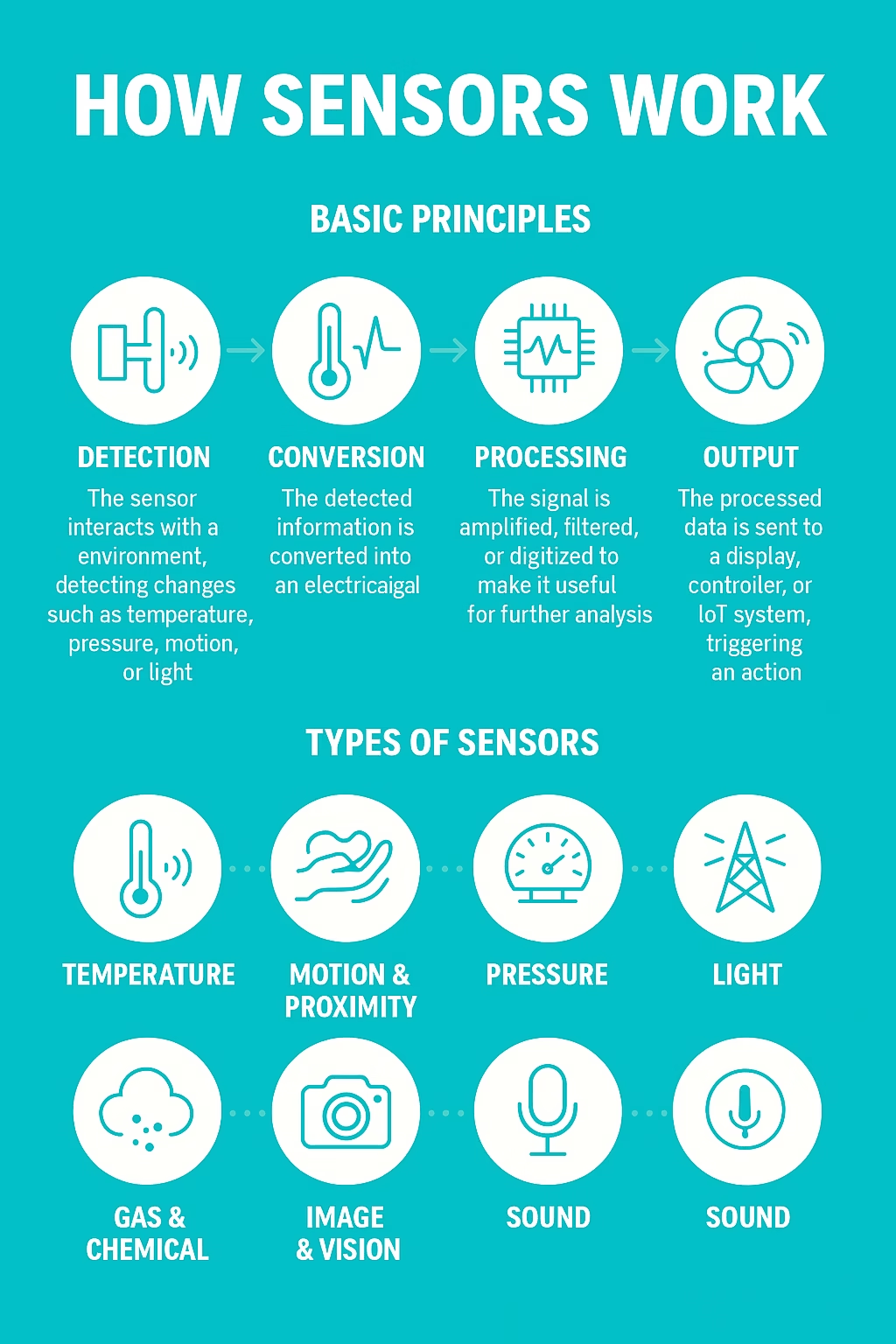
Most pressure sensors function by detecting physical changes in a sensing element (like a diaphragm) due to applied pressure. These changes are then converted into electrical signals. This process generally involves:
- Sensing Element – Detects the pressure and deforms based on force.
- Transduction Mechanism – Converts the deformation into an electrical signal.
- Signal Conditioning – Amplifies, filters, or converts the signal into a usable form.
Common mechanisms used in pressure sensors include:
- Piezoresistive effect
- Capacitive sensing
- Optical methods
- Strain gauges
Types of Pressure Sensors
Pressure sensors can be categorized in various ways depending on their measurement method and application. The most common classifications include:
1. Absolute Pressure Sensors
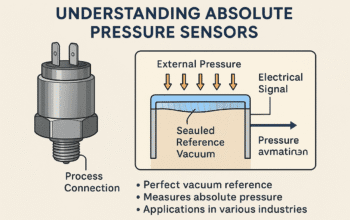
These measure pressure relative to a perfect vacuum. They are used in applications requiring high precision, such as altimeters and scientific instruments.
2. Gauge Pressure Sensors
Measure pressure relative to atmospheric pressure. These are widely used in automotive and industrial systems.
3. Differential Pressure Sensors
Measure the difference between two pressure points. Essential in applications like HVAC systems, flow measurements, and filter monitoring.
4. Sealed Pressure Sensors
These sensors measure pressure relative to a fixed reference, often a sealed atmosphere. Ideal for harsh environments like underwater or high-altitude applications.
5. Digital Pressure Sensors
Provide digital output, often used in microcontroller-based systems like wearable devices and IoT systems.
Key Applications of Pressure Sensors
1. Automotive Industry
Pressure sensor are integral in modern vehicles. They monitor tire pressure, engine oil pressure, and fuel system pressure, ensuring optimal performance and safety.
2. Industrial Automation
In manufacturing plants and factories, pressure sensors help regulate pneumatic systems, monitor process control, and ensure equipment safety.
3. Healthcare and Medical Devices
Devices like ventilators, blood pressure monitors, and infusion pumps rely heavily on accurate pressure sensing for patient safety and diagnostics.
4. Consumer Electronics
Smartphones and wearable devices often include miniature pressure sensor for applications like altitude measurement, weather forecasting, or indoor navigation.
5. Aerospace and Defense
Aircraft require high-accuracy pressure sensors for altitude monitoring, cabin pressure control, and fluid system management.
6. Environmental Monitoring
Used to detect atmospheric pressure changes for weather stations and natural disaster prediction systems.
7. Oil & Gas Industry
Pressure sensor are critical for monitoring underground pressure during drilling and extraction, ensuring safety and efficiency.

Benefits of Using Pressure Sensors
- Real-time monitoring: Enables proactive decision-making.
- Automation support: Essential for Industry 4.0 and smart factories.
- Accuracy: Ensures systems perform within safe and optimal ranges.
- Safety: Early detection of abnormal pressure prevents accidents.
- Efficiency: Helps optimize processes and reduce operational costs.
Choosing the Right Pressure Sensor
When selecting a pressure sensor for an application, several factors must be considered:
- Range of measurement
- Accuracy and sensitivity
- Environmental conditions (temperature, humidity, corrosion)
- Output type (analog, digital)
- Size and mounting compatibility
- Cost vs. performance trade-offs
Understanding the operational requirements is critical to choosing the appropriate sensor.
Emerging Trends in Pressure Sensor Technology
With the rise of the Internet of Things (IoT) and smart manufacturing, pressure sensors are evolving rapidly. Here are a few notable trends:
1. Miniaturization
Micro-Electro-Mechanical Systems (MEMS) technology allows for smaller, more energy-efficient pressure sensor suitable for wearable devices and compact electronics.
2. Wireless Connectivity
Modern pressure sensors increasingly feature wireless communication (Bluetooth, Wi-Fi, LoRa) for remote monitoring and control.
3. Energy Harvesting
Some pressure sensor are now capable of harvesting energy from vibrations or environmental heat, reducing dependency on batteries.
4. AI-Integrated Sensors
Integration with machine learning and AI enables predictive maintenance and anomaly detection in industrial applications.
5. Environmental Sustainability
Eco-friendly materials and energy-efficient designs are gaining popularity in sensor manufacturing, aligning with green technology goals.
Conclusion
Pressure sensors are indispensable components in modern technology. From ensuring safety in aerospace to enabling advanced diagnostics in healthcare, their applications are vast and continually growing. As we move into a future dominated by automation, connectivity, and sustainability, pressure sensor will play a more crucial role than ever before.
For businesses and engineers, understanding how these sensors work and how to select the right type is essential for system optimization and innovation.
Stay updated with sensor technology trends by following Abi Royen — your trusted source for engineering and industrial insights.