


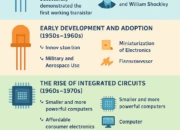
History and development transistor, from its invention in the mid-20th century to its role in powering modern electronics, computing, and communications.
Semiconductor Devices
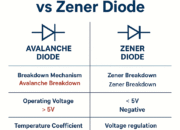
Avalanche Diode: Working Principle, Applications, and Benefits in Modern Electronics
Avalanche Diode: working principle, characteristics, advantages, applications in modern electronics. Crucial for voltage regulation and protection.
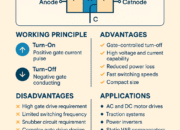
Gate Turn-Off Thyristor (GTO): Working Principle, Applications, and Advantages
Gate Turn-Off Thyristor (GTO)
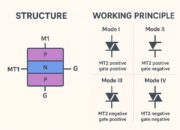
Understanding TRIAC (Triode for Alternating Current): Structure, Working Principle, and Applications
TRIAC (Triode Alternating Current)
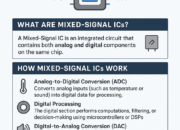
Mixed-Signal ICs: Bridging the Gap Between Analog and Digital Electronics
Introduction In modern electronics, devices often need to process both continuous analog signals and discrete digital signals. Mixed-Signal Integrated Circuits (ICs) have emerged as a vital solution, combining analog and digital circuitry into a single chip. These ICs enable seamless interaction between the physical world, which is inherently analog, and the digital systems that process and store data. From smartphones…
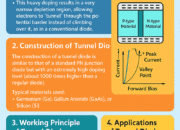
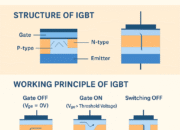
Understanding IGBT (Insulated Gate Bipolar Transistor): Working Principle, Applications, and Advantages
IGBT (Insulated Gate Bipolar Transistor)
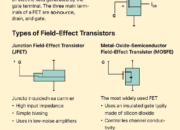
Understanding Field-Effect Transistors (FET): Types, Working Principle, and Applications
Field-Effect Transistors (FET)
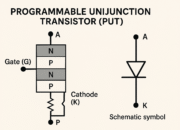
Programmable Unijunction Transistors (PUT): Structure, Operation, and Applications
Programmable Unijunction Transistors (PUT)
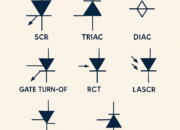
Types of Thyristors: A Complete Guide to Their Classifications and Functions
Types of Thyristors
No More Posts Available.
No more pages to load.