Introduction of Technological Advancements in Radio
Technological Advancements in Radio ~ Radio has been one of the most transformative inventions in modern history, shaping the way humans communicate, share information, and consume entertainment. Since its first introduction in the late 19th century, radio technology has evolved dramatically. What started as simple analog signals has now advanced into complex digital systems, satellite communications, and internet radio streaming.
This article explores the technological advancements in radio, highlighting the journey from early analog systems to the digital age, while also discussing its present innovations and future potential in a world dominated by fast-paced communication technologies.
The Early Days of Radio Technology
The invention of radio dates back to Guglielmo Marconi in the 1890s, who demonstrated the ability to transmit signals wirelessly. These early transmissions used amplitude modulation (AM), which allowed voice and music to be broadcasted over long distances.
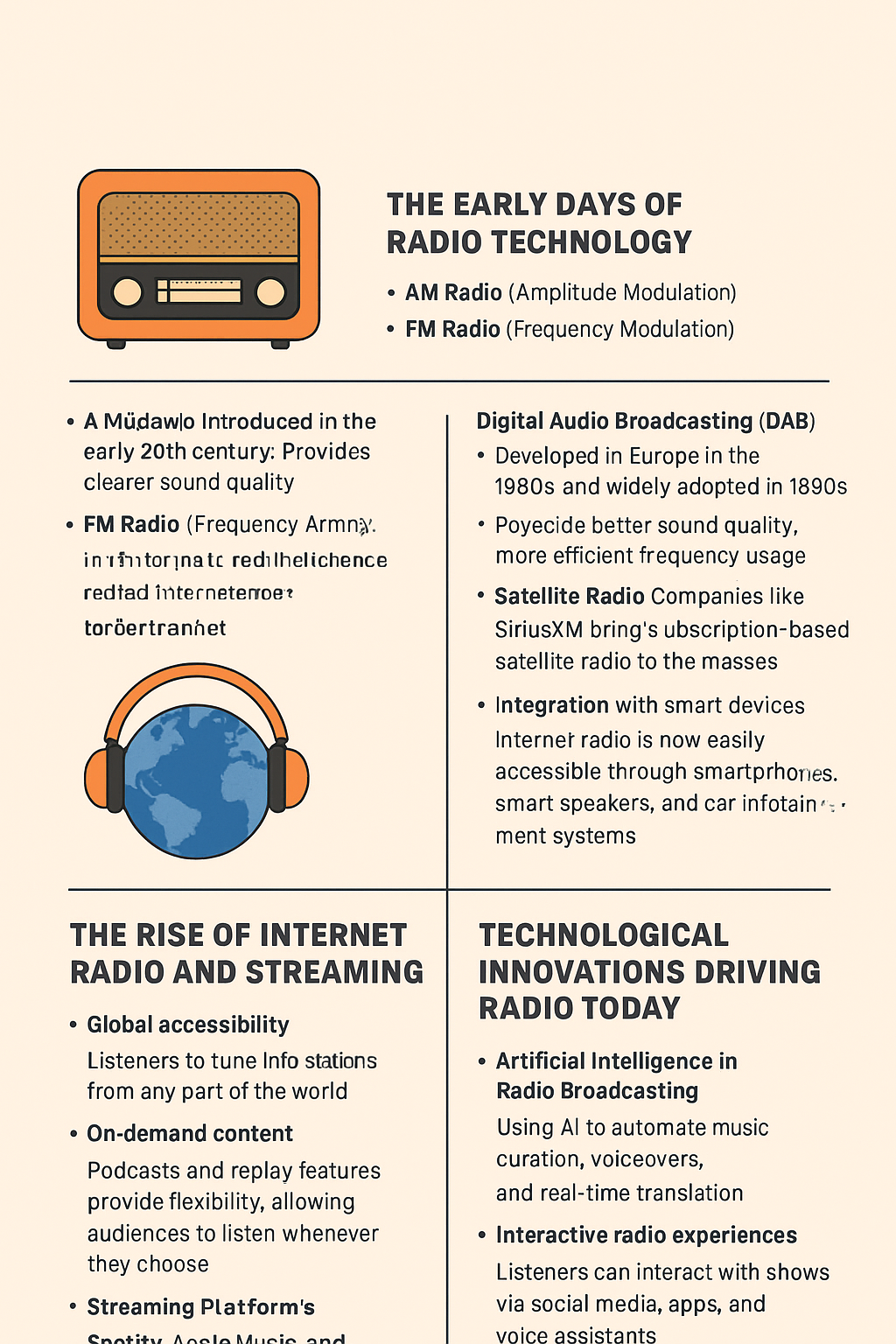
- AM Radio (Amplitude Modulation): Introduced in the early 20th century, AM radio became the first major method of audio broadcasting. It was capable of reaching large audiences, but the sound quality was limited and susceptible to interference.
- FM Radio (Frequency Modulation): Invented by Edwin Howard Armstrong in the 1930s, FM provided clearer sound quality and reduced interference, revolutionizing music broadcasting and entertainment.
These analog technologies laid the foundation for what would later become a vast, global industry.
Transition to Digital Broadcasting
As technology advanced in the late 20th century, radio began shifting from analog to digital broadcasting. This transition addressed limitations in sound quality, frequency congestion, and broadcasting efficiency.
Key Developments in Digital Radio:
- Digital Audio Broadcasting (DAB):
- Developed in Europe in the 1980s and widely adopted in the 1990s.
- Offers better sound quality, more efficient frequency usage, and the ability to transmit additional information such as song titles, station logos, and traffic updates.
- HD Radio:
- Popular in the United States.
- Allows simultaneous analog and digital broadcasting, giving listeners a choice between traditional and high-quality digital sound.
- Satellite Radio:
- Companies like SiriusXM brought subscription-based satellite radio to the masses.
- Provides access to hundreds of channels covering music, news, talk shows, and sports without geographic limitations.
Digital radio made listening more personalized and reliable, ensuring the survival of radio in the digital media age.
The Rise of Internet Radio and Streaming
The internet revolution has changed nearly every industry, and radio is no exception. Internet radio and streaming platforms have expanded the boundaries of broadcasting far beyond traditional limits.
- Global Accessibility: Listeners can tune into stations from any part of the world, breaking the restrictions of terrestrial signals.
- On-Demand Content: Podcasts and replay features provide flexibility, allowing audiences to listen whenever they choose.
- Integration with Smart Devices: Internet radio is now easily accessible through smartphones, smart speakers, and car infotainment systems.
- Streaming Platforms: Services like Spotify, Apple Music, and Pandora combine music streaming with radio-like features, offering personalized playlists and algorithm-driven content.
Internet radio represents one of the most significant technological advancements in radio history, merging broadcasting with the digital ecosystem.
Technological Innovations Driving Radio Today
Modern radio technology has continued to evolve with the integration of AI, data analytics, and smart connectivity. Here are some key innovations shaping the industry:
- Artificial Intelligence in Radio Broadcasting
- AI is being used to automate music curation, voiceovers, and even real-time translation.
- Personalized radio experiences are created using machine learning algorithms.
- Interactive Radio Experiences
- Listeners can now interact with shows via social media, apps, and voice assistants.
- Two-way communication transforms radio from a passive medium into an engaging platform.
- Hybrid Radio
- Combines terrestrial broadcasting with internet connectivity.
- Offers seamless transitions between FM/DAB and online streaming.
- High-Definition Sound and Surround Broadcasting
- Enhanced audio technologies provide near-CD quality experiences.
- Particularly impactful in music, sports commentary, and live event broadcasting.
Impact of Technological Advancements in Radio
The progression of radio technology has influenced society in several ways:
- Education and Information: Radio remains a vital source of education and emergency alerts in remote regions.
- Entertainment Industry: It continues to be a powerful medium for music, talk shows, and live events.
- Global Connectivity: Digital and internet radio foster cross-cultural communication by allowing international broadcasts.
- Economic Impact: Advertising, subscription services, and streaming revenue make radio a multibillion-dollar industry.
Challenges Technological Advancements in Radio Modern Era
Despite its evolution, radio faces certain challenges:
- Competition with Podcasts and Streaming: Younger audiences are shifting to on-demand content.
- Monetization Issues: Traditional advertising models are struggling in the face of digital competition.
- Regulatory Hurdles: Different countries have varying regulations for digital spectrum allocation.
Still, radio continues to adapt and find relevance in the digital landscape.
The Future of Radio Technology
Looking ahead, radio is poised to integrate further with emerging technologies:
- 5G and Ultra-Fast Networks: Will enhance streaming quality, reduce latency, and support immersive radio experiences.
- Virtual Reality (VR) and Augmented Reality (AR): May open new forms of interactive audio experiences.
- Personalized Radio AI Hosts: Virtual DJs and AI-powered news readers could become mainstream.
- Green Broadcasting Technologies: Focus on energy-efficient transmitters and eco-friendly operations.
The future of radio lies in merging tradition with innovation, ensuring that this century-old medium continues to thrive in a digital-first world.
Conclusion of Technological Advancements in Radio
The journey of radio technology from analog AM/FM to digital, satellite, and internet-based platforms is a testament to human ingenuity and adaptability. Despite competition from newer media forms, radio has successfully reinvented itself through technological advancements.
Whether it is DAB, HD radio, satellite, or streaming services, each innovation reflects the resilience of radio as a communication medium. With continued integration of AI, 5G, and immersive experiences, the future of radio looks brighter than ever.