Introduction of Measuring and Monitoring Instruments
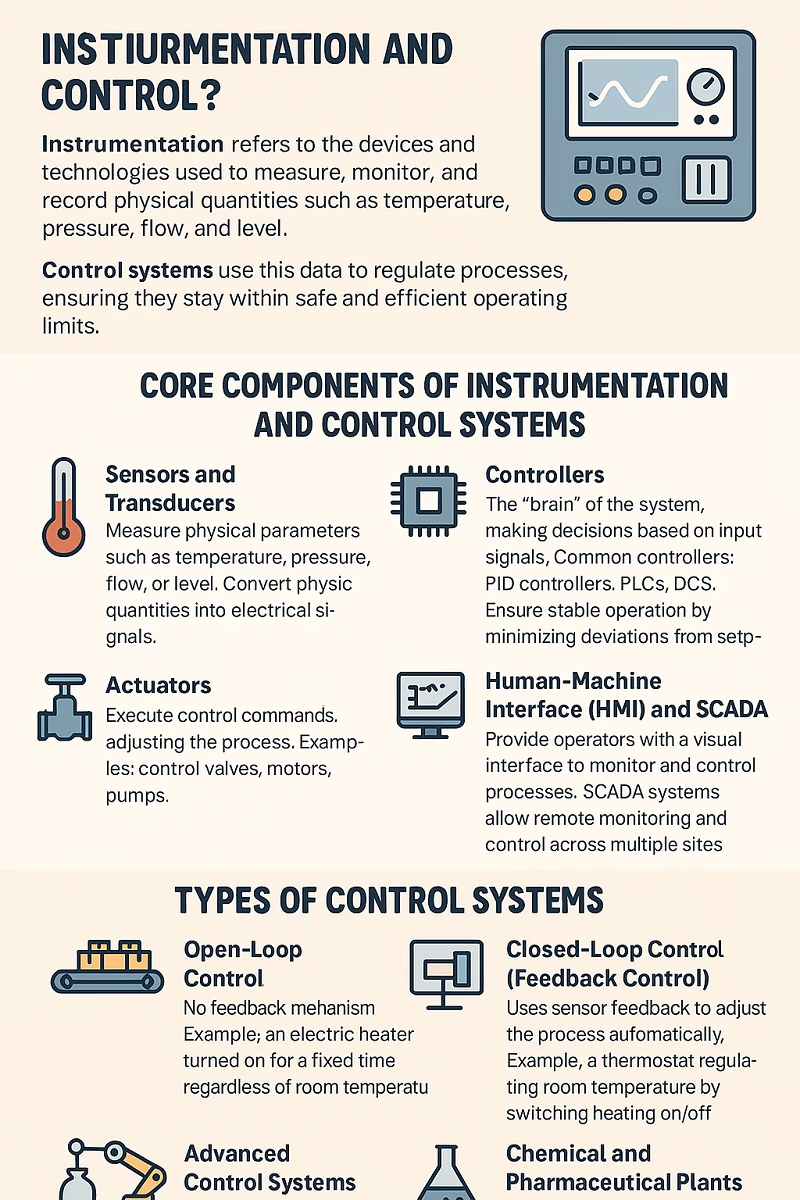
In modern industries and scientific research, accuracy is everything. Whether in construction, healthcare, manufacturing, or environmental science, professionals rely on measuring and monitoring instruments to obtain precise data, ensure safety, maintain efficiency, and comply with global standards. Without these instruments, decision-making would be based on assumptions rather than facts, leading to inefficiency, errors, and even safety hazards.
This article explores the importance, categories, functions, and applications of measuring and monitoring instruments across different fields. It will also highlight how advancements in digital technology and smart systems have transformed these tools into essential components of modern industry.
What Are Measuring and Monitoring Instruments?
Measuring instruments are devices used to determine the quantity, dimension, or capacity of a particular variable. They provide numerical values of parameters such as length, weight, temperature, voltage, pressure, and speed.
Monitoring instruments, on the other hand, are used to observe, record, and track these parameters over time. Monitoring tools are particularly useful in detecting fluctuations, maintaining system stability, and preventing failures.
Together, these instruments form the backbone of modern industries, where precision and control are fundamental.
Importance of Measuring and Monitoring Instruments
- Accuracy and Precision
High-quality measurements ensure that processes and products meet standards and specifications. For instance, in manufacturing, even a millimeter difference can cause product failure. - Safety and Compliance
Monitoring instruments play a crucial role in maintaining safe working conditions by detecting dangerous parameters such as excessive pressure, toxic gases, or electrical faults. - Efficiency and Cost Reduction
Continuous monitoring reduces downtime, prevents breakdowns, and improves efficiency. Accurate data also helps organizations minimize waste and optimize resource usage. - Quality Control
In industries like pharmaceuticals and food production, quality control is heavily dependent on measuring and monitoring devices to guarantee consumer safety. - Scientific Research and Innovation
Measuring instruments are essential in laboratories for conducting experiments, validating theories, and advancing technology.
Types of Measuring Instruments
1. Length and Dimension Measuring Instruments
- Vernier calipers
- Micrometers
- Coordinate measuring machines (CMM)
These are widely used in mechanical engineering, machining, and precision manufacturing.
2. Electrical Measuring Instruments
- Multimeters
- Oscilloscopes
- Wattmeters
- Clamp meters
They are used to measure voltage, current, resistance, frequency, and power.
3. Mechanical and Force Measuring Instruments
- Pressure gauges
- Torque wrenches
- Dynamometers
These devices measure mechanical forces, pressures, and loads, making them essential in automotive, aerospace, and mechanical engineering.
4. Thermal Measuring Instruments
- Thermometers
- Pyrometers
- Thermal cameras
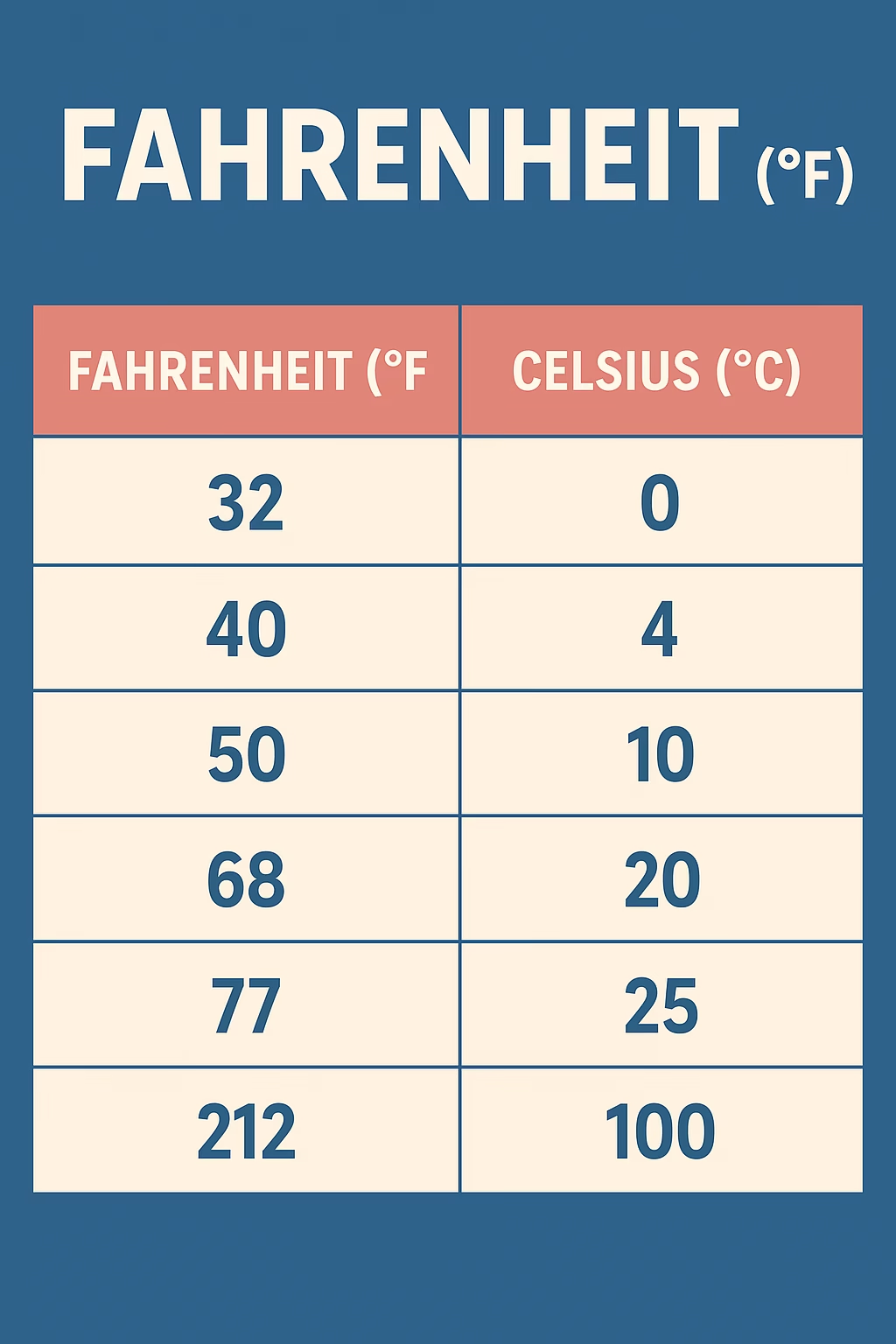
They measure temperature and heat transfer, crucial for HVAC systems, metallurgy, and healthcare.
5. Time and Frequency Measuring Instruments
- Stopwatches
- Frequency counters
- Atomic clocks
These tools ensure synchronization in electronics, telecommunications, and research.
6. Environmental Measuring Instruments
- Hygrometers (humidity)
- Anemometers (wind speed)
- Sound level meters (noise)
- Gas detectors
They are widely used in meteorology, environmental science, and workplace safety.
Types of Monitoring Instruments
1. Process Monitoring Systems
- SCADA (Supervisory Control and Data Acquisition) systems
- PLC-based monitoring panels
Used in power plants, factories, and refineries to track industrial operations.
2. Health Monitoring Devices
- Blood pressure monitors
- ECG machines
- Glucose monitors
- Wearable smart devices
These devices ensure patient safety and assist in early diagnosis.
3. Environmental Monitoring Instruments
- Air quality monitors
- Water quality testing devices
- Seismic sensors
They provide data to prevent environmental hazards and monitor natural disasters.
4. Condition Monitoring Tools
- Vibration analyzers
- Oil analysis kits
- Infrared thermography
These tools are vital for predictive maintenance in industries.
Applications of Measuring and Monitoring Instruments
- Engineering and Manufacturing
- Quality inspection of machine parts
- Monitoring of pressure and temperature in industrial processes
- Electrical parameter testing in power systems
- Healthcare and Medicine
- Monitoring patient vitals
- Accurate drug dosage measurement
- Laboratory testing and diagnostics
- Construction and Civil Engineering
- Measurement of land dimensions
- Structural health monitoring of bridges and buildings
- Concrete strength testing
- Environmental Protection
- Air pollution measurement
- Water quality assessment
- Climate data collection
- Automotive and Aerospace
- Vehicle performance testing
- Monitoring aircraft systems
- Measuring engine torque and fuel consumption

Modern Innovations in Measuring and Monitoring Instruments
With the rise of digitalization, IoT (Internet of Things), and AI, measuring and monitoring instruments are evolving rapidly:
- Smart Sensors: Provide real-time data with wireless connectivity.
- Cloud-Based Monitoring: Enables remote supervision and predictive analytics.
- Integration with AI: Improves accuracy through automated anomaly detection.
- Portable Devices: Handheld instruments increase flexibility in the field.
These advancements are making industries safer, more efficient, and more sustainable.
Challenges in Measuring and Monitoring Instruments
Despite their advantages, these instruments face challenges:
- Calibration Issues: Instruments must be calibrated regularly to maintain accuracy.
- Environmental Conditions: Extreme temperatures or humidity can affect reliability.
- Cost: Advanced monitoring systems can be expensive for small businesses.
- Data Overload: Excessive monitoring data can be difficult to analyze without proper software.
Conclusion
Measuring and monitoring instruments are indispensable across industries, science, and daily life. They provide accuracy, ensure safety, and improve efficiency in countless applications, from healthcare and manufacturing to environmental science and construction.
As technology advances, the future of these instruments lies in smart systems, IoT integration, and AI-driven analysis, ensuring that industries can continue to thrive in a data-driven world.
For businesses, researchers, and professionals, investing in reliable measuring and monitoring instruments is not just about compliance—it is a pathway to innovation, sustainability, and excellence.