
Classification Spectrum Radio Frequencies ~ Radio frequencies (RF) are the backbone of modern communication. From the simple AM/FM radio in your car to the advanced 5G mobile networks powering smartphones, radio frequency spectrum plays a vital role in transmitting signals over distances. To ensure efficient use and prevent interference, the radio spectrum is classified into specific ranges, each designated for certain applications.
In this comprehensive guide, we will explore the classification spectrum of radio frequencies, its different bands, international standards, and the everyday technologies that depend on them.
What Is the Radio Frequency Spectrum?
The radio frequency spectrum is a range of electromagnetic waves that fall between 3 Hz and 300 GHz. These frequencies are used to transmit data wirelessly, whether it be sound, images, or digital information.
Because the spectrum is finite and valuable, global organizations such as the International Telecommunication Union (ITU) regulate its classification and allocation to prevent conflicts between users and ensure efficient operation across nations.
International Classification Spectrum Radio Frequencies
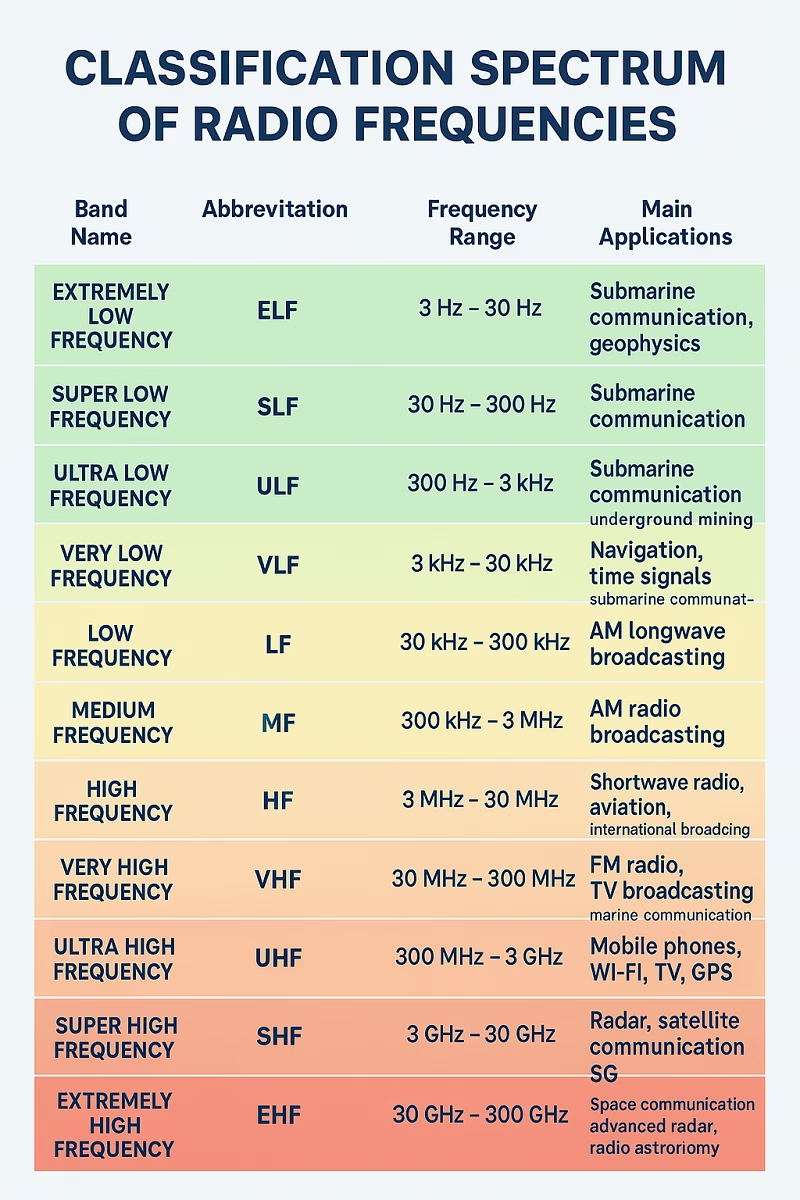
The ITU divides the radio frequency spectrum into bands based on frequency ranges. Below is the internationally recognized classification:
| Band Name | Abbreviation | Frequency Range | Typical Wavelength | Main Applications |
|---|---|---|---|---|
| Extremely Low Frequency | ELF | 3 Hz – 30 Hz | 100,000 km – 10,000 km | Submarine communication, geophysics |
| Super Low Frequency | SLF | 30 Hz – 300 Hz | 10,000 km – 1,000 km | Submarine communication |
| Ultra Low Frequency | ULF | 300 Hz – 3 kHz | 1,000 km – 100 km | Submarine communication, underground mining |
| Very Low Frequency | VLF | 3 kHz – 30 kHz | 100 km – 10 km | Navigation, time signals, submarine communication |
| Low Frequency | LF | 30 kHz – 300 kHz | 10 km – 1 km | AM longwave broadcasting, navigation beacons |
| Medium Frequency | MF | 300 kHz – 3 MHz | 1 km – 100 m | AM radio broadcasting |
| High Frequency | HF | 3 MHz – 30 MHz | 100 m – 10 m | Shortwave radio, aviation, international broadcasting |
| Very High Frequency | VHF | 30 MHz – 300 MHz | 10 m – 1 m | FM radio, TV broadcasting, marine communication |
| Ultra High Frequency | UHF | 300 MHz – 3 GHz | 1 m – 10 cm | Mobile phones, Wi-Fi, TV, GPS |
| Super High Frequency | SHF | 3 GHz – 30 GHz | 10 cm – 1 cm | Radar, satellite communication, 5G |
| Extremely High Frequency | EHF | 30 GHz – 300 GHz | 1 cm – 1 mm | Space communication, advanced radar, radio astronomy |
Detailed Overview of Each Frequency Band
1. Extremely Low Frequency (ELF) – 3 to 30 Hz
- Characteristics: Very long wavelengths that can penetrate deep into water and earth.
- Uses: Submarine communication, geophysical monitoring, earthquake studies.
2. Super Low Frequency (SLF) – 30 to 300 Hz
- Uses: Similar to ELF, primarily used in defense for submarine communication.
3. Ultra Low Frequency (ULF) – 300 Hz to 3 kHz
- Applications: Military communication with submarines, underground mining communication, seismology.
4. Very Low Frequency (VLF) – 3 to 30 kHz
- Applications: Navigation systems, time signals, submarine communications.
- Advantage: Reliable transmission over long distances.
5. Low Frequency (LF) – 30 to 300 kHz
- Uses: AM longwave radio broadcasting, navigation beacons, maritime communication.
6. Medium Frequency (MF) – 300 kHz to 3 MHz
- Uses: AM radio broadcasting, aeronautical beacons, emergency maritime communication.
7. High Frequency (HF) – 3 to 30 MHz
- Characteristics: Known as the “shortwave” band, capable of long-distance communication due to ionospheric reflection.
- Applications: International broadcasting, amateur radio, aviation communication, military communication.
8. Very High Frequency (VHF) – 30 to 300 MHz
- Applications: FM radio broadcasting, marine communication, television broadcasting, aviation communication.
- Advantages: Less affected by interference compared to lower bands.
9. Ultra High Frequency (UHF) – 300 MHz to 3 GHz
- Uses: Mobile phones, Wi-Fi, GPS, satellite communication, TV broadcasting.
- Importance: Crucial for modern communication systems including 4G and 5G networks.
10. Super High Frequency (SHF) – 3 to 30 GHz
- Applications: Microwave communication, satellite systems, radar, 5G networks.
- Advantages: High data transfer rates, though limited in range due to atmospheric absorption.
11. Extremely High Frequency (EHF) – 30 to 300 GHz
- Uses: Space communication, advanced military radar, experimental wireless systems, radio astronomy.
- Challenges: High absorption by atmosphere and obstacles.
Radio Frequency Applications in Modern Life
- Broadcasting – Radio and television rely heavily on MF, HF, VHF, and UHF frequencies.
- Telecommunications – Mobile phones, Wi-Fi, and Bluetooth primarily use UHF and SHF.
- Navigation – LF, VLF, and VHF are essential for aviation and maritime navigation.
- Military and Defense – ELF, SLF, and ULF bands are crucial for submarine and secure communications.
- Scientific Research – EHF and SHF bands are used in space exploration and radio astronomy.
Global Classification Spectrum Radio Frequencies Allocation and Regulation
The radio spectrum is a limited natural resource. To prevent interference and ensure fair use, spectrum allocation is managed by international and national bodies:
- International Telecommunication Union (ITU) – Establishes global standards and frequency allocations.
- Federal Communications Commission (FCC) – Regulates spectrum usage in the United States.
- Ofcom – Regulates in the United Kingdom.
- Indonesian Ministry of Communication and Information Technology (Kominfo) – Regulates frequencies in Indonesia.
Spectrum allocation often involves auctions where telecommunications companies bid for licenses to use specific frequency bands.
Challenges in Spectrum Management
- Spectrum Scarcity – Growing demand for mobile internet and wireless communication increases competition.
- Interference Issues – Overlapping usage may cause disruptions.
- Technological Advancements – Emerging technologies like 5G and IoT require new spectrum allocations.
- Security Concerns – Military and defense applications require strict frequency management.
Future of Classification Spectrum Radio Frequencies
As the digital world evolves, so does the demand for spectrum. Future trends include:
- Expansion of 5G and 6G networks requiring higher frequency bands (SHF and EHF).
- Increased reliance on satellite communication for global internet coverage.
- Development of smart cities and IoT, requiring low-latency wireless systems.
- More efficient spectrum sharing technologies to maximize use.
Conclusion of Classification Spectrum Radio Frequencies
The classification spectrum of radio frequencies is essential for understanding how wireless communication functions in our everyday lives. From ELF signals deep in the ocean to high-frequency EHF waves used in advanced technologies, each band has unique applications that shape modern society.
With the increasing demand for connectivity, managing and utilizing the radio spectrum effectively will remain a global priority. By understanding how frequencies are classified and used, businesses, governments, and individuals can better appreciate the invisible infrastructure powering the digital age.