
Introduction of Shipyard in Surabaya
Surabaya, the bustling capital of East Java, is not only famous for its history and commerce but also for its critical role in Indonesia’s maritime industry. As a major port city located strategically along the Java Sea, Surabaya has grown into one of the country’s most important hubs for shipbuilding, ship repair, and maritime engineering. A shipyard in Surabaya is more than just a facility for vessel construction; it is a vital contributor to Indonesia’s economy, defense, and international trade.
In this article, we will explore the history, services, and modern development of shipyards in Surabaya, highlighting why they remain a cornerstone of Indonesia’s maritime progress.
1. Historical Background of Shipyard in Surabaya
Surabaya has long been a maritime city. During the Dutch colonial era, the port of Surabaya was a critical naval and commercial center. With Indonesia’s independence, the need for strong domestic shipbuilding capability became urgent.
This led to the establishment of PT PAL Indonesia, the largest state-owned shipbuilding company in the nation, headquartered in Surabaya. Since then, Surabaya’s shipyards have expanded to support both civilian and military needs, from building cargo vessels to advanced naval warships.
2. Major Shipyard in Surabaya
1. PT PAL Indonesia (Persero)
- Indonesia’s largest state-owned shipbuilder, headquartered in Surabaya. They manufacture naval vessels, merchant ships, submarines, and offer ship repair and maintenance services.
- In 2023, PT PAL began steel cutting and laying down the Fregat Merah Putih (Red White Frigate)—a significant Type-31 frigate project.
- Notably, PT PAL assembled and launched Indonesia’s first domestically built submarine, KRI Alugoro, marking a milestone in Southeast Asian shipbuilding.
- The yard also laid the keel for Philippine Navy’s Landing Platform Dock vessels, due for delivery in 2026.
2. PT Dok & Perkapalan Surabaya (DPS)
- A venerable state-owned shipyard, established in 1910 and reformed as PT DPS in 1976.
- Offers a wide range of facilities including floating docks (4,500–9,000 dwt), slipways, and piers. They build and repair vessels like tugs, cement carriers, container ships, ferries.
- Located at Jl. Tanjung Perak Barat in Surabaya.
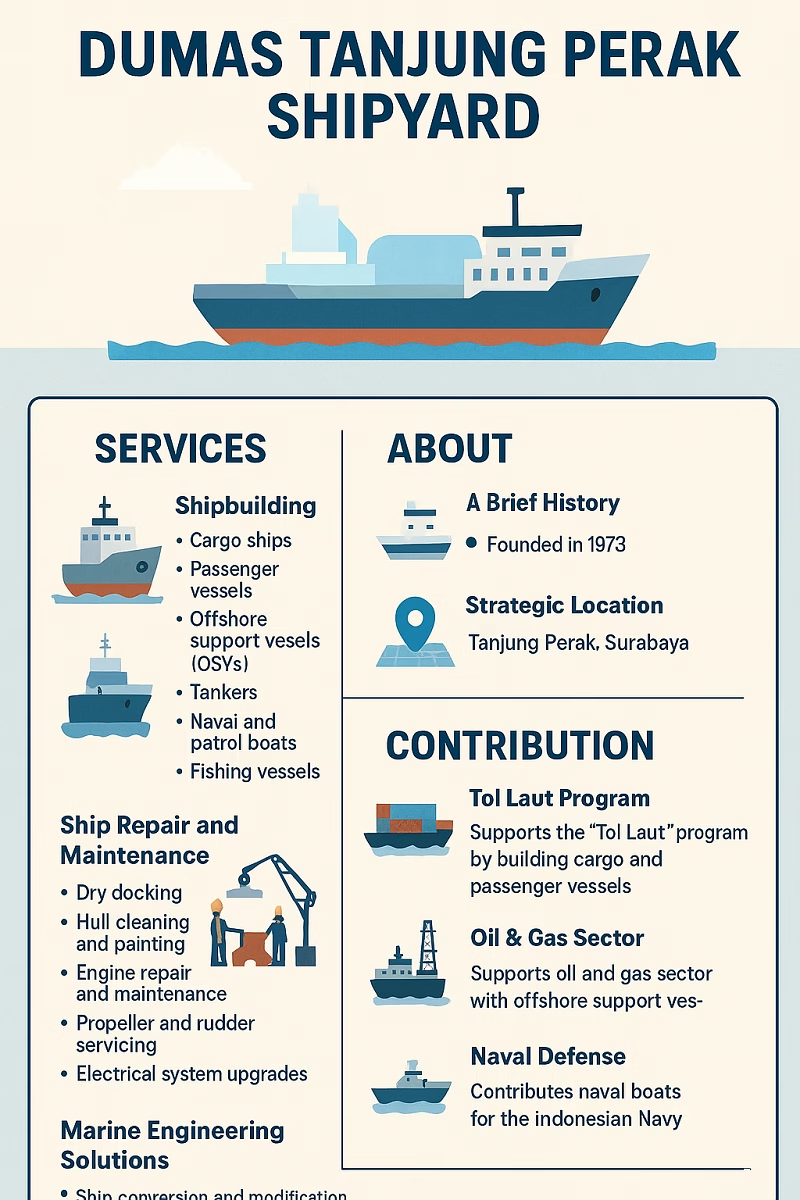
3. PT Dumas Tanjung Perak Shipyard
Features an 8,000 DWT graving dock and slipways in its Surabaya facility
Founded in 1973 as a ship repair business, now also manufactures new vessels—RO-RO ferries, tankers, patrol boats, and offshore support ships.
Other Notable Shipyard in Surabaya
According to the Surabaya Marine exhibition and industry directories, other active players include:
- PT Adiluhung SSI
- PT Dewa Ruci Agung
- PT Najatim Dockyard
- PT Ben Santosa
- PT Galangan Surya PELNI (a unit offering docking, maintenance, and repair services under PT PELNI—with international quality certification).
- Additional names: PT Indonesia Marina Shipyard, PT Bintang Timur Samudera, PT Samudera Indoraya Perkasa, PT Waruna Nusa Sentana, among others.
3. Services Offered by Shipyard in Surabaya
A shipyard in Surabaya typically provides a wide range of services, such as:
- Shipbuilding – From small boats to large tankers and warships.
- Ship repair & maintenance – Dry-docking, hull inspection, engine overhaul, and safety upgrades.
- Conversion projects – Modifying vessels to meet new regulations or operational needs.
- Marine engineering & fabrication – Offshore platforms, floating docks, and industrial steel structures.
- Submarine and naval support – Advanced technology for national defense.
This diversity ensures that Surabaya remains competitive in the global maritime sector.
4. Strategic Advantages of Surabaya as a Shipyard Hub
There are several reasons why Surabaya is an ideal location for shipyards:
- Geographical Position – Located along Indonesia’s main maritime routes, Surabaya connects to both domestic and international shipping lanes.
- Skilled Workforce – Surabaya hosts maritime academies and technical institutes that continuously supply skilled engineers and technicians.
- Port Infrastructure – Tanjung Perak Port, one of Indonesia’s busiest, supports logistics for shipyards.
- Government Support – National policies encourage local shipbuilding and reduce dependency on imports.
5. Contribution to Indonesia’s Economy and Defense
Shipyards in Surabaya contribute significantly to both the civilian and defense sectors.
- Economic Impact – They create thousands of jobs, stimulate local industries, and attract foreign investment.
- Defense Capability – With PT PAL producing modern warships and submarines, Surabaya strengthens Indonesia’s naval power.
- Trade and Shipping – The shipyards ensure Indonesia’s merchant fleet remains efficient and reliable for global commerce.
6. Challenges Faced by Shipyard in Surabaya
Despite their importance, shipyards in Surabaya face several challenges:
- Global Competition – Competing with shipbuilding giants like South Korea, China, and Japan.
- Technology Gap – Need for advanced digitalization and automation in ship design.
- Environmental Regulations – Stricter international standards for green shipping require continuous adaptation.
- Capital Investment – Building large vessels demands high financial resources.
Overcoming these challenges is crucial for Surabaya to remain competitive.

7. Future Development of Shipyards in Surabaya
The future of Surabaya’s shipyards looks promising with several planned advancements:
- Digital Shipbuilding – Adoption of CAD, AI, and automation in design and construction.
- Green Technologies – Building eco-friendly vessels with LNG fuel and hybrid systems.
- International Collaboration – Partnerships with global shipbuilders for knowledge transfer.
- Expansion Projects – PT PAL and private shipyards are expanding their docks and facilities to accommodate larger vessels.
These initiatives will strengthen Surabaya’s position as a maritime hub not only in Indonesia but in Southeast Asia as a whole.
8. Why Surabaya Shipyards Matter Globally
With over 17,000 islands, Indonesia is the largest archipelagic nation in the world. Shipbuilding is not just an industry—it is a strategic necessity. Surabaya’s shipyards enable Indonesia to maintain sovereignty, secure trade routes, and contribute to global shipping needs.
For investors, shipping companies, and government stakeholders, Surabaya represents a unique opportunity to engage in a growing maritime ecosystem that balances tradition with modern innovation.
Conclusion
The shipyards in Surabaya stand as a symbol of Indonesia’s maritime strength. From PT PAL’s advanced naval vessels to private shipyards handling repairs and conversions, Surabaya plays a central role in ensuring Indonesia remains a key player in the global shipping industry.
As technology evolves and demand for greener, more efficient ships increases, Surabaya’s shipyards are adapting to meet future challenges. For businesses, policymakers, and maritime professionals, investing in Surabaya’s shipyard sector is not just about building ships—it is about securing Indonesia’s future as a maritime nation.