Introduction: What Are Radio Filters?
In the world of radio communication, clarity and precision of signals are essential. Every radio receiver and transmitter faces one major challenge—signal interference. Signals from different sources often overlap, producing noise and distortion that can reduce communication quality. To solve this, engineers use radio filters, which are designed to separate useful signals from unwanted frequencies.
A radio filter is an electronic circuit or device that allows certain frequency ranges to pass while blocking or attenuating others. These filters are a fundamental part of radio systems, from AM/FM radios to modern wireless technologies like Wi-Fi, Bluetooth, and 5G networks.
In this article, we will explore the types of radio filters, their functions, and applications in communication systems.
How Do Radio Filters Work?
Radio filters operate based on the principle of frequency selection. Every signal is made up of different frequencies, and filters allow engineers to control which frequencies pass through.
- Desired signals → Allowed to pass
- Unwanted signals (noise, interference) → Blocked or reduced
This frequency selection is achieved using electronic components such as resistors, capacitors, and inductors (in passive filters) or transistors and operational amplifiers (in active filters).
In radio technology, filters are commonly used in:
- Transmitters: To ensure that only the intended frequency is transmitted.
- Receivers: To select the desired station or channel while rejecting others.
Types of Radio Filters
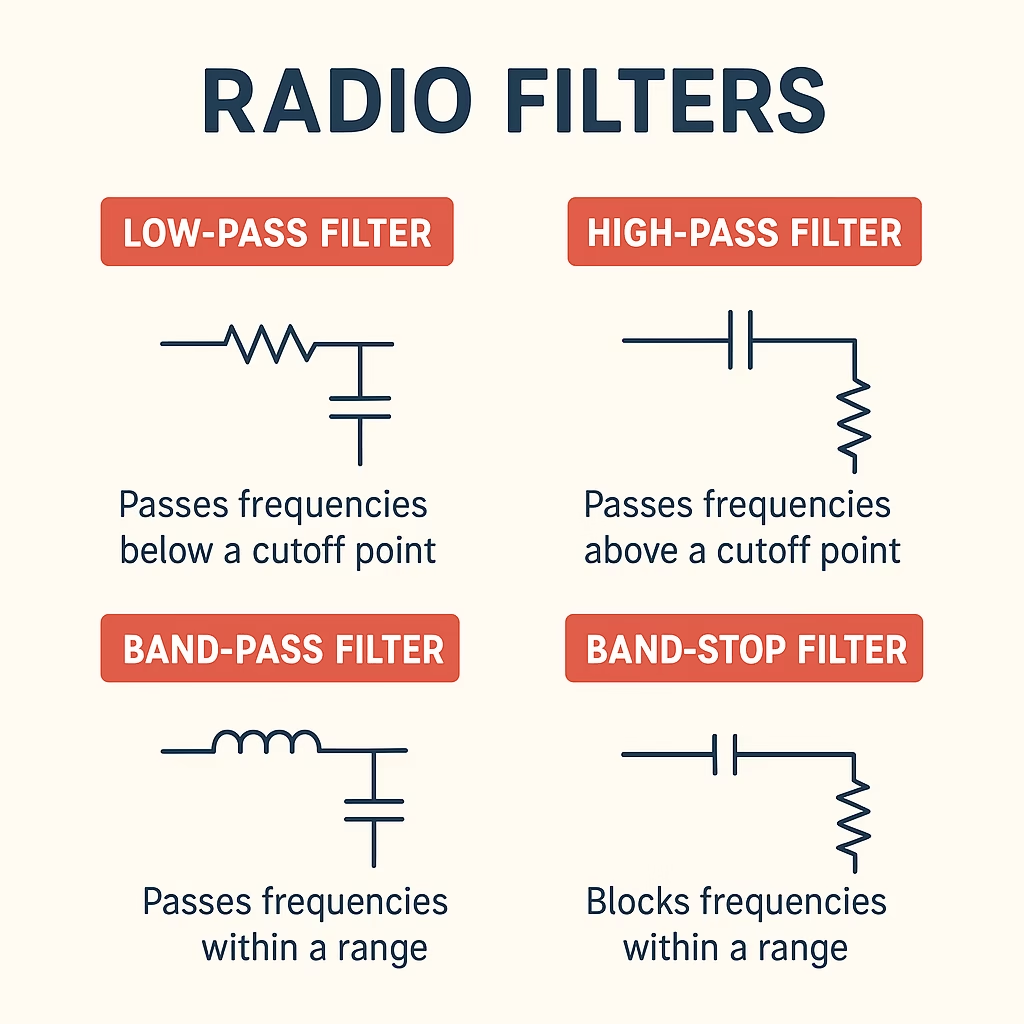
Radio filters can be classified based on the range of frequencies they allow or reject. Below are the main types:
1. Low-Pass Filters (LPF)
- Function: Allows frequencies below a cutoff point to pass while attenuating higher frequencies.
- Application:
- Removes high-frequency noise in audio circuits.
- Used in transmitters to suppress unwanted harmonics.
2. High-Pass Filters (HPF)
- Function: Allows frequencies above a cutoff point to pass while blocking lower frequencies.
- Application:
- Eliminates low-frequency hum in audio systems.
- Removes interference from nearby low-frequency signals.
3. Band-Pass Filters (BPF)
- Function: Allows only a specific frequency range to pass, rejecting both lower and higher frequencies.
- Application:
- Essential in radio receivers for station tuning.
- Used in wireless communication systems like Wi-Fi and cellular networks.
4. Band-Stop Filters (Notch Filters)
- Function: Rejects a narrow band of frequencies while allowing others to pass.
- Application:
- Used to eliminate unwanted frequencies, such as power line hum (50/60 Hz).
- Suppresses interference from nearby strong signals.
5. All-Pass Filters
- Function: Allows all frequencies to pass but alters the phase relationship between them.
- Application:
- Common in signal processing for phase correction.
- Used in equalizers and advanced audio systems.
Radio Filters in Communication Systems
Radio filters are the unsung heroes of communication technology. Without them, our devices would be overwhelmed by interference. Below are some key applications:
1. AM and FM Radios
- Filters help tune into one station while rejecting all others.
- Band-pass filters are essential in separating closely spaced channels.
2. Mobile and Wireless Networks
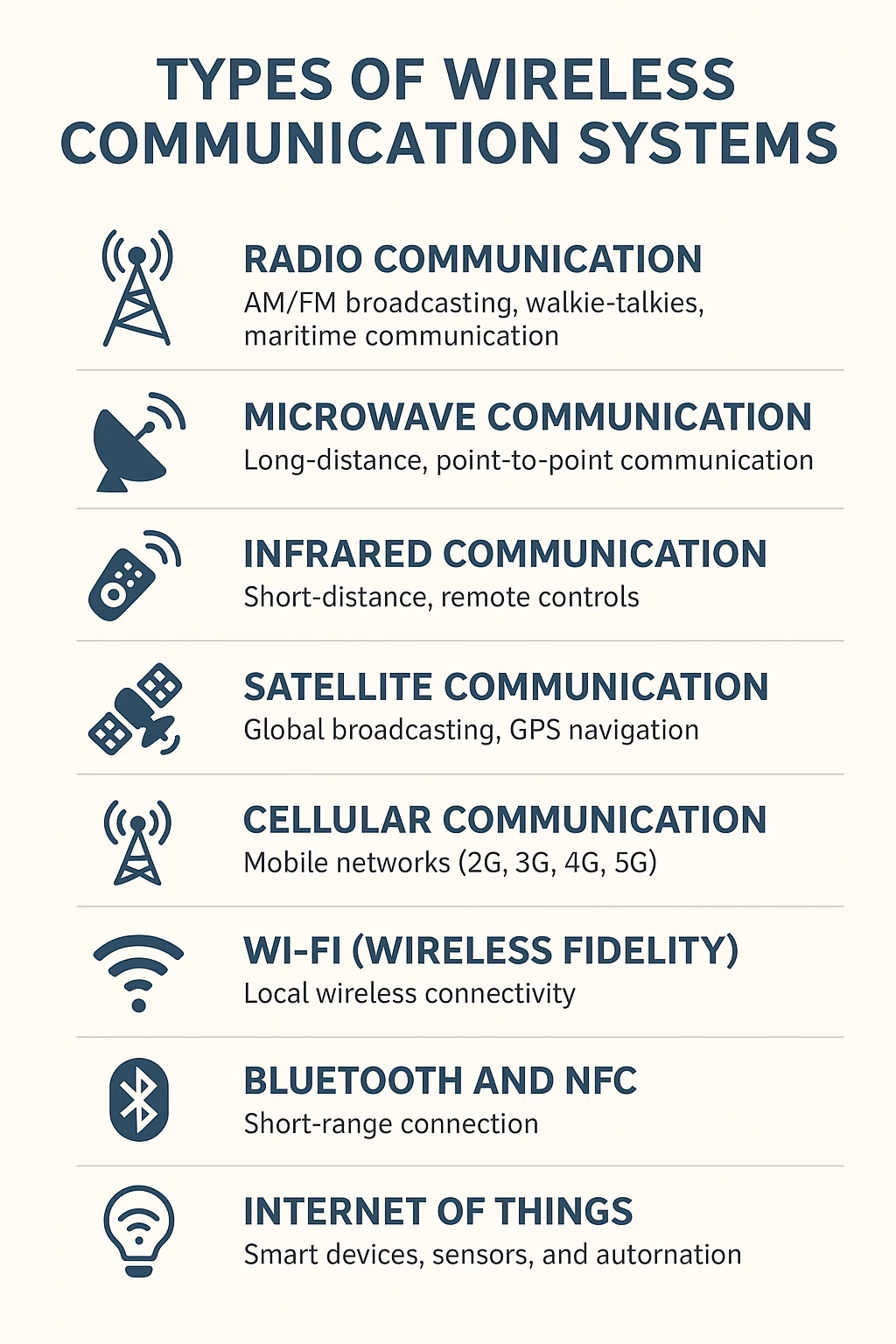
- Cellular systems use filters to isolate specific frequency bands.
- Prevents interference between 4G, 5G, and Wi-Fi signals.
3. Satellite Communication
- Requires highly selective filters to differentiate between weak signals from space and terrestrial noise.
4. Military and Aviation
- Used in radar, navigation, and secure communication systems.
- Ensures clarity and reliability even in noisy environments.
5. Medical Equipment
- MRI machines and biomedical sensors rely on radio filters to reduce noise in signal processing.
Advantages of Using Radio Filters
- Improved Signal Quality → Clearer communication.
- Noise Reduction → Removes unwanted interference.
- Channel Separation → Enables multiple users on the same system.
- Efficiency → Helps transmitters and receivers operate more effectively.
- Versatility → Applicable in audio, radio, satellite, and digital communication.
Challenges in Radio Filter Design
While radio filters are powerful, designing them comes with challenges:
- Miniaturization: Modern devices require small, lightweight filters.
- High Selectivity: Filters must sharply separate desired and undesired frequencies.
- Low Loss: Ensuring minimal energy loss while filtering.
- Cost vs. Performance: Advanced filters may increase production costs.
Engineers today are developing digital filters and software-defined radios (SDR) to overcome these limitations.
The Future of Radio Filters
With the rise of 5G, Internet of Things (IoT), and satellite internet, the demand for advanced filtering technologies is growing. Future filters will be:
- More compact → Suitable for smartphones and wearable devices.
- Highly adaptive → Able to adjust filtering in real time.
- Energy-efficient → Consuming less power for sustainable electronics.
These innovations will make communication systems more reliable, efficient, and interference-free.
Conclusion
Radio filters are a cornerstone of modern communication. From basic AM radios to advanced 5G networks, filters ensure that only the right signals are transmitted and received. Their role in noise reduction, channel selection, and signal clarity cannot be overstated.
As technology continues to evolve, so too will radio filters, becoming smarter, smaller, and more powerful. Without them, our world of instant communication and wireless connectivity would simply not be possible.