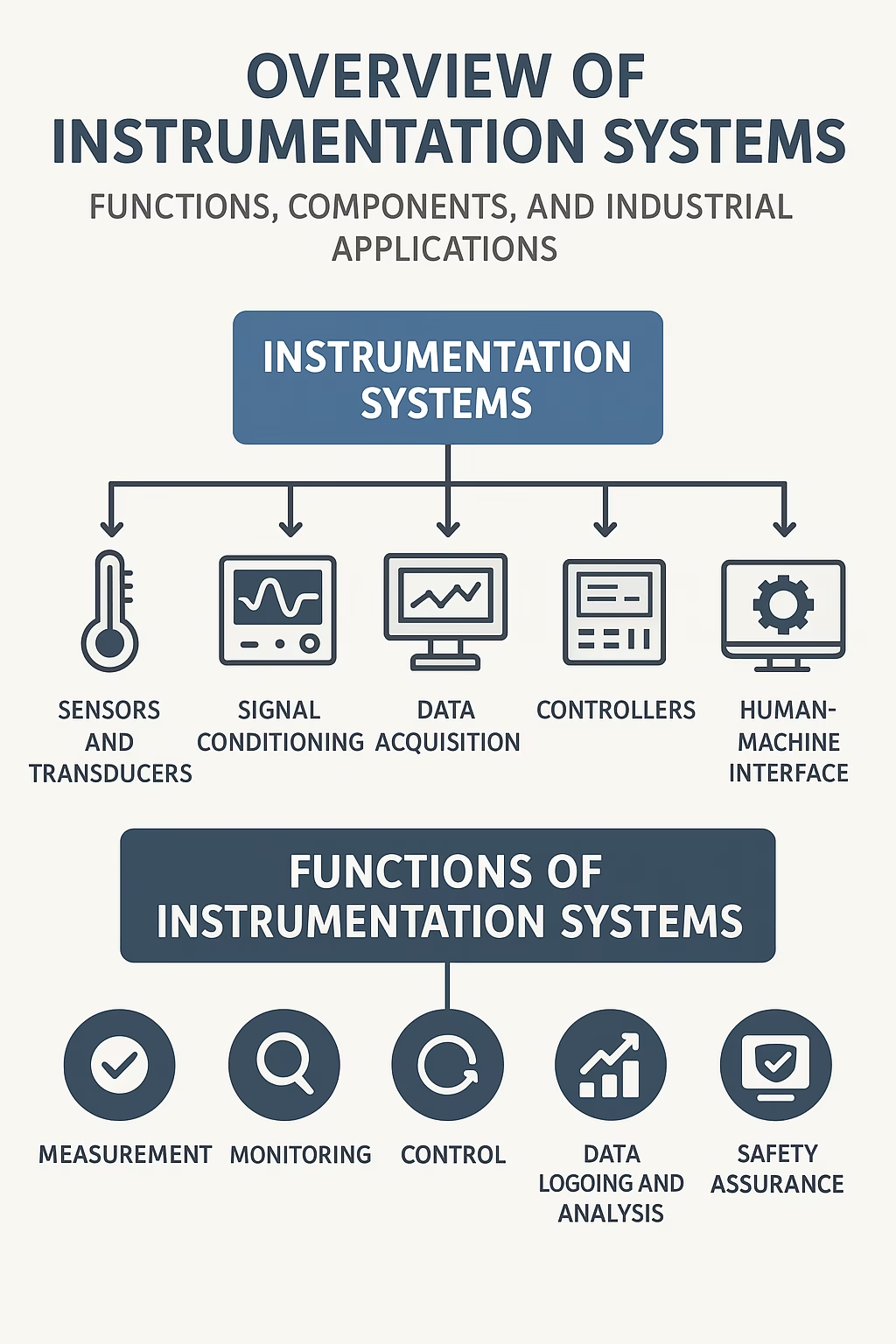
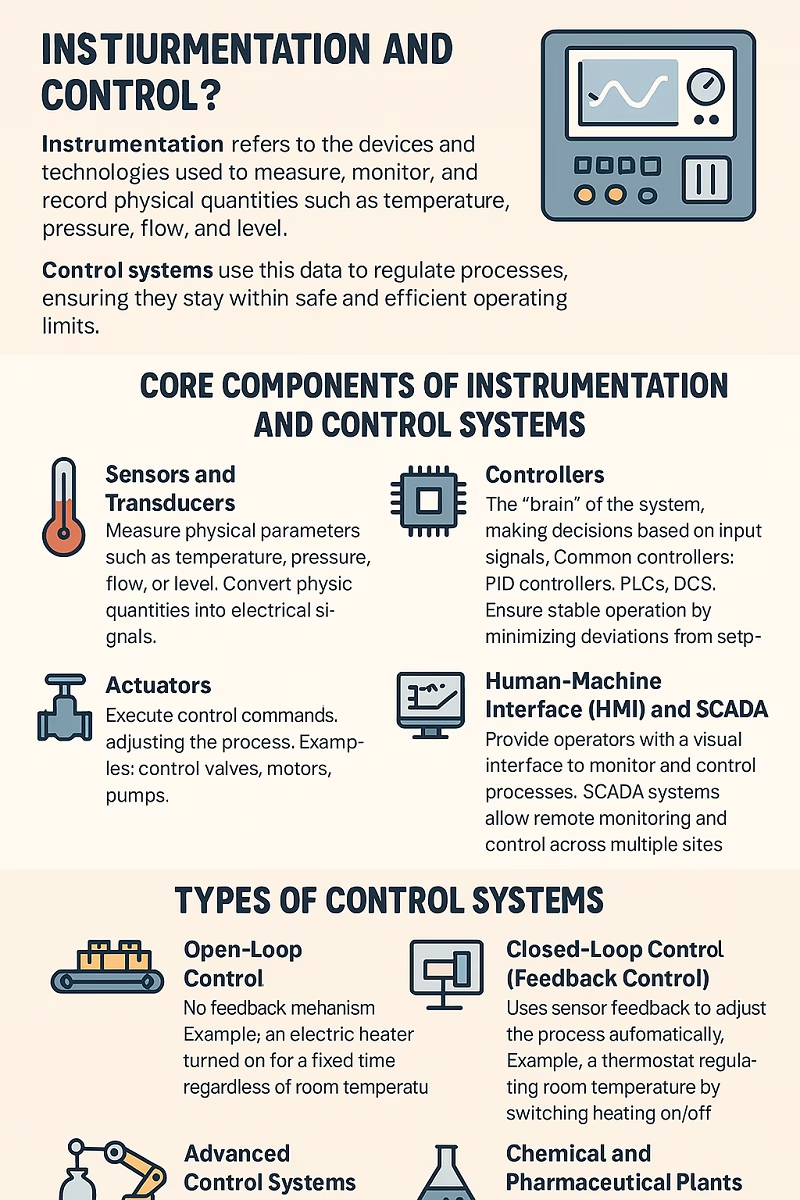
In today’s fast-paced and technology-driven world, instrumentation plays a crucial role in monitoring, measuring, and controlling processes across industries. From oil refineries to pharmaceutical labs, accurate data collection and precise measurements are critical to maintaining efficiency, safety, and quality standards. While general-purpose instruments are widely used, many industries rely on specialized types of instrumentation designed for specific applications and unique operational requirements.
This article explores what specialized instrumentation is, its key types, applications, and the advantages it brings to modern industries.
1. What is Specialized Types of Instrumentation?
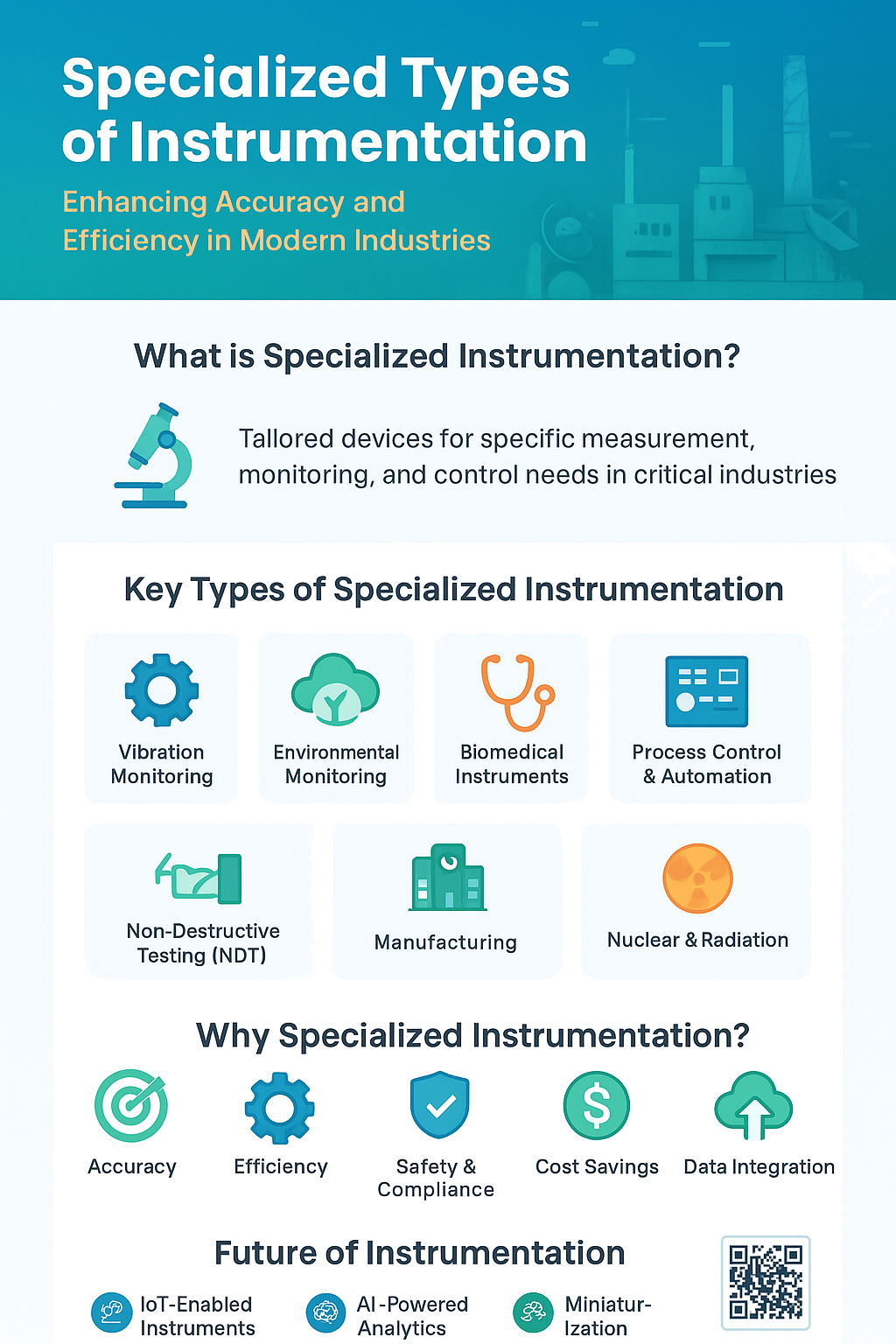
Specialized instrumentation refers to highly tailored devices and systems developed to perform specific measurement, monitoring, or control tasks that cannot be effectively managed by general-purpose instruments. These instruments are engineered to function in demanding environments, meet strict regulatory standards, and deliver high-precision data required for critical operations.
Examples of specialized instrumentation include:
- Vibration monitoring systems for rotating machinery.
- Gas analyzers for environmental compliance.
- Biomedical sensors for patient monitoring.
- Nuclear radiation detectors for safety assurance.
2. Key Types of Specialized Types of Instrumentation
a. Vibration and Condition Monitoring Instrumentation
Used extensively in manufacturing, energy, and transportation industries, these instruments detect irregularities in machinery.
- Purpose: Predictive maintenance to prevent costly downtime.
- Examples: Accelerometers, velocity sensors, and vibration analyzers.
b. Environmental Monitoring Instruments
These instruments measure environmental parameters to ensure compliance with regulatory standards and sustainability goals.
- Purpose: Track air quality, water purity, and pollution levels.
- Examples: Gas analyzers, particulate matter sensors, weather monitoring stations.
c. Biomedical and Clinical Instrumentation
Essential for healthcare, these devices provide accurate physiological data for diagnosis, treatment, and research.
- Purpose: Monitor vital signs, analyze biological samples, and assist in surgeries.
- Examples: ECG machines, blood gas analyzers, infusion pumps.
d. Process Control and Automation Instruments
Critical in manufacturing, chemical, and oil & gas sectors, these instruments ensure process stability and safety.
- Purpose: Measure variables such as temperature, pressure, and flow while integrating with automated systems.
- Examples: Programmable Logic Controllers (PLC), Distributed Control Systems (DCS), and advanced sensors.
e. Non-Destructive Testing (NDT) Instruments
Used to inspect materials and structures without causing damage.
- Purpose: Ensure product integrity and safety in aerospace, construction, and automotive industries.
- Examples: Ultrasonic testers, radiographic imaging, eddy current devices.
f. Nuclear and Radiation Instrumentation
Used in energy, medical, and research sectors to detect, measure, and control radiation levels.
- Purpose: Ensure safety and compliance in environments dealing with radioactive materials.
- Examples: Geiger counters, scintillation detectors, dosimeters.
3. Applications of Specialized Types of Instrumentation
Specialized instrumentation finds applications in a wide range of industries, including:
- Oil & Gas: Monitoring pipeline integrity, pressure levels, and gas composition.
- Healthcare: Patient monitoring, laboratory diagnostics, and medical imaging.
- Manufacturing: Ensuring product quality through process control and predictive maintenance.
- Environmental Protection: Measuring pollution levels, climate parameters, and resource usage.
- Aerospace & Defense: Structural testing, navigation systems, and safety assurance.
By integrating these instruments into their operations, companies gain a competitive edge through improved efficiency, reduced downtime, and enhanced safety compliance.
4. Benefits of Specialized Types of Instrumentation
- Enhanced Accuracy: High precision measurements ensure reliable decision-making.
- Operational Efficiency: Automated and real-time monitoring reduces human errors.
- Safety & Compliance: Helps meet industry standards and regulatory requirements.
- Cost Savings: Predictive maintenance reduces unexpected failures and repairs.
- Data Integration: Many modern instruments connect to digital platforms for data analysis and remote monitoring.
5. Future Trends in Specialized Types of Instrumentation
With rapid technological advancements, specialized instrumentation is evolving towards:
- IoT-Enabled Instruments: Allowing remote access and cloud data storage.
- AI-Based Analytics: Predicting failures and optimizing processes automatically.
- Miniaturization: Developing compact, portable devices without compromising accuracy.
- Sustainability Focus: Instruments designed for energy efficiency and environmental stewardship.
Industries that embrace these trends will stay ahead in innovation, productivity, and sustainability.
Conclusion of Specialized Types of Instrumentation
Specialized types of instrumentation are the backbone of modern industries, ensuring precision, safety, and efficiency across countless applications. As technology continues to advance, the demand for smarter, more reliable, and connected instruments will only grow. Businesses that adopt and integrate these innovations into their operations will be better equipped to face the challenges of the future.