
Introduction
Major Shipyards in Indonesia, the world’s largest archipelagic nation, holds a strategic position in global maritime trade. With over 17,000 islands and vital sea lanes of communication passing through its waters, Indonesia’s maritime industry plays a central role in both domestic and international shipping. At the heart of this industry lies the shipyard sector, where vessels are designed, built, maintained, and repaired.
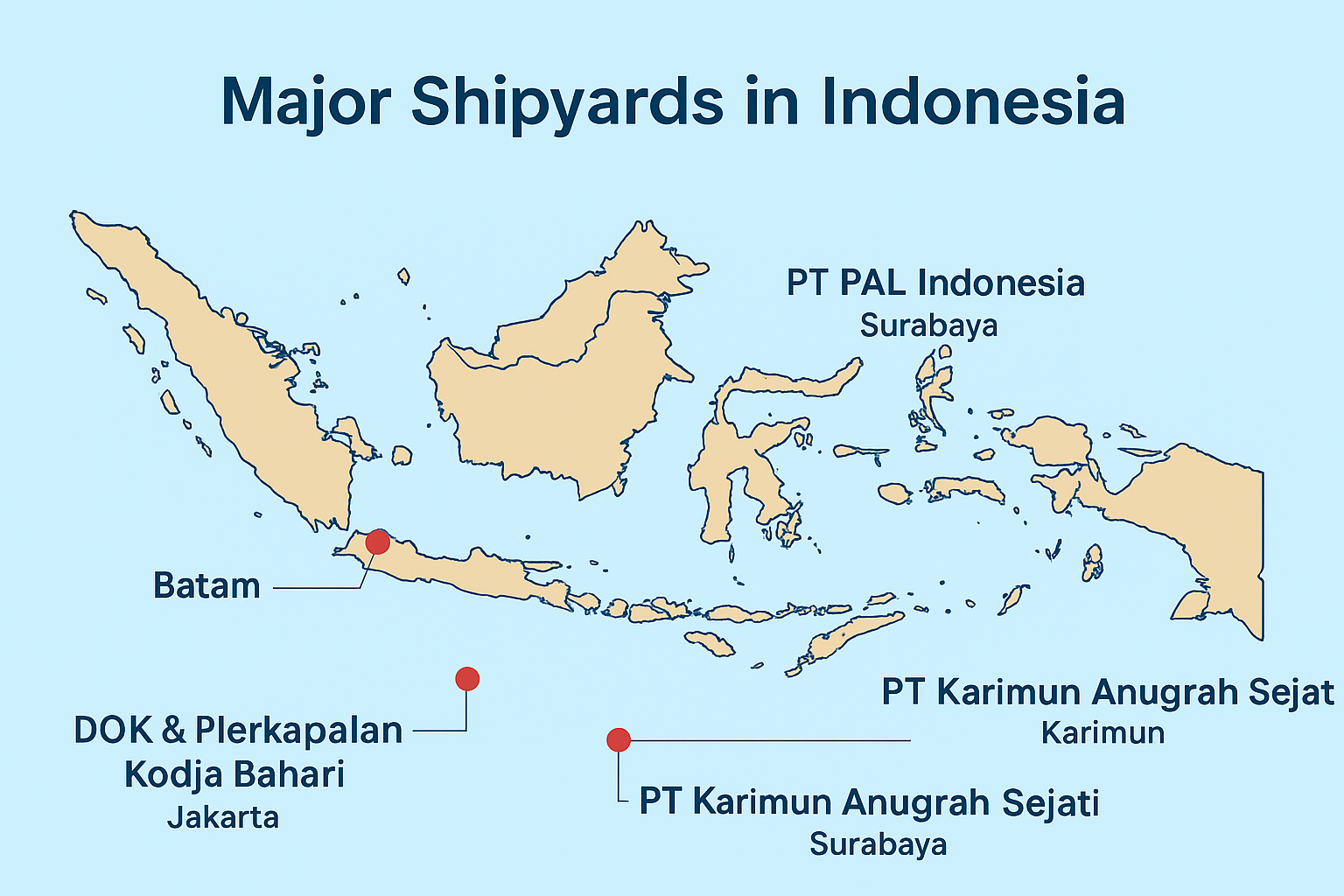
Major shipyards in Indonesia have been growing steadily, offering competitive services in shipbuilding, ship repair, and retrofitting. From state-owned enterprises like PT PAL Indonesia to private hubs in Batam, Surabaya, and Jakarta, the country is positioning itself as a strong player in the global maritime economy.
In this article, we will explore the major shipyards in Indonesia, their contributions to the industry, and their role in shaping the nation’s maritime future.
1. The Importance of Shipyards in Indonesia
Shipyards are critical facilities for Indonesia, considering its dependence on sea transportation. Some of the main reasons shipyards are vital include:
- Domestic Transportation: Ships are essential for connecting remote islands and supporting logistics within Indonesia.
- Economic Growth: Shipbuilding and repair generate significant employment and foreign exchange.
- Defense and Security: Indonesia’s navy relies on modern warships and submarines, many of which are built domestically.
- Global Competitiveness: The presence of advanced shipyards enables Indonesia to compete with countries like South Korea, Japan, and China.
2. Major Shipyards in Indonesia
a. PT PAL Indonesia (Persero)
Located in Surabaya, East Java, PT PAL Indonesia is the largest state-owned shipyard in the country. Established in 1939, PT PAL has grown into a leading company specializing in:
- Naval Shipbuilding: Frigates, submarines (in collaboration with South Korea), and fast attack craft.
- Commercial Vessels: Tankers, container ships, and passenger vessels.
- Ship Repair & Maintenance: Dry docking and retrofitting services.
PT PAL is also a strategic partner for defense projects, contributing to Indonesia’s ambition of becoming a global maritime axis.
b. Batam Shipyards
Batam Island has emerged as a shipbuilding and repair hub due to its strategic location near Singapore and the Malacca Strait. The island hosts more than 100 shipyards, including international players and domestic companies.
Notable shipyards in Batam include:
- ASL Shipyard Indonesia
- Citra Shipyard
- Drydocks World Graha
These shipyards specialize in offshore structures, oil and gas vessels, tugboats, barges, and repair services. The industry in Batam significantly supports Indonesia’s offshore and energy sectors.
c. Dok & Perkapalan Kodja Bahari (DKB)
A state-owned enterprise with multiple facilities across Indonesia, DKB provides services in ship repair, shipbuilding, and offshore engineering. Headquartered in Jakarta, DKB operates several dry docks and slipways, making it a vital contributor to both naval and commercial projects.
d. Dok & Perkapalan Surabaya (DPS)
Based in Surabaya, DPS is another significant shipyard focusing on ship repair and conversion. It provides dry docking, hull maintenance, and engine repairs for various types of vessels, supporting the maritime logistics of East Java and beyond.
e. PT Karimun Anugrah Sejati (KAS)
Located in Karimun Island, Riau Islands, KAS is a modern shipyard specializing in the construction of bulk carriers, oil tankers, and offshore vessels. Its close proximity to Singapore enhances its international competitiveness.
f. Other Notable Shipyards
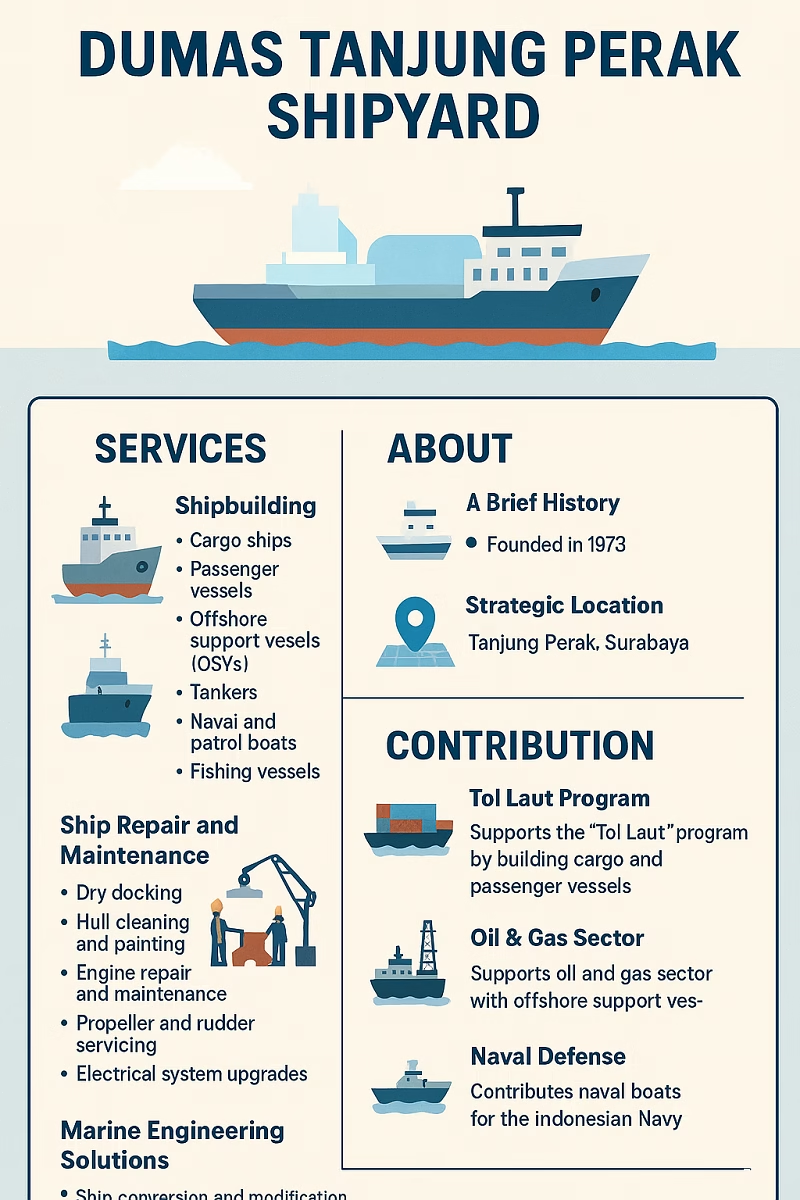
- PT Dumas Tanjung Perak Shipyard (Surabaya) – Specializes in tugboats, patrol vessels, and ferries.
- PT Mariana Bahagia (Palembang) – Known for shipbuilding and steel fabrication.
- PT Bandar Abadi Shipyard (Batam) – Offers construction and repair for offshore and commercial vessels.
3. Services Offered by Major Shipyards in Indonesia
The shipyard industry in Indonesia provides a wide range of services, including:
- Shipbuilding – Construction of naval, commercial, and offshore vessels.
- Ship Repair & Maintenance – Dry docking, hull cleaning, engine overhaul, and retrofitting.
- Conversion Projects – Modifying existing vessels for new purposes (e.g., cargo to passenger ship).
- Offshore Engineering – Building platforms, rigs, and supply vessels for the oil and gas industry.
4. Challenges Faced by Major Shipyards in Indonesia
Despite significant progress, Indonesian shipyards face several challenges:
- Global Competition: Competing with technologically advanced countries such as South Korea and China.
- High Production Costs: Dependence on imported ship components increases costs.
- Skilled Workforce: Need for more advanced training and maritime engineering expertise.
- Infrastructure Limitations: Some shipyards lack modern facilities compared to international standards.
5. Future Outlook of Major Shipyards in Indonesia
The Indonesian government has identified the maritime sector as a national priority under the vision of becoming a Global Maritime Fulcrum (Poros Maritim Dunia). Shipyards are central to this vision, with strategies including:
- Investment in Modern Facilities – Expanding dry docks and shipbuilding infrastructure.
- International Collaboration – Partnerships with South Korea, Japan, and European companies.
- Technology Adoption – Implementing digital ship design, automation, and green shipbuilding.
- Sustainability – Developing eco-friendly vessels to reduce carbon emissions in shipping.
With these initiatives, major shipyards in Indonesia are expected to increase their competitiveness and capture a larger share of the global market.
Conclusion
Indonesia’s major shipyards, from PT PAL Indonesia in Surabaya to the numerous private shipyards in Batam, play a vital role in the country’s maritime industry. They provide shipbuilding, repair, and offshore engineering services that support domestic logistics, defense, and international trade.
Although challenges remain, Indonesia’s shipyard industry is steadily advancing, driven by government support, private investment, and global collaboration. As the maritime sector continues to expand, major shipyards in Indonesia will remain the backbone of the nation’s economy and global trade presence.