1. Introduction to Control Instrumentation
Control instrumentation refers to the collection of devices, systems, and techniques used to monitor, measure, and control industrial processes. These instruments ensure that systems operate within desired parameters, maintaining efficiency, safety, and product quality.
From temperature and pressure regulation to automated flow control, control instrument plays a crucial role in industries such as oil & gas, manufacturing, power generation, and chemical processing.
2. The Role of Control Instrumentation in Industry
Control instrumentation serves as the “nervous system” of industrial operations. Its main objectives include:
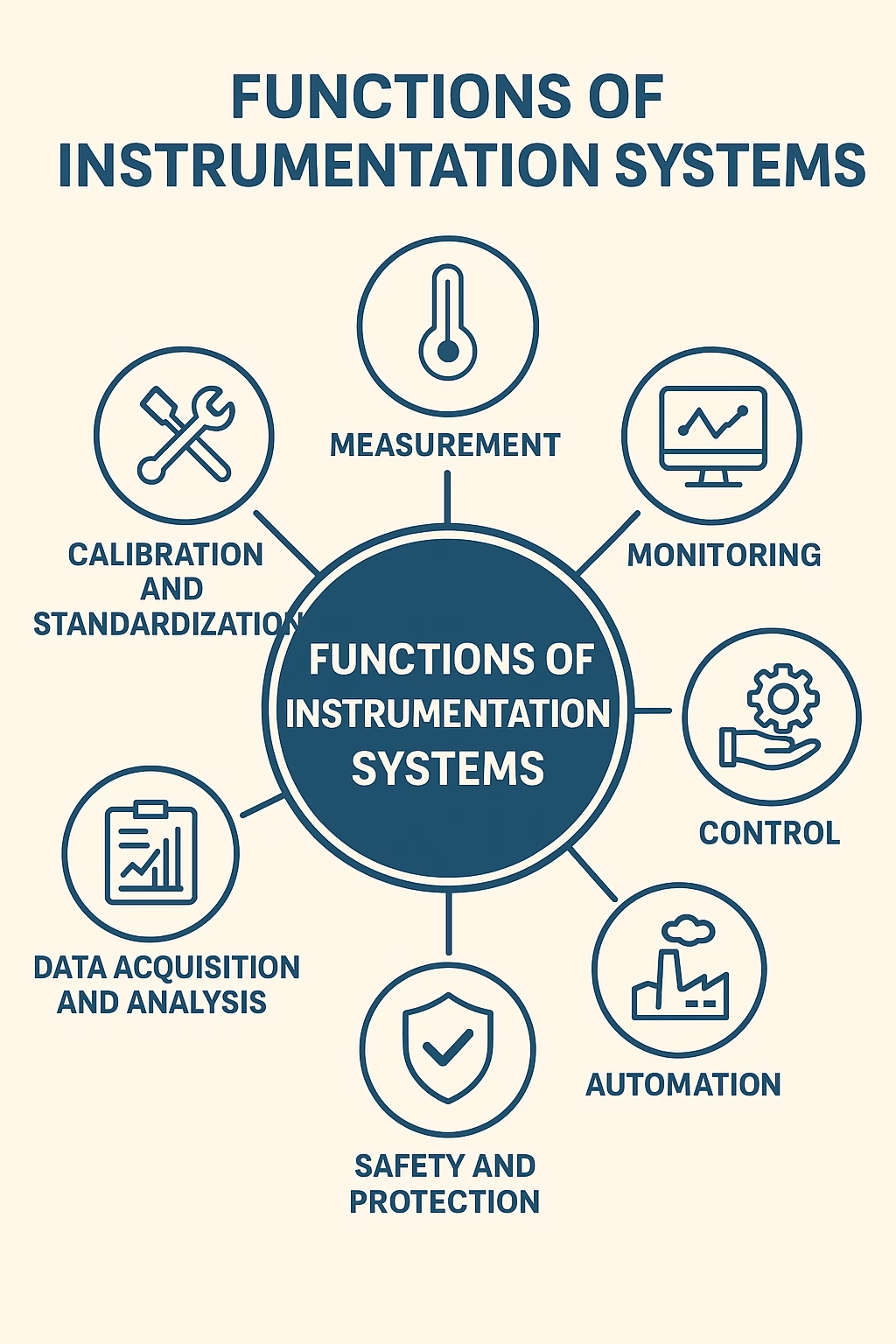
- Monitoring – Continuously tracking variables like temperature, pressure, flow rate, and level.
- Controlling – Automatically adjusting process parameters to maintain optimal conditions.
- Protecting – Preventing dangerous operating conditions through alarms and shutdown mechanisms.
- Optimizing – Ensuring maximum efficiency and minimal waste in production processes.
3. Principles of Control Instrumentation
The foundation of control instrumentation lies in measurement, feedback, and correction.
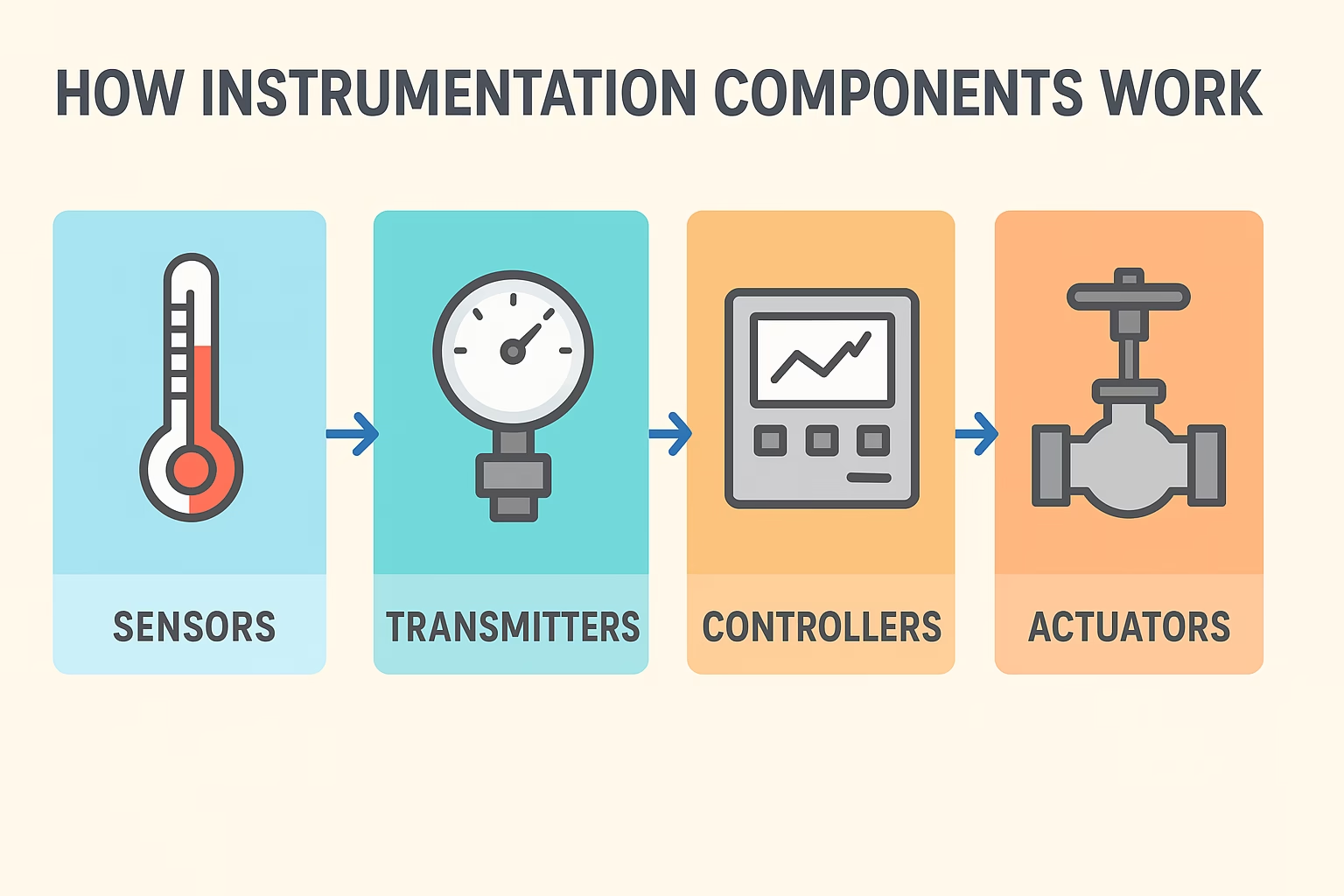
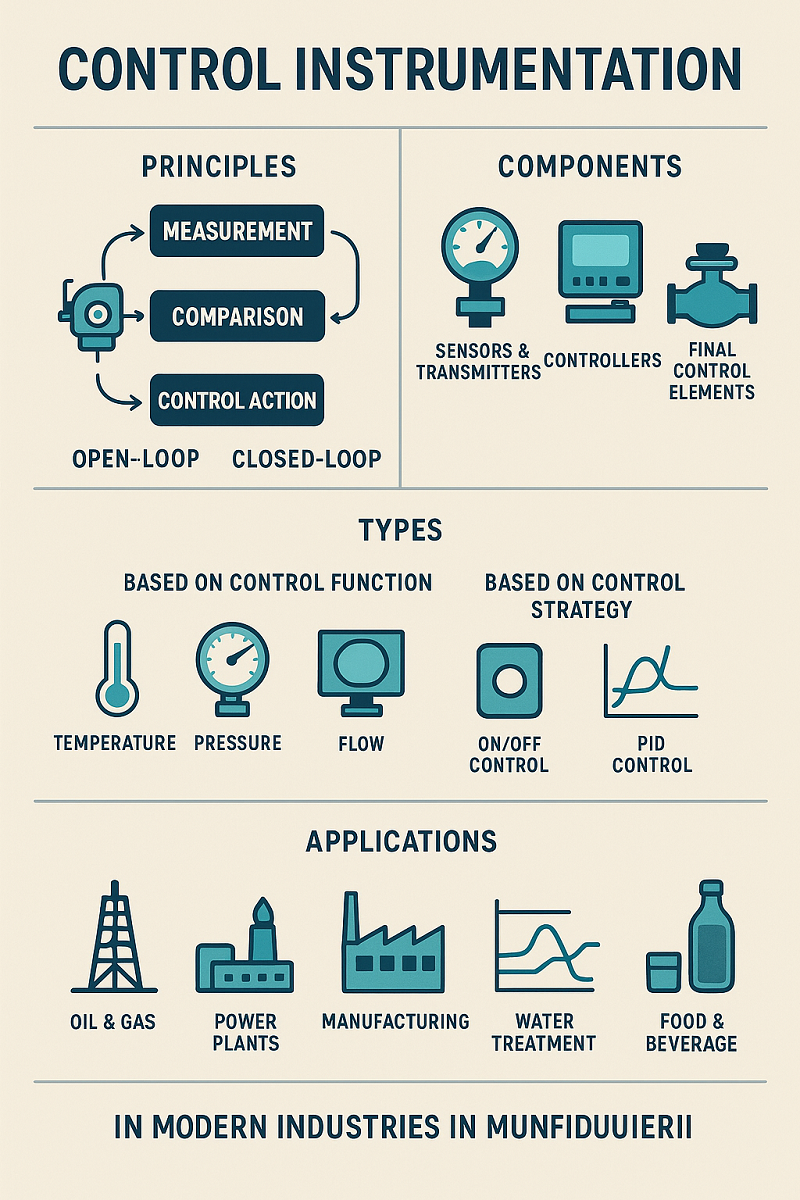
- Measurement – Sensors detect the actual process variable.
- Comparison – The measured value is compared with a setpoint (desired value).
- Control Action – A controller decides the necessary adjustment.
- Actuation – Control devices (e.g., valves, motors) implement the correction.
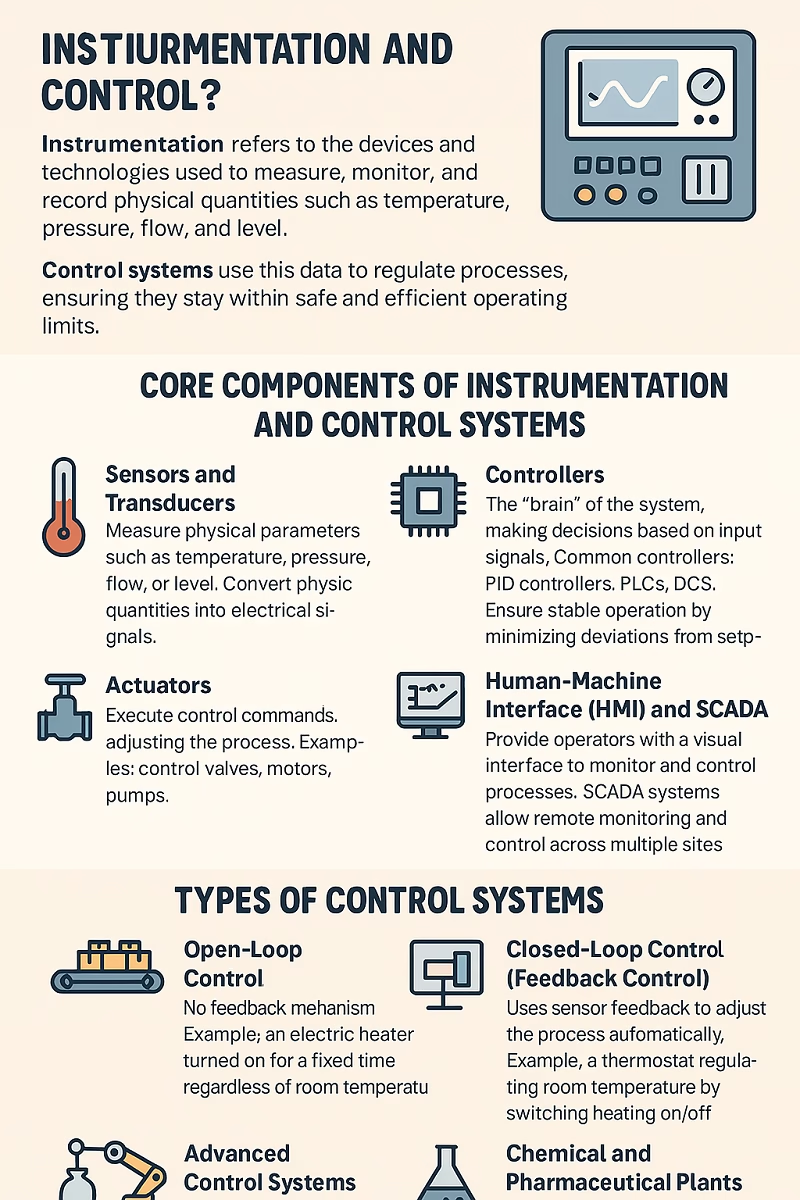
This cycle is known as the control loop and can be open-loop (no feedback) or closed-loop (feedback-based control).
4. Components of a Control Instrumentation System
A complete control instrumentation system typically consists of:
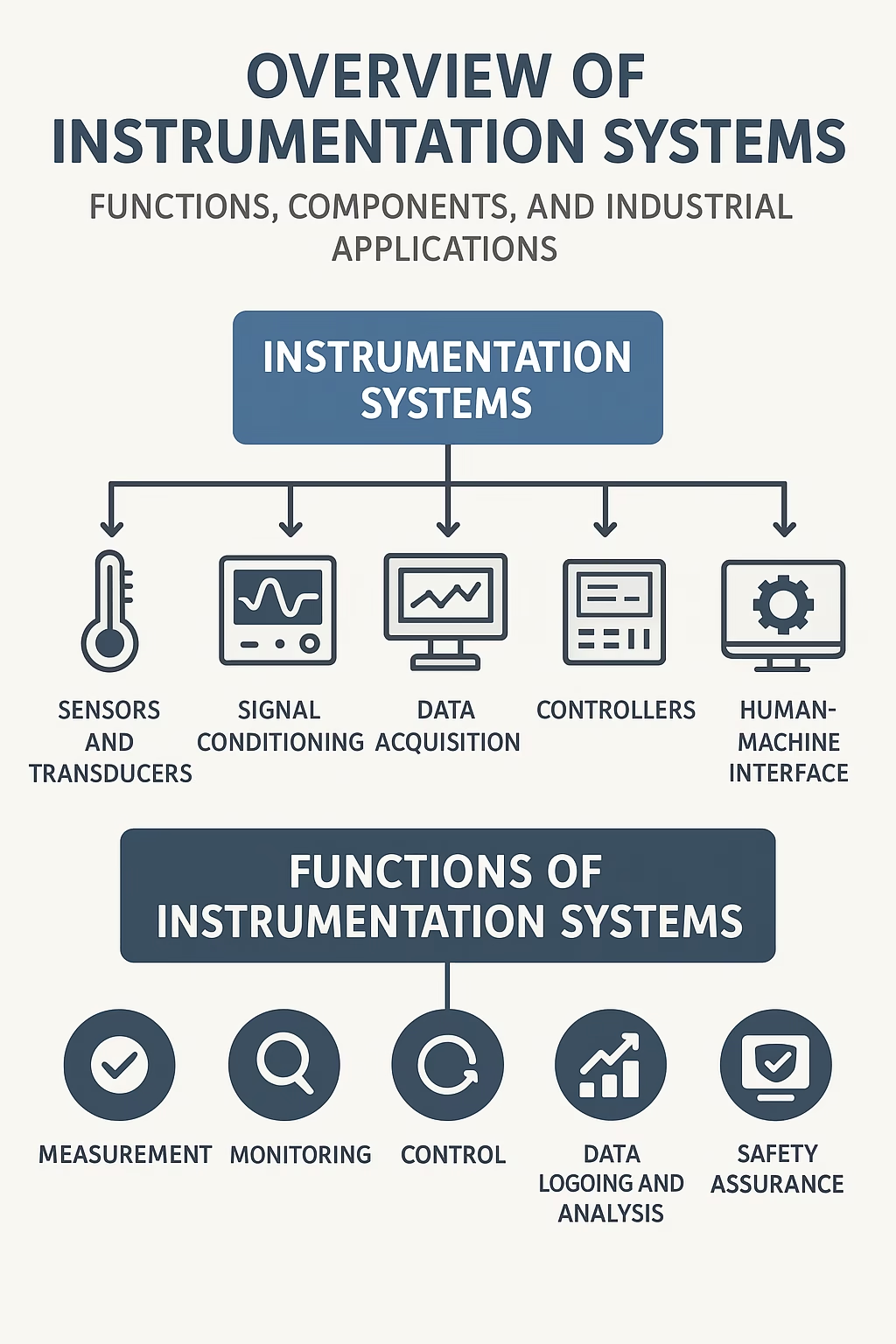
- Sensors & Transmitters – Measure physical quantities (temperature, pressure, flow, etc.) and convert them into signals.
- Controllers – Devices or software that interpret signals and determine corrective actions (e.g., PID controllers).
- Final Control Elements – Actuators, control valves, and motors that implement the controller’s decision.
- Human-Machine Interface (HMI) – Allows operators to monitor and adjust system parameters.
- Communication Systems – Networks like Modbus, Profibus, or Ethernet/IP to link different components.
5. Types of Control Instrumentation
Control instrumentation can be categorized based on function and control method:
A. Based on Control Function
- Temperature Control Instruments – Thermocouples, RTDs, temperature transmitters.
- Pressure Control Instruments – Pressure gauges, pressure transmitters, differential pressure switches.
- Flow Control Instruments – Flow meters, flow transmitters, control valves.
- Level Control Instruments – Ultrasonic level sensors, float switches, radar level transmitters.
B. Based on Control Strategy
- On/Off Control – Simple binary control (e.g., a thermostat).
- Proportional Control – Adjusts output proportionally to the error signal.
- PID Control – Proportional-Integral-Derivative control for precise adjustments.
- Advanced Control – Model predictive control, fuzzy logic, and adaptive control.
6. Applications of Control Instrumentation
Control instrument is essential in various industries:
- Oil & Gas – Monitoring drilling parameters, controlling refinery processes.
- Power Plants – Regulating turbine speed, boiler pressure, and steam flow.
- Manufacturing – Controlling assembly lines, robotic operations, and quality inspection.
- Water Treatment – Managing chemical dosing, flow rates, and filtration systems.
- Food & Beverage – Ensuring precise cooking temperatures, bottling processes, and quality consistency.
7. Advantages of Effective Control Instrumentation
Implementing an efficient control instrument system offers:
- Higher productivity – Minimizes downtime and ensures consistent output.
- Improved safety – Prevents hazardous conditions with automated shutoffs and alarms.
- Energy savings – Optimizes process parameters to reduce waste.
- Better product quality – Maintains uniformity in production.
- Regulatory compliance – Meets industry standards and safety regulations.
8. Challenges in Control Instrumentation
While control instrument offers many benefits, industries may face challenges such as:
- Harsh environmental conditions affecting sensor accuracy.
- Signal interference in communication networks.
- Complex maintenance for advanced systems.
- Cybersecurity risks in connected systems.
To address these issues, industries use ruggedized devices, redundancy systems, and secure communication protocols.
9. Future Trends in Control Instrumentation
The future of control instrument is moving towards smart, interconnected systems driven by:
- Industrial Internet of Things (IIoT) – Sensors connected to cloud platforms for real-time analytics.
- Artificial Intelligence (AI) & Machine Learning – Predictive maintenance and process optimization.
- Wireless Instrumentation – Reducing cabling costs and enabling remote monitoring.
- Digital Twins – Virtual models of processes for testing and optimization.
10. Conclusion
Control instrumentation is at the heart of modern industrial operations. By integrating precise measurement tools, advanced control strategies, and intelligent monitoring systems, industries can achieve better safety, higher productivity, and improved efficiency. As technology evolves, control instrument will continue to transform how industries operate, making processes smarter, faster, and more reliable.