
Advancements in Radio Technology ~ Radio technology has been one of the most influential innovations in human communication. From the first successful wireless transmissions in the late 19th century to the advanced digital systems we use today, radio technology continues to evolve at an incredible pace. It plays a crucial role not only in broadcasting entertainment but also in enabling global communication, navigation, disaster management, and industrial applications.
This article explores the historical journey of radio technology, the major technological advancements, and the emerging trends that are shaping its future.
1. Advancements in Radio Technology: The Historical Beginnings of Radio Technology
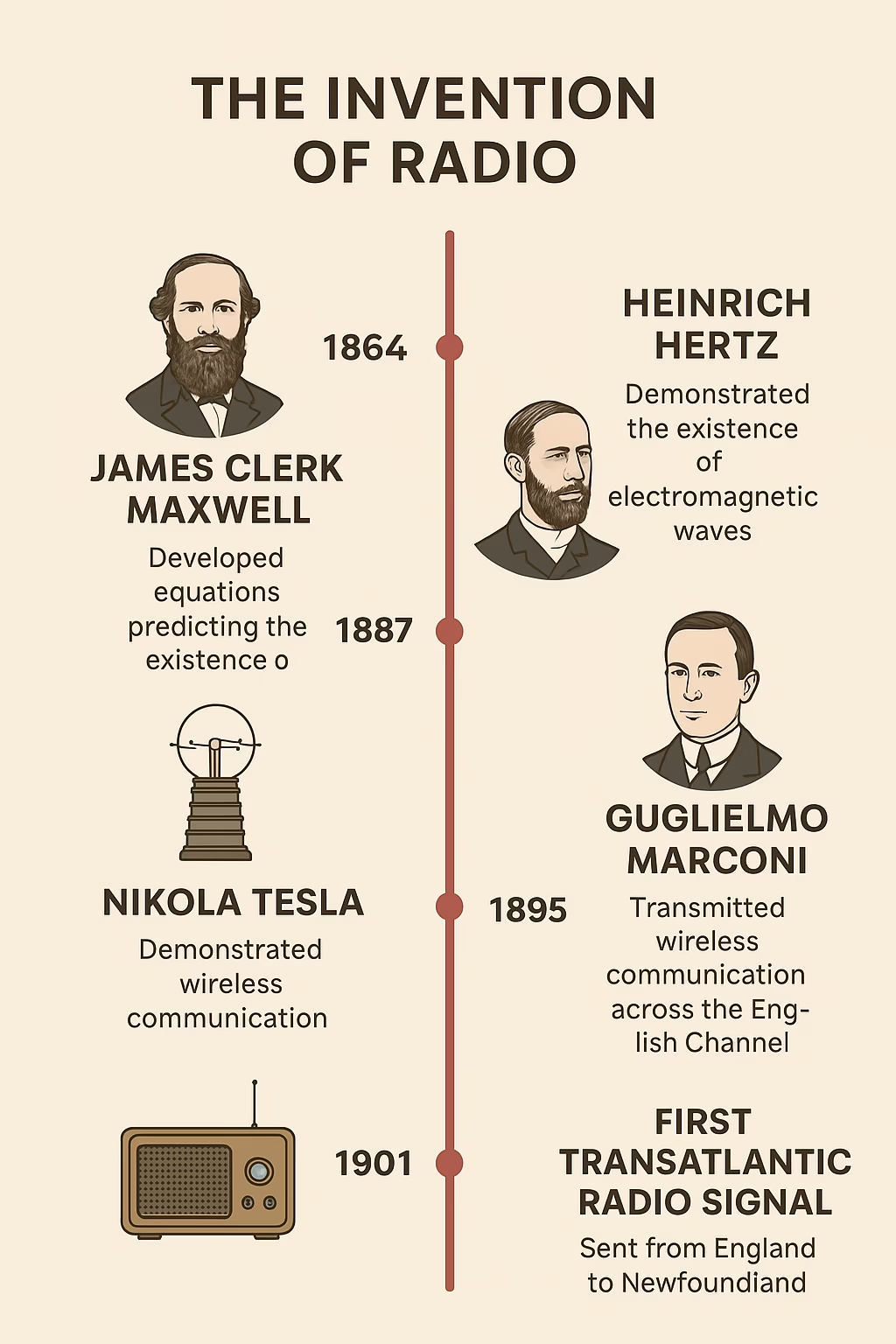
Radio technology began with the groundbreaking work of scientists such as Guglielmo Marconi, who demonstrated wireless communication in the late 1800s. Using radio waves to transmit signals without physical wires, Marconi’s invention transformed communication.
Some key historical milestones include:
- 1895: Marconi’s first wireless transmission.
- 1901: First transatlantic wireless communication.
- 1920s: Birth of public radio broadcasting.
- 1940s-50s: Widespread use of FM radio for better sound quality.
Early radios were analog-based and used vacuum tubes, which were bulky and consumed a lot of power. This would later change with the invention of the transistor in 1947, which made radios smaller, more efficient, and more affordable.
2. Advancements in Radio Technology: The Shift from Analog to Digital Radio
One of the most significant advancements in radio technology was the shift from analog to digital broadcasting.
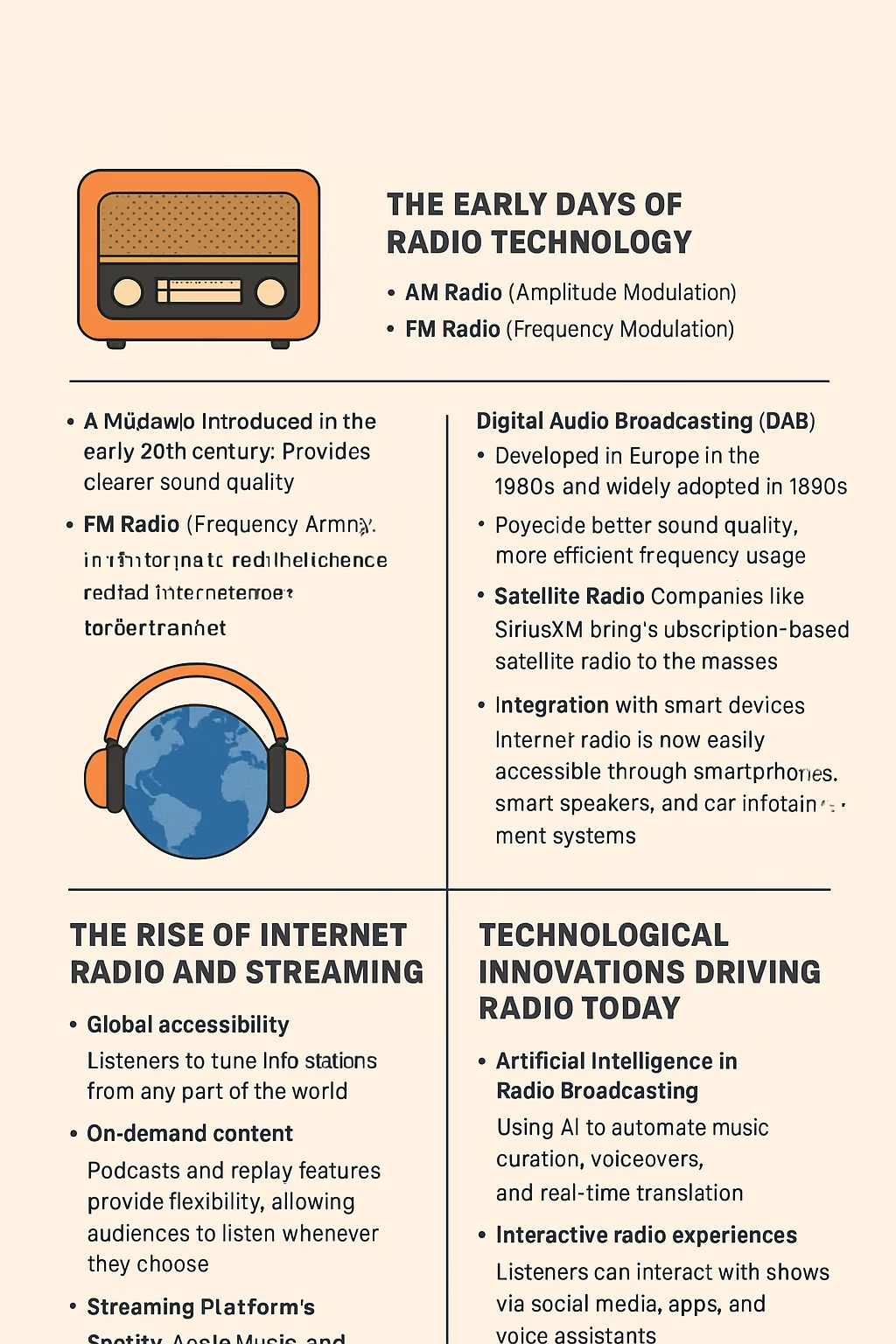
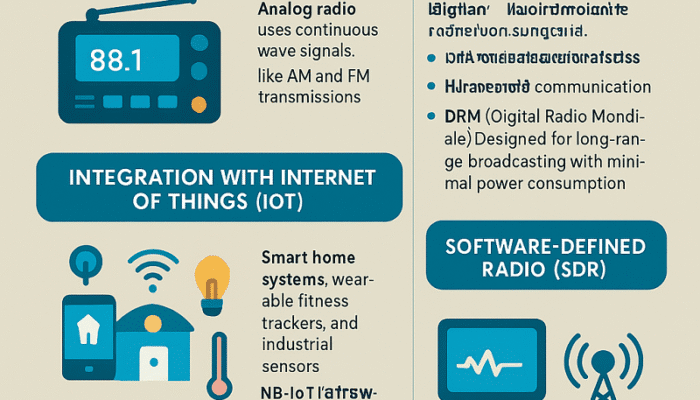
- Analog Radio: Uses continuous wave signals; widely used in AM (Amplitude Modulation) and FM (Frequency Modulation) transmissions.
- Digital Radio: Uses binary signals for higher audio quality, better reception, and additional features such as song titles, traffic updates, and station information.
Popular digital radio standards include:
- DAB (Digital Audio Broadcasting) – Common in Europe and parts of Asia.
- HD Radio – Widely used in North America.
- DRM (Digital Radio Mondiale) – Designed for long-range broadcasting with minimal power consumption.
Digital technology has allowed for clearer audio, reduced interference, and more efficient use of the radio spectrum.
3. Advancements in Radio Technology: Radio in Wireless Communication Systems
Modern radio technology is not limited to entertainment broadcasting; it is a critical part of wireless communication systems.
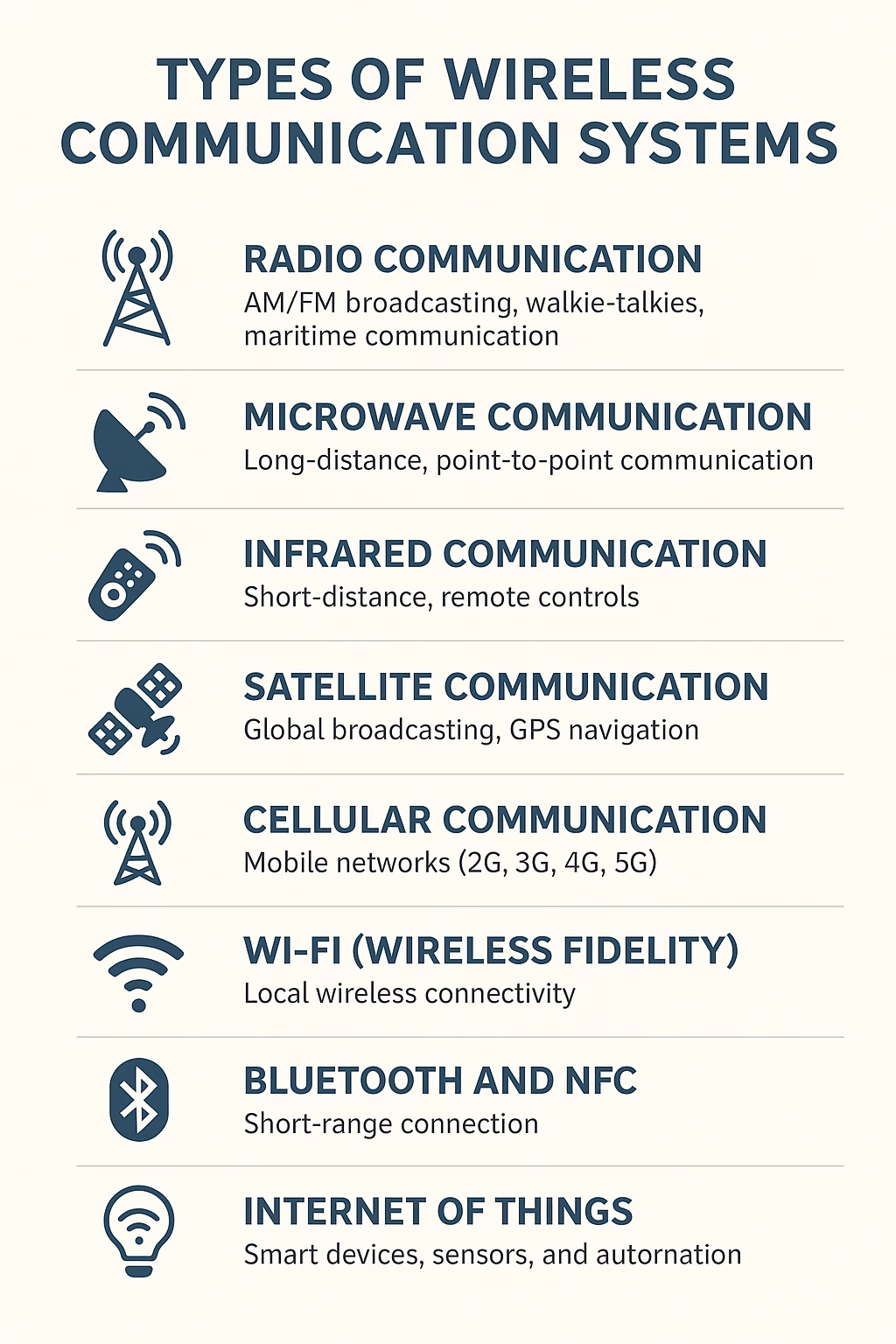
- Mobile Communication: Cellular networks like 4G and 5G rely heavily on radio frequency (RF) technology for data transmission.
- Wi-Fi and Bluetooth: Operate on unlicensed radio frequency bands, enabling short-range wireless connectivity.
- Satellite Communication: Uses radio signals to provide television, navigation (GPS), and global internet services.
Advancements in RF engineering have allowed faster data transmission rates, lower latency, and more secure communication channels.
4. Advancements in Radio Technology: Integration with Internet of Things (IoT)
One of the most exciting advancements in recent years is the integration of radio technology with the Internet of Things (IoT).
IoT devices such as smart home systems, wearable fitness trackers, and industrial sensors rely on radio-based wireless protocols like:
- LoRaWAN (Long Range Wide Area Network)
- Zigbee
- NB-IoT (Narrowband Internet of Things)
These technologies allow devices to communicate efficiently over long distances with minimal power consumption, making them ideal for smart cities and remote monitoring applications.
5. Advancements in Radio Technology: Software-Defined Radio (SDR)
Software-Defined Radio (SDR) represents a major leap forward in flexibility and adaptability. Instead of using fixed hardware components, SDRs use software to control radio functions. This means:
- Easier updates and reconfiguration.
- Support for multiple communication standards.
- Lower development costs.
SDR technology is used in military communication, research, and amateur radio due to its ability to adapt to new protocols without changing the hardware.
6. Modern Broadcasting Techniques
Radio broadcasting has expanded beyond traditional AM/FM. Some notable advancements include:
- Internet Radio & Streaming: Allows global access to radio stations through online platforms.
- Podcasting: A modern form of on-demand radio content.
- Hybrid Radio: Combines broadcast signals with internet data for enhanced interactivity.
These developments have made radio content more accessible and customizable, especially for younger audiences.
7. Future Trends in Radio Technology
Looking ahead, several trends are set to shape the next generation of radio communication:
- 5G and Beyond: Ultra-reliable, low-latency radio communication for autonomous vehicles, remote surgery, and immersive VR experiences.
- Cognitive Radio: AI-driven systems that automatically detect available frequencies and optimize usage.
- Quantum Radio: Leveraging quantum mechanics for ultra-secure communication.
- Green Radio Technology: Energy-efficient systems designed to reduce environmental impact.
8. Conclusion
Radio technology has evolved from simple Morse code transmissions to high-speed digital communication systems that connect billions of devices worldwide. It remains an essential pillar of modern communication, adapting to new demands and integrating with cutting-edge technologies like IoT, AI, and quantum communication.
As innovation continues, radio will likely play an even more important role in shaping global connectivity, bridging digital divides, and enabling smart, interconnected societies.