Introduction
Radio frequencies (RF) are the lifeblood of modern communication systems. From the music you hear on your FM radio to the Wi-Fi that connects your laptop, and even the GPS that guides you through traffic, RF plays a vital role in our daily lives. This invisible part of the electromagnetic spectrum enables the transmission of data, sound, and images across vast distances without physical connections.
In this article, we will explore the fundamentals of radio frequencies, their classifications, applications, and why they remain an irreplaceable technology in the 21st century.
What Are Radio Frequencies?
Radio frequencies refer to the range of electromagnetic waves used for transmitting data wirelessly. They are measured in Hertz (Hz), representing the number of cycles per second. The RF spectrum generally spans from 3 kHz to 300 GHz, covering various communication and broadcasting applications.
RF is a subset of the broader electromagnetic spectrum, which also includes microwaves, infrared, visible light, ultraviolet, X-rays, and gamma rays. What makes radio frequencies unique is their ability to travel long distances, penetrate buildings, and be modulated to carry different types of information.
The Radio Frequency Spectrum
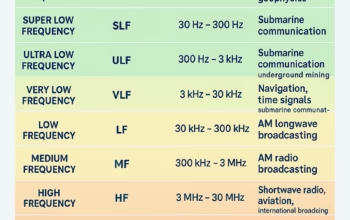
The radio frequency spectrum is divided into specific bands, each allocated for different services to prevent interference. Here’s a breakdown:
| Band Name | Frequency Range | Common Uses |
|---|---|---|
| Very Low Frequency (VLF) | 3 – 30 kHz | Submarine communication, navigation |
| Low Frequency (LF) | 30 – 300 kHz | Maritime communication, navigation beacons |
| Medium Frequency (MF) | 300 kHz – 3 MHz | AM radio broadcasting |
| High Frequency (HF) | 3 – 30 MHz | Shortwave radio, aviation communication |
| Very High Frequency (VHF) | 30 – 300 MHz | FM radio, television, two-way radios |
| Ultra High Frequency (UHF) | 300 MHz – 3 GHz | TV broadcasting, mobile phones, Wi-Fi |
| Super High Frequency (SHF) | 3 – 30 GHz | Satellite communication, radar |
| Extremely High Frequency (EHF) | 30 – 300 GHz | Advanced radar, 5G networks, experimental communication |
These divisions ensure that different wireless services can coexist without harmful interference.
How Radio Frequencies Work
RF communication works by generating electromagnetic waves that propagate through air or space. The key steps include:
- Generation – A transmitter generates RF signals using an oscillator.
- Modulation – The signal is modulated to encode data (AM, FM, or digital modulation).
- Transmission – The modulated signal is sent via an antenna.
- Propagation – RF waves travel through different mediums (air, space, water) depending on the frequency.
- Reception – A receiving antenna captures the signal.
- Demodulation – The receiver extracts the original data from the RF signal.
Modulation Techniques in RF
To send information, RF signals must be modulated. Common techniques include:
- Amplitude Modulation (AM) – Varies the amplitude of the carrier wave.
- Frequency Modulation (FM) – Alters the frequency of the carrier wave.
- Phase Modulation (PM) – Changes the phase of the carrier wave.
- Digital Modulation – Includes QAM, PSK, and FSK for transmitting data in binary form.
Applications of Radio Frequencies
1. Broadcasting
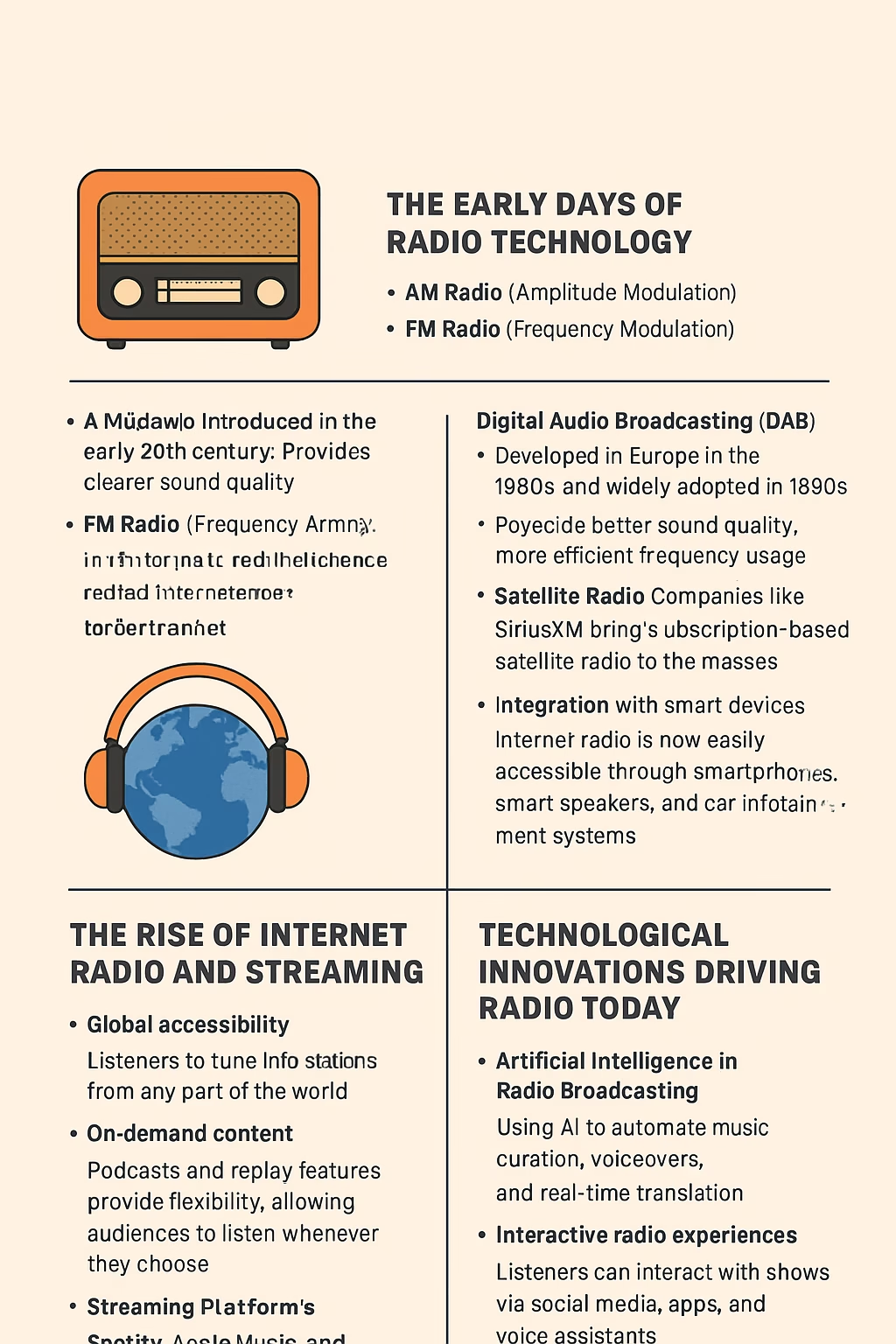
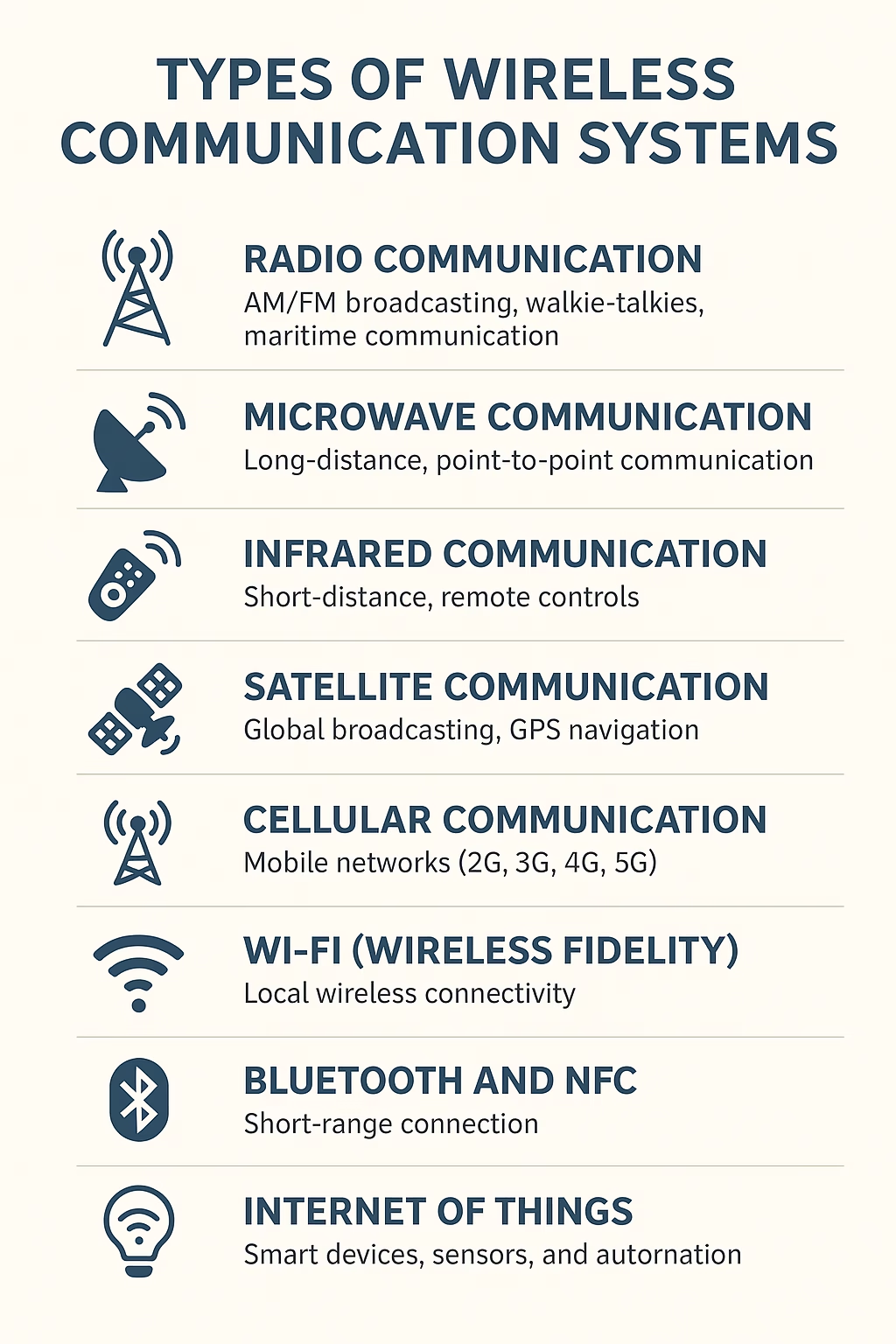
AM and FM radio, as well as television, rely heavily on RF. The stability and reach of RF waves make them ideal for transmitting entertainment and news to large audiences.
2. Telecommunications
Mobile phones, VoIP, and satellite phones operate on assigned RF bands. Without RF technology, wireless telecommunication would not exist.
3. Internet Connectivity
Wi-Fi networks use 2.4 GHz and 5 GHz RF bands to deliver high-speed internet without cables.
4. Navigation Systems
GPS and maritime navigation use specific RF frequencies for accurate positioning and guidance.
5. Military and Defense
Secure communication, radar systems, and remote-controlled equipment rely on various RF ranges.
6. Industrial and Medical Uses
RF technology is also applied in MRI machines, industrial heating, and RFID tagging systems.

Advantages of Radio Frequencies
- Wireless Operation – Eliminates the need for physical connections.
- Long Range – Some frequencies can travel thousands of kilometers.
- Versatility – Supports voice, video, and data transmission.
- Scalability – Can handle both small-scale and large-scale communication networks.
Challenges and Limitations
While RF technology offers numerous benefits, it faces certain challenges:
- Interference – Overlapping frequencies can cause disruption in communication.
- Bandwidth Limitations – The RF spectrum is finite, requiring careful allocation.
- Signal Loss – Higher frequencies tend to weaken faster over long distances.
- Regulation Compliance – Every country has specific RF allocation rules enforced by agencies like the FCC or ITU.
Future of Radio Frequencies
The demand for RF spectrum is growing due to technologies like 5G, the Internet of Things (IoT), and satellite broadband. Future developments may include:
- Dynamic Spectrum Allocation – Allowing frequencies to be shared dynamically.
- Higher Frequency Utilization – Expanding into millimeter-wave bands for ultra-fast data.
- Integration with AI – Optimizing spectrum management and reducing interference.
Conclusion
Radio frequencies are the invisible threads that weave together our modern, connected world. They enable communication, navigation, broadcasting, and countless other applications. As technology continues to evolve, efficient use and management of RF will remain crucial for ensuring reliable, high-speed, and interference-free communication.
From the earliest AM broadcasts to today’s high-speed 5G networks, radio frequencies have proven themselves as an indispensable part of human progress — and they are set to remain at the heart of innovation for decades to come.