Conductors Based on Material ~ Electrical conductors are essential components in any electrical or electronic system. They are materials that allow the flow of electric current by offering low resistance to the movement of electrons. However, not all conductors are created equal — especially when categorized based on their material composition.
Each conductive material offers unique characteristics that make it suitable for specific applications. This article explores the most common types of electrical conductors based on their material types, their properties, advantages, disadvantages, and typical use cases in the electrical industry.
1. What is an Electrical Conductor?
An electrical conductor is any material that allows the easy flow of electric current due to the presence of free-moving electrons. The quality of a conductor is primarily determined by its electrical conductivity, which depends on the material’s atomic structure and temperature.
The efficiency of a conductor is often measured using the unit siemens per meter (S/m) — the higher the conductivity, the better the material conducts electricity.
2. Why Material Matters in Conductors
The material used for a conductor significantly affects the overall performance of electrical systems, including:
- Resistance and power loss
- Current carrying capacity
- Weight and flexibility
- Durability and corrosion resistance
- Cost of installation and maintenance
Choosing the right material is critical for safety, efficiency, and cost-effectiveness.
3. Common Types of Conductors Based on Material
3.1 Conductors Based on Material: Copper Conductors
Properties:
- Excellent electrical conductivity (second only to silver)
- Ductile and malleable
- High tensile strength
- Corrosion-resistant
Advantages:
- Reliable and durable
- Suitable for high-load applications
- Widely available
Disadvantages:
- More expensive than aluminum
- Heavier, which can increase installation cost
Applications:
- Power transmission lines
- Residential and commercial wiring
- Transformers and motors
3.2 Conductors Based on Material: Aluminum Conductors
Properties:
- Approximately 60% the conductivity of copper
- Lightweight
- More affordable than copper
Advantages:
- Cost-effective
- Lightweight makes it easier to handle and install
Disadvantages:
- Less conductive than copper
- Prone to oxidation (though aluminum oxide layer protects further corrosion)
- Requires special connectors and installation practices
Applications:
- High-voltage overhead power lines
- Utility grids
- Aerospace and automotive wiring
3.3 Conductors Based on Material: Silver Conductors
Properties:
- Highest electrical conductivity of all metals
- Excellent thermal conductivity
- Anti-corrosive
Advantages:
- Superior performance in high-precision applications
- Excellent for high-frequency circuits
Disadvantages:
- Very expensive
- Rarely used in large-scale power distribution
Applications:
- High-frequency RF and microwave circuits
- Specialized electronics and military equipment
- Coating for connectors and circuit boards
3.4 Conductors Based on Material: Gold Conductors
Properties:
- Very good conductor (not as high as silver or copper)
- Extremely resistant to oxidation and corrosion
Advantages:
- Long-term reliability
- Ideal for low-voltage and signal applications
Disadvantages:
- Expensive
- Not suitable for high-power systems
Applications:
- Circuit board contacts
- High-end electronic components
- Aerospace connectors
3.5 Conductors Based on Material: Iron Conductors
Properties:
- Moderate conductivity
- High tensile strength
Advantages:
- Strong and durable
- Cheap and readily available
Disadvantages:
- Corrodes easily
- Not efficient for power transmission
Applications:
- Grounding systems
- Historical power applications
- Reinforced composite conductors
3.6 Nickel and Nickel Alloys
Properties:
- Corrosion-resistant
- Relatively high resistivity
Advantages:
- Stable in harsh environments
- Used where resistance and strength are both required
Disadvantages:
- Low electrical conductivity
- Expensive compared to copper or aluminum
Applications:
- Thermocouples
- Heating elements
- Aerospace and military components
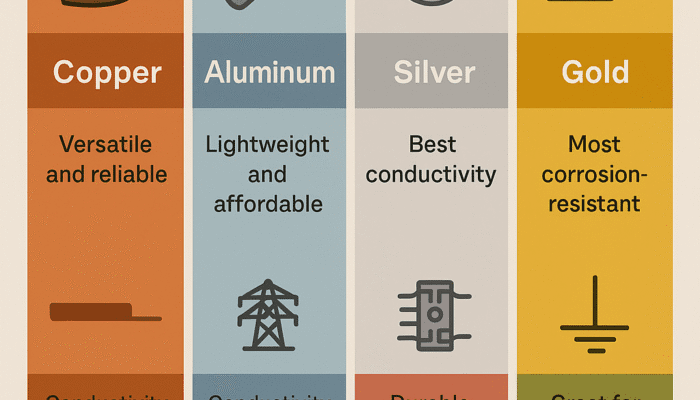
4. Comparison Table of Common Conductive Materials
| Material | Conductivity (% IACS) | Corrosion Resistance | Cost | Weight | Application Suitability |
|---|---|---|---|---|---|
| Silver | 105 | High | Very High | Medium | Specialized electronics |
| Copper | 100 | High | High | Heavy | General wiring, motors |
| Gold | 70 | Very High | Very High | Heavy | Connectors, circuits |
| Aluminum | 61 | Medium | Low | Light | Power lines |
| Iron | 17 | Low | Low | Heavy | Grounding, structural |
| Nickel | 22 | High | High | Heavy | Harsh environment use |
5. Factors to Consider When Choosing a Conductor Material
When selecting a conductor material for a particular electrical application, consider the following:
- Electrical requirements: Conductivity, voltage, and current demands
- Environmental conditions: Moisture, temperature, corrosion risks
- Mechanical properties: Strength, flexibility, weight
- Economic factors: Cost of material, installation, and maintenance
- Regulatory standards: Compliance with local and international codes
6. Future Trends in Conductor Materials
The demand for better-performing and more sustainable conductor materials is pushing innovation in areas like:
- Carbon Nanotubes (CNTs): Ultra-light and extremely conductive
- Graphene: Promising high-efficiency conductor with mechanical flexibility
- Superconductors: Zero resistance conductors for specialized systems (e.g., MRI, maglev trains)
These materials are still under research and development but show great promise for the future of electrical engineering.
Conclusion of Conductors Based on Material
Understanding electrical conductors based on their material composition helps in making smarter choices for electrical systems. Whether you’re designing a high-voltage power grid or a compact microelectronic device, the material you choose directly influences efficiency, safety, and cost.
Copper and aluminum dominate the industry, but silver, gold, and specialized alloys are indispensable in high-performance applications. With new technologies on the horizon, the future of electrical conductors is likely to be lighter, stronger, and more efficient than ever.