
Electronics Component ~ Modern electrical and electronic systems, whether found in ships, industrial automation panels, or consumer electronics, rely on electronic components —the building blocks of circuits that control, process, or transmit electrical signals.
This comprehensive guide by Abi Royen covers everything you need to know about electronic component types, including how they work, how they’re classified, international compliance requirements, examples of real-world use, and how to maintain them for long-term reliability.
What Are Electronic Components ?
Electronic components are basic physical entities in electronic circuits that influence the flow of electricity. They come in passive and active varieties and are used to:
- Control voltage and current
- Store energy
- Amplify signals
- Switch electrical states
- Convert one signal form to another
From a simple resistor to a sophisticated microcontroller, each component plays a specific role in enabling intelligent automation, signal processing, or energy distribution.
Importance of Electronic Components in Industry
In critical systems—like marine engine control, industrial robots, or renewable energy systems—electronic components:
- Enable automation and remote control
- Protect systems from overload and fault conditions
- Allow real-time monitoring and diagnostics
- Reduce power consumption via smart circuitry
Abi Royen supplies and services these components in demanding sectors like shipping, oil & gas, and offshore platforms.
Classification of Electronic Components
Electronic components can be broadly classified into:
1. Passive Electronics Component
They do not require external energy to operate (do not amplify or switch signals).
a. Resistors
- Function: Limit current flow
- Types: Carbon film, wire-wound, surface-mount (SMD), variable
- Example: Voltage divider, current limiter for LEDs
b. Capacitors
- Function: Store and release electrical energy
- Types: Ceramic, electrolytic, tantalum, film
- Example: Power smoothing, signal coupling, start circuits in motors
c. Electronics Component Inductors
- Function: Resist changes in current, store energy in magnetic fields
- Types: Air core, iron core, toroidal
- Example: Used in filters, transformers, DC-DC converters
d. Transformers
- Function: Transfer energy between circuits via electromagnetic induction
- Types: Step-up, step-down, isolation
- Example: Used in power supplies, audio devices, and marine converters
2. Active Electronics Component
They need an external source of power and can amplify or switch signals.
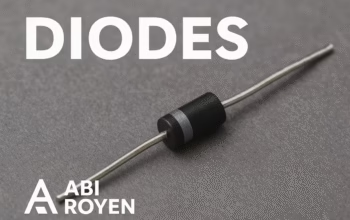
a. Diodes
- Function: Allow current in one direction only
- Types: Zener, Schottky, Light-emitting (LED), Photodiode
- Example: Rectifiers, overvoltage protection, indicators
b. Electronics Component Transistors
- Function: Act as electronic switches or amplifiers
- Types: BJT, FET, MOSFET, IGBT
- Example: Used in inverters, amplifiers, control boards
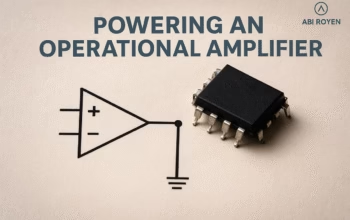
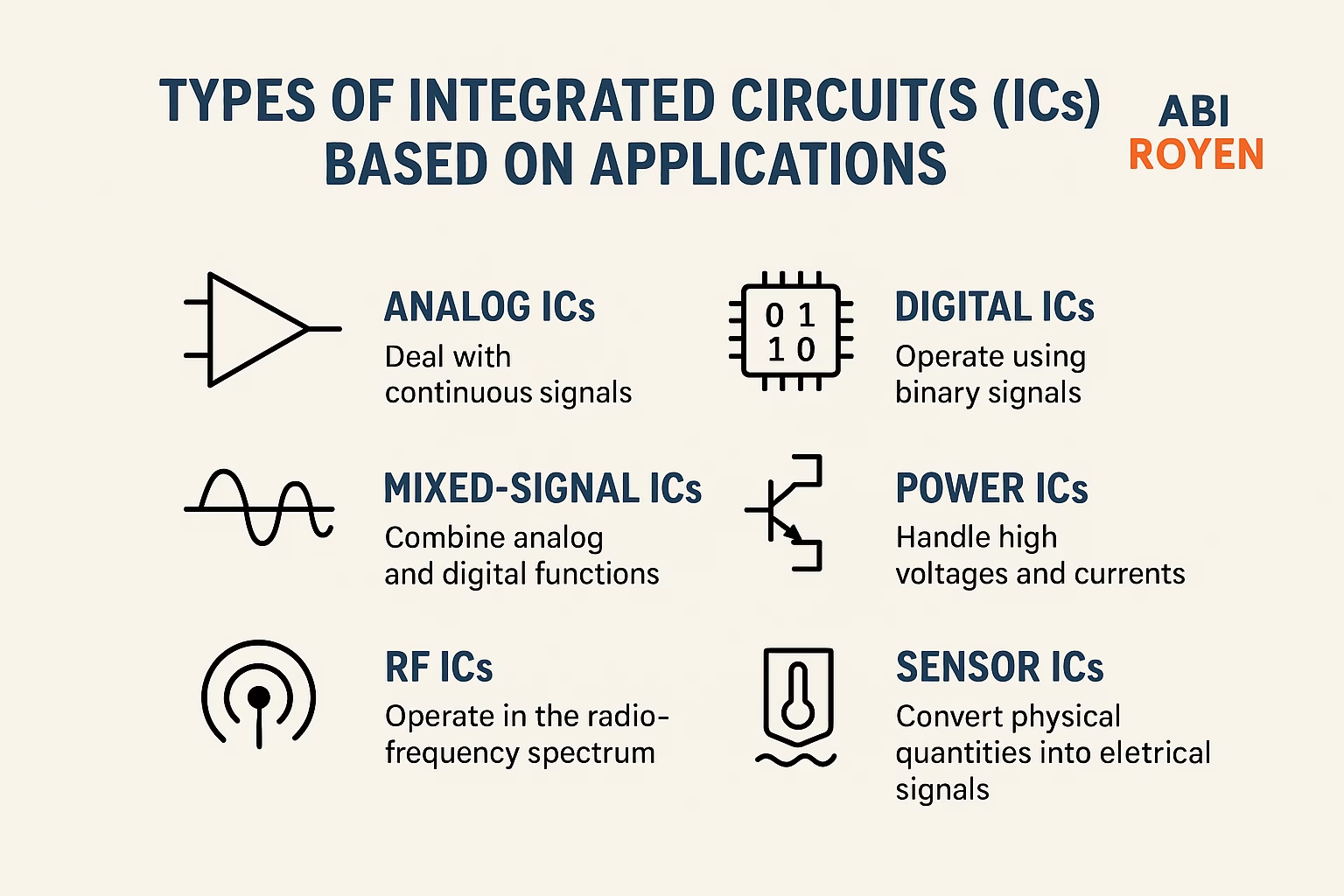
c. Integrated Circuits (ICs)
- Function: Contain multiple electronic components on a chip
- Types: Analog, digital, mixed-signal
- Example: Microcontrollers, operational amplifiers, timers
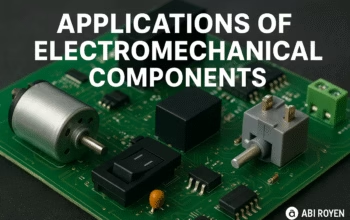
3. Electromechanical Components
a. Relays
- Function: Electrically operated switches
- Types: Electromechanical, solid-state
- Example: Used in control panels, marine automation
b. Switches
- Function: Manually or automatically open/close circuits
- Types: Toggle, push-button, DIP, rotary
c. Connectors
- Function: Join two or more components or circuits
- Types: Header, terminal blocks, RF connectors
d. Displays
- Function: Show visual information
- Types: LED, LCD, OLED, 7-segment
Global Standards & Compliance of Electronics Component
1. IEC & ISO
- IEC 60617: Graphical symbols for diagrams
- ISO/IEC 17025: Calibration of test equipment for electronic components
- IEC 60068: Environmental testing for electronic parts (temperature, vibration)
2. RoHS (Restriction of Hazardous Substances)
- Bans hazardous materials like lead and mercury in electronics
- Compliance is mandatory in the EU and adopted in Asia and North America
3. IPC Standards (PCB and Assembly)
- IPC-A-610: Acceptability of Electronic Assemblies
- IPC-2221: Generic standard for PCB design
4. Classification Society Requirements
Marine electronics must often be certified or tested under DNV, ABS, Lloyd’s, or Bureau Veritas, especially for safety-critical systems like:
- Navigation control units
- Emergency stop systems
- Fire suppression alarms
Applications Electronics Component in Marine & Industrial Systems
1. Marine Navigation Systems
- Use microcontrollers, gyros, capacitors, and RF filters for GPS and AIS systems
2. Engine Room Control Panels
- Integrate transistors, relays, ICs, and sensors to control pumps, valves, alarms
3. Renewable Energy Systems
- Power inverters and battery management use MOSFETs, IGBTs, and thermal sensors
4. Industrial Robotics
- Require precision controllers built with active ICs, resistors, and stepper drivers
5. Offshore Oil Rigs
- Use ruggedized electronic components for zone-rated (hazardous area) applications
Example: Electronics Component Application on a Tanker Vessel
An oil tanker’s automatic ballast control system uses:
- Pressure sensors with signal conditioning ICs
- Capacitors and resistors for signal filtering
- Solid-state relays for valve actuation
- Microcontroller-based logic board for automation
Faults in any of these components can compromise vessel stability and cause regulatory non-compliance.
Maintenance & Best Practices Electronics Component
Common Issues:
| Problem | Cause | Prevention |
|---|---|---|
| Corrosion on pins | Salt air, humidity | Use conformal coating & sealed enclosures |
| Component drift | Thermal aging | Periodic recalibration |
| Short circuits | Dust, vibration, or solder fatigue | Regular inspection & thermal scanning |
| Signal noise | Capacitor failure | Replace electrolytic capacitors every 3–5 years |
Maintenance Tips:
- Store components in anti-static, dry environments
- Use multimeters and LCR meters for basic testing
- Clean PCBs with isopropyl alcohol or ultrasonic cleaners
- Inspect solder joints under magnification
- Replace components during preventive dry dock inspections
Calibration & Testing of Electronics Component
For sensors and active components, periodic calibration ensures accuracy:
- Use signal generators, oscilloscopes, and component testers
- Traceable to ISO 17025 standards
- Especially critical for navigation electronics, fuel meters, and alarms
Abi Royen provides calibration and testing services for marine and industrial electronics.
Why Choose Abi Royen
At Abi Royen, we offer:
- Supply of certified electronic components (SMD, DIP, through-hole)
- Circuit board assembly and repair
- Fault tracing and replacement services
- Calibration and inspection for ship and industrial clients
- Component kits for emergency repairs or maintenance
Trusted Brands We Work With:
- Vishay, STMicroelectronics, Texas Instruments, Omron, Panasonic, ABB, WAGO
Conclusion of Electronics Component
Electronic components are the invisible workforce behind every automated system. Knowing their function, type, and maintenance requirements is vital for engineers, technicians, and operators—especially in marine and industrial sectors where reliability is mission-critical.
Abi Royen is here to support your operations with quality components, testing, and maintenance expertise. Visit https://abiroyen.com to consult our electronics specialists today.