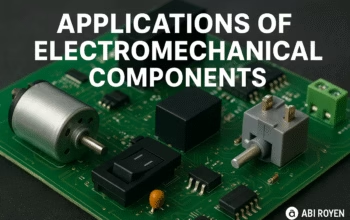
Types of Electromechanical components ~ Electromechanical components are vital building blocks in a wide range of industrial, commercial, and consumer systems. These components serve as the interface between electrical and mechanical processes, allowing automation, control, and movement in modern machinery.
In this article, we’ll explore the main types of electromechanical components, detailing how each works, where they are used, and why they’re essential in the design and operation of electromechanical systems.
What Are Types of Electromechanical Components?
Electromechanical components are devices that convert electrical signals into mechanical movement or vice versa. They function as both sensors and actuators, bridging the gap between electronics and moving parts in machines or devices.
Key Characteristics:
- Electrical input or output
- Mechanical motion or force
- Often used in control systems
- Integral to automation and robotics
1. Types of Electromechanical Components: Relays
Function:
A relay is an electrically operated switch that opens or closes a circuit when energized.
Types of Relays:
- Electromechanical Relays (EMR): Use magnetic coils to actuate switching.
- Solid-State Relays (SSR): Use semiconductor devices instead of moving parts.
Applications:
- Motor control circuits
- Home appliances
- Automotive electronics
- Industrial automation
Advantages:
- Electrical isolation between input and output
- Capable of switching high currents
2. Types of Electromechanical Components: Solenoids
Function:
Solenoids convert electrical energy into linear mechanical movement.
Types:
- Linear Solenoids: Push or pull objects in a straight line.
- Rotary Solenoids: Create rotational motion for short movements.
Applications:
- Locking mechanisms
- Valve control in fluid systems
- Automotive starters
Advantages:
- Simple construction
- Fast response time
3. Types of Electromechanical Components: Electric Motors
Function:
Electric motors convert electrical energy into rotational mechanical energy.
Common Types of Motors:
- DC Motors: Ideal for variable-speed applications.
- AC Motors: Used for fixed-speed operations in industrial machinery.
- Stepper Motors: Move in discrete steps, ideal for precise positioning.
- Servo Motors: High-precision motors with feedback control.
Applications:
- Conveyor belts
- Pumps and fans
- Robotics
- Electric vehicles
Advantages:
- High efficiency
- Wide power range
- Easy to integrate with control systems
4. Types of Electromechanical Components: Switches
Function:
Switches are mechanical devices that make or break an electrical circuit.
Types of Switches:
- Toggle Switches: Manual on/off control.
- Push-Button Switches: Momentary or maintained action.
- Limit Switches: Activated by the physical presence or movement of an object.
- Rotary Switches: Select between multiple circuit paths.
Applications:
- Control panels
- Home lighting
- Machine safety systems
Advantages:
- Simple operation
- Low cost
- High reliability
5. Types of Electromechanical Components: Contactors
Function:
Contactors are heavy-duty switches used for switching high-power electrical circuits.
Difference from Relays:
- Designed for higher current applications
- Used primarily in motor control systems
Applications:
- Industrial motor control
- HVAC systems
- Lighting control systems
Advantages:
- Handles large electrical loads
- Durable under frequent switching
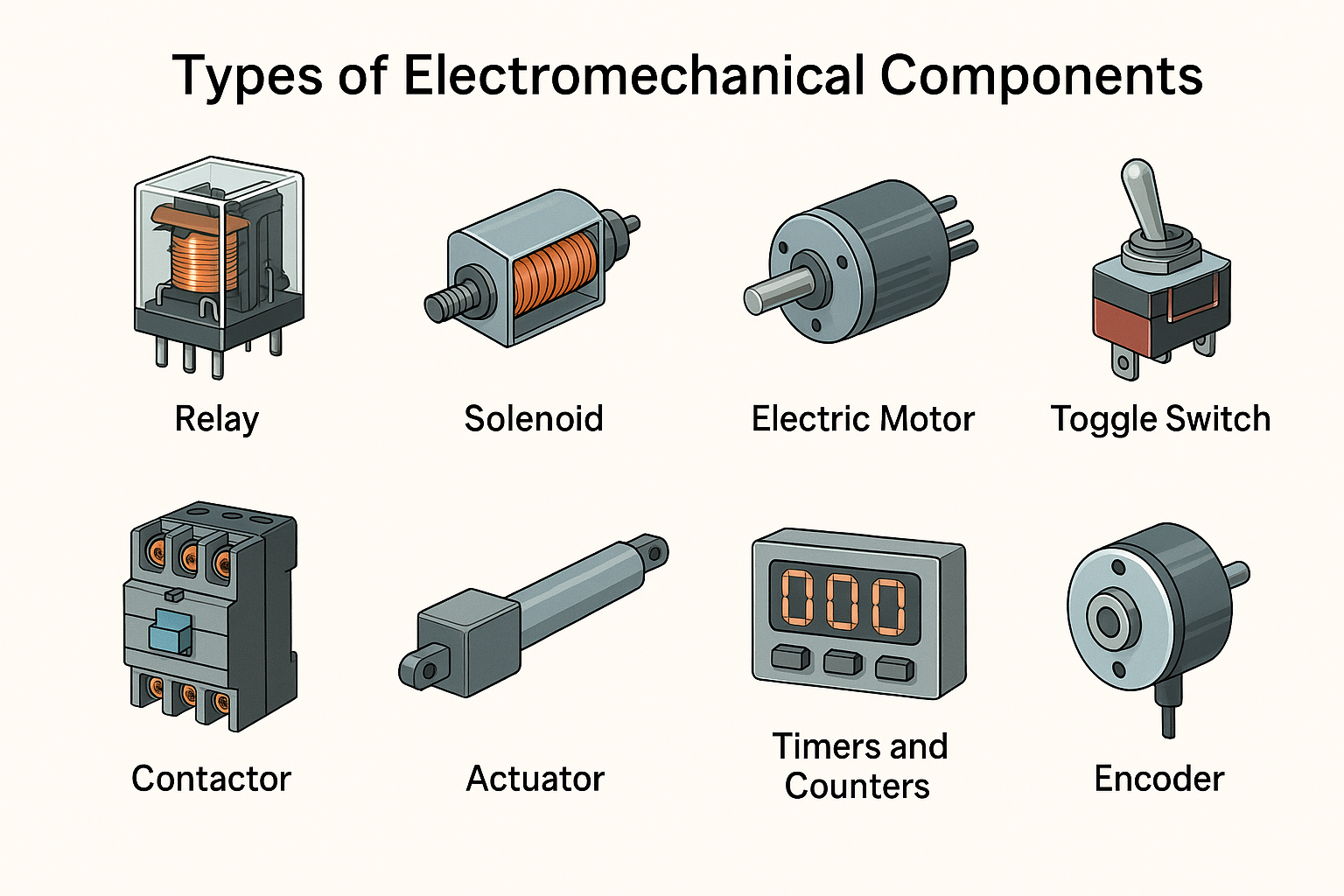
6. Types of Electromechanical Components: Actuators
Function:
Actuators are devices that convert electrical signals into physical motion, either linear or rotary.
Types of Actuators:
- Electric Actuators: Use motors for motion.
- Hydraulic Actuators: Use fluid pressure.
- Pneumatic Actuators: Use compressed air.
Applications:
- Robotics arms
- Valves in automation systems
- Medical devices
Advantages:
- Accurate control of position and force
- Integration with automation systems
7. Types of Electromechanical Components: Timers and Counters
Function:
Timers and counters are used to control operations based on time or count inputs.
Types:
- Analog Timers: Use mechanical or electromechanical means.
- Digital Timers: Microcontroller-based for accurate control.
Applications:
- Conveyor systems
- Batch processing
- Event logging
Advantages:
- Enables sequential control
- Reliable automation logic
8. Types of Electromechanical Components: Encoders
Function:
Encoders are sensors that convert mechanical motion (position, speed, or direction) into electrical signals.
Types:
- Incremental Encoders
- Absolute Encoders
Applications:
- CNC machines
- Elevators
- Industrial robots
Advantages:
- High precision
- Easy integration with control systems
How to Choose the Right Types of Electromechanical Components
When selecting electromechanical components, consider the following factors:
- Application Requirements: Determine the required motion (linear or rotary), load, and environmental conditions.
- Electrical Specifications: Match voltage, current, and switching capacity.
- Durability and Maintenance: Look for rugged components for industrial use.
- Integration with Control Systems: Ensure compatibility with PLCs, sensors, or feedback systems.
- Cost vs. Performance: Balance initial cost with long-term reliability and efficiency.
Conclusion of Types of Electromechanical Components
Electromechanical components are fundamental to modern electrical systems, enabling automation, control, and mechanical output in a wide range of industries. From simple switches to complex motors and actuators, understanding the types and applications of these components is essential for engineers, technicians, and industrial system designers.
By selecting the right components and understanding their capabilities, companies can enhance system performance, reduce maintenance needs, and improve overall reliability.